
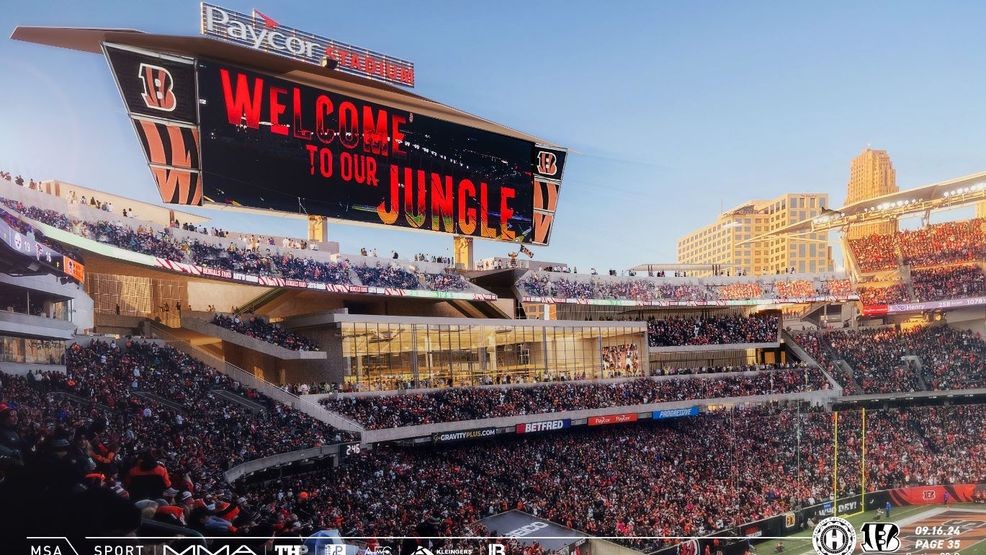
CINCINNATI (WKRC) – The upgrades proposed to Paycor Stadium and presented to Hamilton County Commissioners on Tuesday would cost $1.25 billion and take four years to complete, according to the document prepared by the architect hired by the county.
The proposal includes installing several new features to the home of the Cincinnati Bengals, most notably a separate building next door that would serve as the team’s training facility as well as team headquarters.
That would help clear out space inside the existing stadium for more amenities, the document states.
All told, the proposal would create an additional 500,000-plus square feet on the Paycor footprint, according to the proposal created by MSA Sport.
MSA Sport President Michael Schuster said that the bones and infrastructure of Paycor are solid, which allows for the stadium to be updated.
“Short of building a brand-new stadium and starting over, this stadium, the way that it’s being looked at right now, is current and future as most stadiums are if you take a look at it,” said Schuster.
It would also create several new club spaces, new space for outside events and receptions, and even a standing room only area underneath a new scoreboard that would be one of the largest in the NFL.
Plans also call for the straightening of Mehring Way to create 20 acres of developable land and to close off Central Ave. between Pete Rose Way and Mehring permanently to create a bigger concourse.
The goal is to make the stadium more usable for other events, including conferences, concerts and other sporting events, the document states, following previous requests from county commissioners.
The board is hearing the proposal at it regular meeting Tuesday.
The Bengals and the county are in negotiations to extend the lease, which expires in June 2026. What would be kept out of this proposal, and who would pay for it, will now be part of those talks.
Commissioner Alicia Reece said that the county needs to renegotiate that lease first before the improvements can be agreed upon.She pointed out the Bengals currently pay no rent or utility costs or property taxes, and wondered if that would be the case for the new headquarters and practice buildings.
“And that’s why I believe we can’t talk about the pretty pictures until we talk about this because this thing is almost iron clad,” said Reece.
All three commissioners made it clear they want the Bengals, the NFL, and the state of Ohio to help fund any improvements, especially since the Cleveland Browns are also asking the state with help for either a new or renovated stadium there.
County voters approved a sales tax increase to fund the building of both Paycor and Great American Ball Park, and that increase will not expire with the lease – with the county still owing on the stadiums until at least 2033.
Some commissioners, notably Alicia Reece, have also asked county administrators to explore building a new stadium, something the Bengals have said they do not want.
The most recent stadium to open, SoFi Stadium in Los Angeles, cost nearly $6 billion.
Reece and others are also asking the Bengals, the NFL and the state of Ohio to help fund the new improvements.
The county already spent $39 million on upkeep maintenance repairs this last offseason, and the stadium needs at least $200 million more to keep it in shape – which would be included in this latest cost estimate.
The time estimate for the upgrades would keep the Bengals playing in the stadium while construction is underway.
In a statement, the Bengals said:
“The Bengals thank Hamilton County for sharing these concepts and designs that explore the future of Paycor Stadium. While concepts about transforming Paycor Stadium can be explored, the community is fortunate to have a strong, existing facility. Paycor Stadium is a cornerstone of the community that has been well maintained but needs immediate repairs and improvements to remain competitive now and into the future. The team will review the materials in due course and believes an approach of responsible investing in this great public asset can serve the community for NFL games, major concerts and other events that bring vibrancy to The Banks, Greater Cincinnati and the entire region for years to come.”