
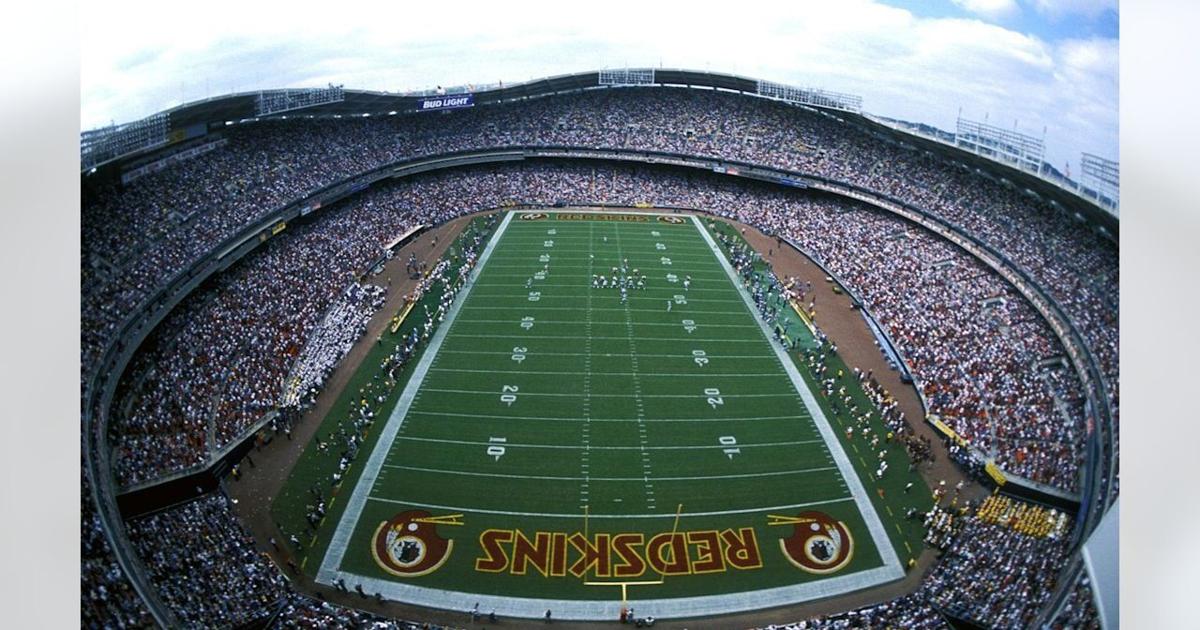
The Washington Commanders and D.C. have reached a nearly $4 billion deal to build a 65,000-seat stadium at the RFK Stadium site, with plans to open the venue in 2030, according to officials with the city and the team.
The D.C. Council still needs to approve the agreement for it to move forward.
The Commanders plan to contribute $2.7 billion, with the city vowing to invest roughly $1.1 billion over the next eight years for the new stadium and redevelopment of housing, a sportsplex and other venues nearby.
“Welcome home,” D.C. Mayor Muriel Bowser said while sitting between Commanders owner Josh Harris and NFL Commissioner Roger Goodell at a Monday morning news conference.
The new stadium would be built on a 180-acre site and would include a roof so it could host events year-round, according to city leaders.
“We want to bring the Commanders home with a new RFK that our fans will love, our opponents will fear,” Harris said at a news conference. “It’ll be loud. We want to make it about football, but also about the city and the community, and we want to host the biggest and best events in the world.”
The Commanders plan to build restaurants, entertainment venues and hotels around the stadium. The team said it will add 5,000-6,000 housing units near the new sports venue with at least 30% of them being affordable housing.
“This land has been blighted and underutilized for too long, and what our deal with the Washington Commanders provides is the fastest and surest route to developing the RFK campus and not just delivering sports and entertainment, but delivering housing, jobs, recreation and economic development,” Bowser said.
District officials said the city will continue to operate the recreational fields near the RFK site. Nearby those fields, D.C. will build a new sportsplex for kids sporting events and tournaments, according to a news release from the mayor’s office. The city’s budget for fiscal year 2026 includes $89 million for those plans.
Bowser said that indoor sportsplex is aimed at helping D.C.’s student athletes who currently have to travel outside the city for sports, such as track, gymnastics and cheer.
Earlier in the day, Mayor Bowser posted a short video on social media, voiced by team legend Joe Theismann, announcing ourrfk.dc.gov as the website to follow for more details.
“The time is now,” Theismann said. “Let’s bring Washington back to D.C.”
RFK Stadium is currently in the process of being demolished — a lengthy project expected to take about 22 months.
Critics didn’t want a new stadium at the site, as WTOP’s Nick Iannelli reported. Locals have said they would rather see housing being built than another stadium.
“We envision a giant neighborhood in that area, that doesn’t exist currently, with maybe homes for 30,000 people,” said Adam Eidinger, one of the organizers of the “Homes Not Stadiums” effort.
Precisely what to do with the site has been up for debate since the stadium closed in 2017.
Earlier this month, NBC Washington reported documents showed the Commanders would put as much as $2.5 billion toward the project, and the District would pledge $850 million which would go to infrastructure improvements that would benefit the community — not just the stadium.

Fans line up outside the old RFK stadium in Washington in this historic photo from the Washington Commanders.
Washington Commanders
The team has been looking for a new stadium for several years, and that search moved to a new level when Josh Harris’ group bought the Commanders from previous owner Dan Snyder in July 2023. Spots across D.C., Virginia and Maryland were all under consideration.
A rendering obtained by InsideNoVa in 2022 shows a proposed but tabled Washington Commanders stadium alongside Interstate 95 in Woodbridge.
Getting back to the franchise’s former home is a path that included Harris and NFL Commissioner Roger Goodell lobbying lawmakers on Capitol Hill in December to pass legislation to transfer the 170-plus acres of land from the federal government to D.C. It made it through Congress at the eleventh hour, and former President Joe Biden signed it into law back in January.
The Commanders’ lease at Northwest Stadium in Landover, Maryland, runs through 2027. Harris has previously called 2030 a “reasonable target” for a new stadium.
RFK Stadium’s history
RFK Stadium was one of the most iconic sports venues in the District.
It has seen its fair share of history — from exhilarating moments in sports to unforgettable concerts and political events. It all started back in 1961, when the stadium opened its doors as a state-of-the-art sports complex.
It was originally called “D.C. Stadium,” then later renamed in honor of Sen. Robert F. Kennedy after his assassination in 1968.
For decades, RFK was the heartbeat of D.C. sports.
Washington’s NFL team would play at the stadium from 1961 until they moved to FedEx Field in Landover, Maryland, by 1997.
Harris and several co-owners, including Mitch Rales and Mark Ein, grew up as Washington football fans during that era, which included the glory days of three Super Bowl championships from 1982-91.
But the departure never meant the stadium would go quiet — its walls would go on to echo with the sounds of soccer and baseball games.
It hosted the Washington Nationals when they moved to D.C. in 2005. Plus, the D.C. United soccer team made RFK its home for years, cementing the stadium as a key figure in the city’s sports identity.
After being booted from the National Mall, the Beach Boys perform their opening number at RFK Stadium in Washington, June 12, 1983. The Beach Boys held their concert after the Team America-Ft. Lauderdale Strikers soccer game.
After being booted from the National Mall, the Beach Boys perform their opening number at RFK Stadium in Washington, June 12, 1983. The Beach Boys held their concert after the Team America-Ft. Lauderdale Strikers soccer game. (AP Photo/Ira Schwarz)
RFK wasn’t just for sports, though.
The stadium hosted everything from concerts by legends like The Rolling Stones and U2 to historic political events like Martin Luther King Jr.’s speech at the March on Washington. It became a place where the energy of the city could be felt, no matter what the event was.
Though RFK’s last professional sporting event was held in 2017, the stadium’s legacy lives on.
WTOP’s Neal Augenstein, Matt Small and The Associated Press contributed to this report.