
Editor’s note: This story is part of Peak, The Athletic’s desk covering leadership, personal development and success through the lens of sports. Follow Peak here.
Josh Johnson, 39, played for Jim Harbaugh at the University of San Diego and then was drafted by the Tampa Bay Buccaneers in the fifth round of the 2008 NFL Draft — a draft that featured quarterbacks Matt Ryan, Joe Flacco and current Minnesota Vikings head coach Kevin O’Connell.
During his 18-year career, Johnson has been on a record 14 teams in the NFL and thrown more interceptions (16) than touchdowns (13). And yet teams continue to bring him in as a veteran backup quarterback (he’s currently with the Washington Commanders).
Our conversation was all about leadership, and at the end, I was pleasantly surprised when we started talking about an unconventional leader I covered as a younger reporter who Johnson knows well: Marshawn Lynch, Johnson’s cousin and the heartbeat of the Legion-of-Boom-era Seattle Seahawks.
(Note: This conversation has been edited for length and clarity.)
The reason I wanted to talk to you is that I imagine you’ve seen a lot of outstanding leadership and a lot of not-so-great leadership. I thought you would have an interesting perspective.
I would use the words “effective” and “ineffective” because I feel like to get in these positions of leadership, you have to be qualified to some degree.
The best leaders I’ve been around can adapt to anything to become effective. And the ones that aren’t as effective, it’s more situationally based. They need the situation to be perfect, the way they’d prefer.
This is not where I was planning on starting this conversation, but I find this fascinating, so could you explain that some more?
One thing sports have shown me, especially as a quarterback, is that you’ve got to be able to relate to everybody. Everybody comes from different paths, different walks of life, which leads to different perspectives. The goal is to try to get everybody aligned. Some people struggle with that because they don’t have the ability to adapt to every perspective, because they might not understand it. So they fight for what they believe in, and that’s what I’ve seen as ineffective over the years.
But the best ones understand what they want to get done with their group of people, and they can make it relatable to anybody.
During an interview I watched, you said: “You can be a sponge learning from people. I’m always open to that.” Where did that mindset start?
I was always like that. I was always a “why” child. Why? Why is this like this?
You said you feel you can learn from anyone. I have to imagine that it has evolved over 17 years in the NFL. How did you get to this point?
In a word that everybody can relate to: Maturity. And in a word that I put my values and spirituality with God: Empathy.
When I was younger, I was just like any other young adult, thinking we know everything, but we don’t know nothing. You think your way is always the best way. But now, I take a more critical view: Do I agree? No. But why is it that way? You ask those questions to gain people’s perspective. And then, for me, once I gain their perspective, how can I correlate that to what I believe in so I can understand what’s expected of me?
Because in my role, there’s leadership above me, and I have to get on the same page as them.
Is there a moment that helped you understand that or changed that for you?
When I got cut by (Jim Harbaugh), my college coach in the NFL (laughs).
In college, it was catering to my view a lot more. And in the NFL, I wasn’t the starter. I was a guy trying to make the team. I took the same mindset (as in college) and I had to evolve to more of a lens that it wasn’t about me and his relationship. That mattered, but that wasn’t the driving force for the team like it was in college.
What was that like?
It was a very humbling experience. It was like a gut punch. But I had to check myself. Spiritually, emotionally, mentally, I went down the list of what I could do differently and better instead of making excuses and pointing fingers. It led me to empathy and maturity.
That’s a tough pill to swallow. Everyone thinks they’re going to come in and be the star and be the Pro Bowl player and not everyone can be that.
The biggest thing I’ve learned is to have humble confidence.
Oh, I like that.
You’ve got to be humble enough to know when it’s not about you, but you’ve still got to maintain the confidence that got you there. You’ve got to know when it’s time to apply that and when it’s time to step back. That’s what I’ve been constantly growing at.
Some people don’t think I’m as confident because I’m not as outspoken. To me, on the weighted scale of what matters, my actions matter more than my words.
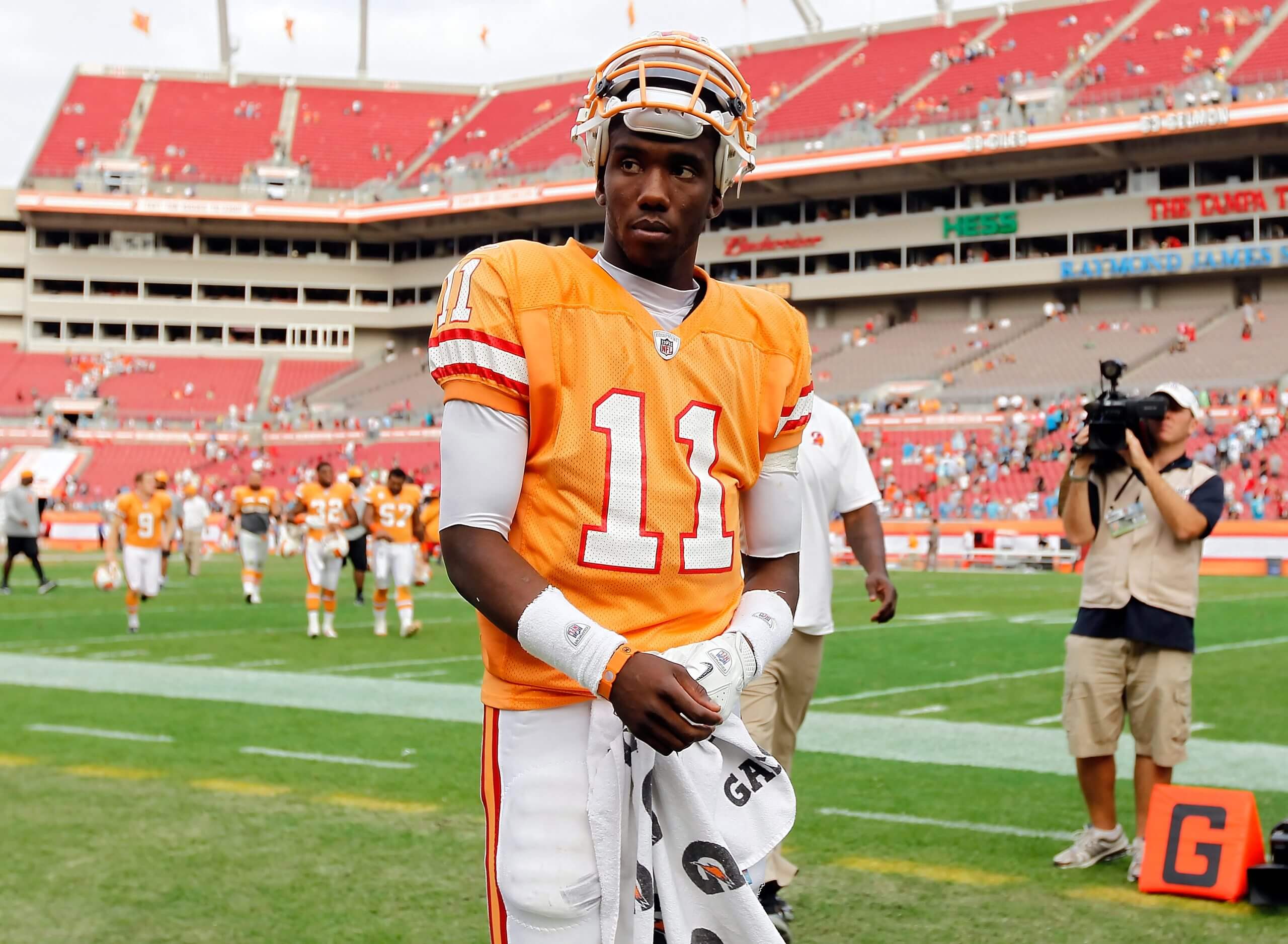
During his long career, Johnson said he has learned the importance of empathy and maturity. (J. Meric / Getty Images)
You’ve started nine games in your career, and yet teams bring you back over and over again. Why do you think that is, and what can other people learn from that?
I’ve always focused more on making myself an asset than a liability. I understand the dynamics and structure that I’m in. My early struggles were teaching me the nature of the business, and I focused on learning that.
It was a contradiction to how I grew up: The best players play; everything is earned; nothing is given. People say that in the NFL world, but that’s not the reality. Some guys have better opportunities. Everyone gets an opportunity, but what that opportunity looks like is different for everybody.
So I had to learn how to separate my emotions from football and business, and once I started to do that, it made me learn more: “OK, what are the ways I can get better, even with the opportunity I’m given? And how can I make myself better for that opportunity?” Instead of sulking and being in my emotions and complaining and pointing fingers and looking at what the next guy has compared to what I have.
“OK, what am I given and how can I use my energy to be effective in that?”
What’s the best leadership lesson you’ve learned in your 17 years?
There’s no one way to be effective. When you’re young, you think there’s one way, one way, one way. It’s about being effective for yourself and then, once you understand yourself, how can you mesh that with everyone else?
Sometimes that’s putting yourself on the back burner, but you’ve gotta understand yourself in order to do that.
What do all the great leaders you’ve been around have in common?
Their effectiveness of communication to each individual, their ability to be open to new ideas and their ability to make them their own but still be able to acknowledge that it didn’t come from them.
Explain that.
When you’re a leader, you might have blind spots. You have to be able to trust the people around you to see those blind spots. When they tell you something you haven’t thought about, the best leaders I’ve seen know how to take those ideas that someone is bringing to them, make sense out of them and apply them.
What’s the biggest thing you think the public gets wrong about leadership?
A lot of people want to see what they think a leader should be versus what the leader is.
We all have the opportunity to show what type of leaders we are in our everyday lives, in some form, whether it’s family, work, friendships. That’s what I see the best leaders do: They’re the same with everything. Not just at work, you know?
You might know this guy: His name is Marshawn Lynch. Do you know him?
Yeah, I think I know that guy (laughs). That’s my cousin/best friend.
So I covered those Seahawks teams he was on. I’ve always argued that Marshawn was a real leader on those teams, but in a way people might not think …
He was the leader of that team. He just didn’t want the attention.
He was the guy who hung out with the defensive linemen and the wide receivers; he was cool with the offensive line and the running backs.
He was the glue guy.
However, I bet you most people wouldn’t think of Marshawn as a leader.
Because of the perception of him, that goes back to my point of people wanting what they think a leader is, versus whether a leader is effective or ineffective. That, to me, is just a wider lens of leadership.
Marshawn was the culture of that team. I don’t know if the reader will appreciate how crazy this is, but you will. There would be games when they wouldn’t run the ball enough, and the Seahawks’ receivers would complain about it in their comments after the game.
That’s unheard of. That’s effective leadership.
Exactly.
I was around those Seahawks teams a lot because of Marshawn. His impact still resonates today with those guys.
What’s the best leadership story you have from your career?
Hmm. Let me think about that. I’ve never put this on a weighted scale before.
I would love to leave people with a story that shows everything we’ve been talking about.
You know what? What Coach Harbaugh did at San Diego was amazing. Not only did he reinvent a culture for the football program but also for the school. The way he leveraged himself to uplift the program and his players, but he also pushed us to limits that not everybody agreed with, but everybody appreciated.
He set a precedent, told everyone what the culture was going to be, went out and was effective, but was not only effective at winning football games but also at helping young men find confidence in themselves to be more than they thought they were capable of being.
Then he did it with Stanford and the 49ers and Michigan and the Chargers with the same motto. That’s the consistency part of it.
Did he have a significant impact on you?
He had a huge impact on me. Because I was young, immature, figuring it out. I was trying to learn what the standard was. And now I understand what the standard is, how to meet it and then how to even exceed it.
(Illustration: Dan Goldfarb / The Athletic; Joshua Sarner/Icon Sportswire / Getty Images)