
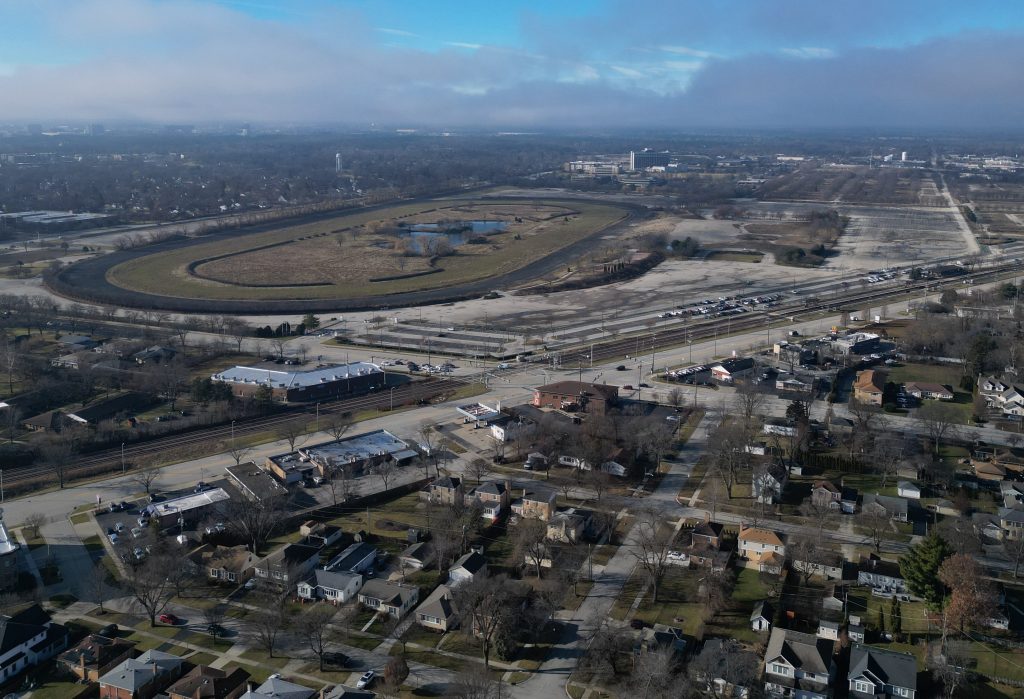
The Chicago Bears have finally said out loud what everyone already knew. They want to leave Chicago and they expect the legislature to help them do it. After months of posturing, hedging and rebranding their intentions, they now say they are “extremely focused” on Arlington Heights. That phrase is meant to sound decisive, but it’s really a public signal to the General Assembly: get ready to make this easier for us.
This is not a new act. Kevin Warren didn’t invent it. In the 1970s, Mayor Richard J. Daley faced a Bears organization threatening to leave Soldier Field for the suburbs; Arlington Heights in fact. The details change, but the script is familiar: big declarations, bad math, sudden reversals, and a hope that taxpayers will somehow pick up the tab. The current version started with the $197 million purchase of 326 acres in Arlington Heights without a real plan. Then came the announcement they were leaving Chicago. Then the walk-back. Then the “Chicago is our home” press event, staged like a new iPhone launch, without ever having talked to the state about financing. When they finally came to Springfield, they were laughed out of the room. And now, after more flip-flops, they’re back to Arlington Heights, with the focus dialed up.
The Bears’ pitch now hinges on “property tax certainty” for their proposed Arlington Heights stadium, with the claim it wouldn’t cost anyone anything. That’s simply not true. Property taxes are what fund a community’s schools, libraries, parks, police, fire departments and infrastructure. A $8.8 billion company moving into town would normally be expected to contribute to all of that. If the Bears get a break, the revenue those services could depend on disappears. Moving to Arlington Heights will raise property values, put more students in classrooms, and increase demand on local roads, utilities and first responders. Under Illinois’ funding formula, the Bears should be paying more into the system, not less. What they are asking for is the same free ride they’ve had in Chicago, where they’ve never paid property taxes for 104 years and taxpayers are still paying off the 2002 Soldier Field renovation. If they don’t pay their share in Arlington Heights, the gap doesn’t vanish, it gets passed on to someone else, and that someone will be the state of Illinois and therefore people throughout the state. Saying otherwise is disingenuous.
This is not just a Chicago problem. Every lawmaker in Springfield should look at this proposal and ask themselves how they will explain it back home. Why should an $8.8 billion franchise get a property tax break that the people you represent will never get? In Rockford, Elgin, Aurora, Peoria and the south suburbs, families pay some of the highest effective property tax rates in the country, often out of proportion to what their homes are worth. They do not get to opt out of paying for schools, police, fire protection, parks and infrastructure. Why should the Bears?
Chicago legislators should be asking themselves additional questions. If we help the Bears leave, what is the plan and the price tag for keeping Soldier Field from becoming a costly, underused relic on the lakefront? After the city has already sunk hundreds of millions into making the venue NFL-ready, how do you justify letting its primary tenant walk away? What about the game day dollars that flow into Chicago hotels, restaurants, bars, ride-share trips and retail shops?
What precedent does it set if Illinois bankrolls a franchise’s departure instead of holding it accountable to the city it has represented for a century? And beyond the dollars, how much does Chicago lose in tourism pull, national exposure and civic identity if the Bears brand moves permanently to the suburbs?
The Bears are touting the supposed spillover effect to Chicago’s economy, saying visiting fans will stay downtown and eat in local restaurants. We already get that now with the team playing here, and that impact will diminish the moment they leave. In their news conference, the Bears even tried to offer comfort by pointing out that Arlington Heights is still in the same county as Chicago. Should the people of Ford Heights take solace in knowing that, despite their struggles being on full display, they share a county with Winnetka? It is out of touch and off base.
Around the country, voters are wising up to these stadium financing sleights of hand. Kansas City recently rejected public subsidies for new venues. Illinois should lead in this space, not follow others into the billion-dollar abyss.
The Bears are free to make whatever business decision they think is best for them. But once they ask the legislature to make it easier, it becomes a public issue. And right now, Springfield has bigger priorities: transit reform and funding, pensions, education funding and closing gaps left by federal budget cuts.
Editorial: Chicago will survive the Chicago Bears of Arlington Heights
I implore the Bears’ ownership to come to Springfield and make their case in person and have open, transparent conversations about what they want from us and why; in front of the people and their representatives. Talk about the real benefits to the public, not inflated numbers economists will tell us are overstated. Explain why you deserve a tax break when families are struggling to pay their own. Explain your urgency. As my math teachers used to say, show your work.
It is not unprecedented. In 1997, Minnesota Twins owner Carl Pohlad came before his state’s lawmakers to get his stadium built. In 2006, Minnesota Vikings owner Zygi Wilf did the same. Mark Davis, owner of the Raiders, personally lobbied Nevada’s legislature in 2016 for Allegiant Stadium. And in 2024, Jerry Reinsdorf came to Springfield in person to talk about his team’s future home.
If it’s such a great idea, Bears ownership should stand where those owners stood, on the record, in the open, in the people’s capitol and have the conversation where it’s meant to be had.
State Rep. Kam Buckner is speaker pro tempore of the Illinois House of Representatives.
Submit a letter, of no more than 400 words, to the editor here or email letters@chicagotribune.com.