
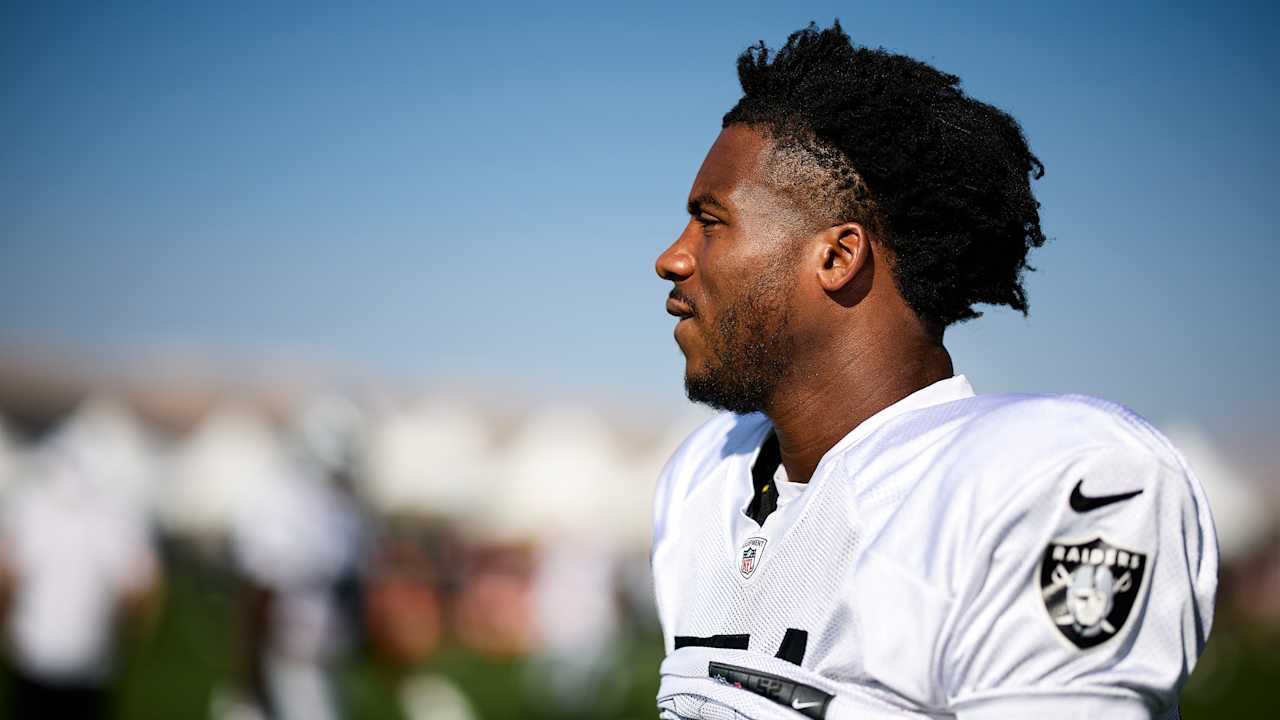
In a modern era of professional football where players can choose their own trainers and rehabilitation staff to recover from injuries, Koonce wanted to keep everything in-house. It was a personal decision he didn’t take any time mulling over.
‘We gave him the option, you can go back home and do your rehab or you can stick around here – we got everything you need,” Grant said. “For him it was, ‘Yeah, I’m definitely staying here. We’re definitely working here.'”
Cortez and Grant proceeded to start Koonce’s rehab before he even had surgery. The mission was to get his knee in as good shape as possible so it would be strong as possible after surgery.
Following a successful operation, the real dog days began.
Koonce had to relearn the most simplistic things in his daily life. He couldn’t drive, he couldn’t shower, he couldn’t walk up or down stairs or even sleep in his own bed.
“On top of that, I’m making you come in every single day in rehab and I’m putting you through hell,” Grant said. “I’m trying to get your motion back as fast as possible, I’m trying to make sure you get your strength back as fast as possible. And that starts Day 1.”
While the physical aspect of the situation was tough, the feeling of watching the team from the sideline was far more difficult for the defensive end.
“The first few weeks, the team is playing and you see opportunities where you’re like, ‘Oh, I could do this and I could do that,'” Koonce said. “But then you take a step back and you’re like, ‘Oh no, I can’t do that because I’m not going to play the whole season.’ Those first few weeks were pretty rough.
“And that was the first time in my career that I missed a game for an injury, let alone a season.”
Koonce quietly sought solace in his family, talking on the phone with his parents every day. Being in the building also allowed him to be around his teammates, who provided encouragement on tough days.
But even in times of despair or doubt, he kept a brave face.
“Malcolm’s demeanor never changed,” Grant said. “From the first two weeks he came in post [operation] until we cleared him, his demeanor never changed. You would’ve never know how difficult it was for him because he put on his hard hat and just kept working.”
“His success is going to help everybody,” Cortez added. “Gaving a part of that, an integral portion of that, it’s something you don’t take for granted and something you really, really find joy in. When you get a guy you know has been working his tail off to get back, knowing he’s putting in days and hours to get where he needs to be and seeing that on the field. You can’t beat that.”
This offseason, the Raiders training staff took an old board in the back of their recovery room and wiped it clean. The board’s sole purpose now is for each player who successfully completes a longterm rehabilitation with their staff to sign it once they’re medically cleared to play again.
As there’s hope one day the blackboard will be filled to the brim with signatures, Koonce is the first player to sign his name in silver Sharpie.
“Every day we were hammering away, workout after workout, setting up plans, setting up stuff I had to do at home,” Koonce said of working with the Raiders training staff. “For me, the surgery was going to happen and I’m trying to come back and not miss a beat. So whatever I had to do, whether it was extra work, or massages or this or that – I would’ve done anything.”