
Editor’s note: This story is part of Peak, The Athletic’s desk covering leadership, personal development and success through the lens of sports. Follow Peak here.
The Athletic has live coverage of Cowboys vs. Eagles from 2025 NFL season kickoff.
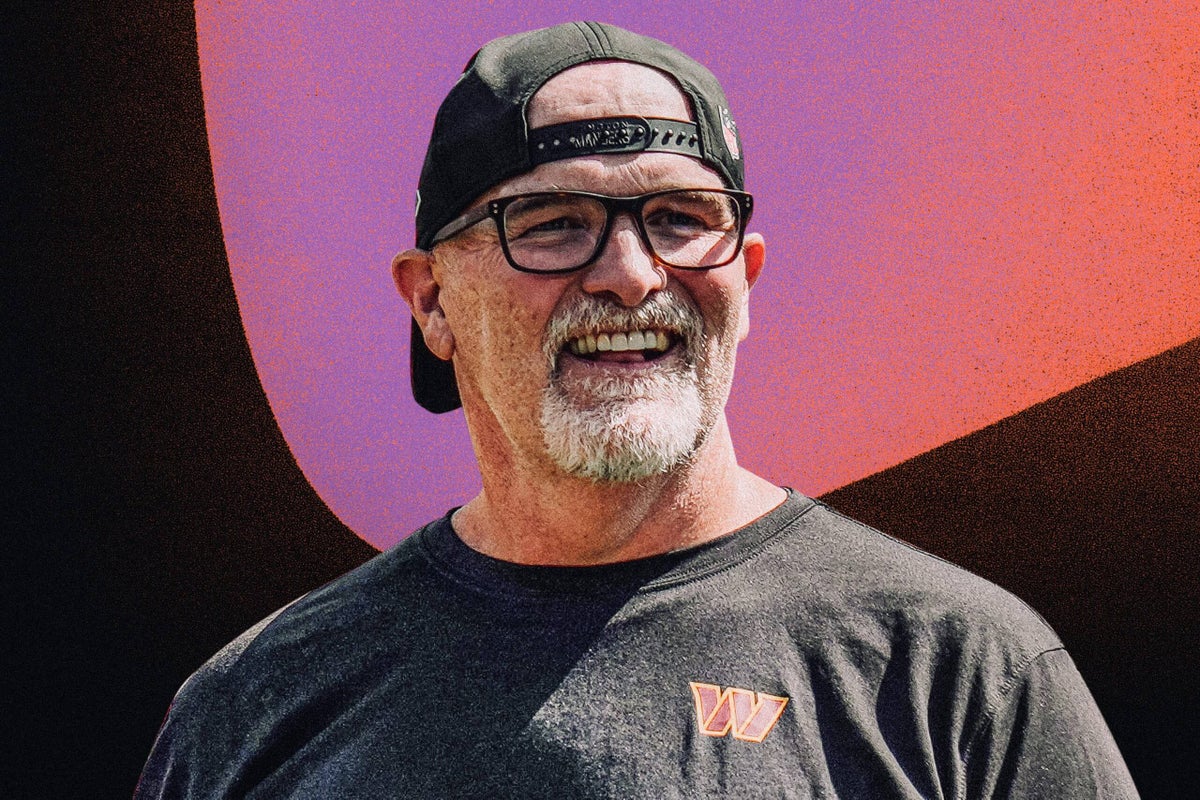
Last spring, Dan Quinn asked each member of his coaching staff to create a PowerPoint presentation. But it had nothing to do with the Washington Commanders’ upcoming season. Rather, the presentation was to be about their own life — the story of their upbringing, important milestones, which family members they were closest to, all accompanied with pictures.
For the next 16 weeks, each staff meeting started the same way: with a new presentation. “There were tears,” Quinn said. “There was joy.” By June, the Commanders reached their last presentation, given by Quinn, the team’s head coach, who viewed those moments as an important part of his team’s surprise 12-5 record in his first season.
It’s why he’s had his players go through the same process, which he calls “my story,” leading up to this season.
“We’re closer than we’ve ever been,” he said.
The exercise reflects Quinn’s philosophy. To him, deepening relationships with players and coaches fosters trust and understanding, which make it easier to navigate tough moments together. He believes it also correlates to performance.
“It gives me a better perspective on them,” Quinn said. “I know what they’re playing for. It helps.”
I wanted to talk to Quinn about that idea and about his leadership style ahead of his second season with the Commanders.
What does the idea of learning to rediscover or recreate yourself through experiences mean to you?
One of the things I love about coaching is that the learning never stops. To say, “OK, how can we frame this differently?”
For instance, at a practice we just had three offsides on offense, one on defense. As opposed to saying, “You just need to focus more,” we went right to the spot. In the team meeting for the next two days, we did some exercises just on focus. We did one called 3-2-1 for before you go on the field.
What are three things you can see? What are two things you can hear? What’s one thing you can feel? Just to get back to being grounded or being in the present. So that’s an example of learning. Maybe before you just say, “Hey, you’ve got to focus, or you’ve got to lock in.” But without teaching them the tools, then it’s just kind of words.
Magic Johnson spoke to our team last year, and it was so fascinating. I’m sure you and everybody else has heard the term, “trust the process,” right? Well, he added one word on the end of it, and it kind of changed everything for me.
He called it the process of winning. And I was like, “Yeah, no shit. It’s not just the process. You’re doing these things to win.”
That one little word attached to the end of it made the word “process” better for me.
Did that click for you all of a sudden or start to mean a lot because you have your own “trust the process” moments that it made you think of?
Yeah, I think so. For example, in football the game management piece is a big deal. So early on, you’ll do some of that by yourself, but the process is much more effective when we include special teams coaches, offensive coaches, defensive coaches, and we have things to discuss together.
Having different points of view, I really encourage because I don’t want it to be just, “OK, with seven seconds left, this is the play, this is how we would do it.” Different points of view, collaborating to test things — that’s now my process of winning.
Sometimes as a head coach, you feel that responsibility of having to plan everything. But you want your own ideas challenged and tested. Because the easy thing to do is just agree with the head coach and move forward. But if you’re really about the process of winning, then some people should say, “Or what if we did this?”
I think it’s really cool how you said once you could learn to really understand that, then you were able to find different ways to teach other people how to lean into it. Almost like taking one of your strengths and making it contagious and trying to make it everyone’s strength. Like your “my story” concept.
You want to create an environment that’s uplifting, but you also want to have really high standards.
So, yeah, “my story.” It was brought up by our defensive back coach, Tom Donatell. It was a way that he thought some of the DBs could connect. You could see an impact. Somebody might have a shared experience, at least in terms of, “I also went through that,” or, “I also have been dealing with that issue.” Sometimes hearing somebody’s shared experience about what they’ve gone through can be a really big deal.
One of the players had an emotional one. He said, “Hey, man, I can’t relate to that topic, but I can relate to pain. And it sucks what you’re going through or what you went through, but I got you.” It gives us a little better vision of each other.
It also helped me know the staff better. There are some things that I found out about people that I’d never known before, and I’ve known them for a long time. I thought, “S—. I would have gone all this time and maybe not known some of the things.”
I think when you know somebody a little deeper, you know their why, then you’re able to go further in the relationship and understand each other better. Maybe that comes up during a difficult moment, maybe it comes up that you’re able to respond better to somebody when they need your help.
We bound all the presentations together, and at the start of (training) camp, we gave everybody a book from the staff. So I’m hopeful they’ll pick it up 20 years from now and share the stories of things they learned about people to someone else.
I just love that. Do you think your younger self would be surprised at what you’ve been through and done? What did you want to be when you grew up?
I knew that I wanted to teach, so I thought I would probably teach elementary school and then coach high school football and track. Or I would have gone into the military. I love being part of a team. But my younger self would have been like, “No, being a head coach in the NFL?” That was not on the radar.
I think people forget that coaching is teaching.
I found that out in college. In high school you’re not in a classroom doing meetings. So when I got to college and had meetings and teaching and there was note taking, that was cool. I was like, this is teaching.
That’s why when I graduated, I got right into coaching. You can and should almost insert the word teacher for coach in just about most occasions — with the exception of game day when there are 80,000 people yelling at you and calling you an asshole. That’s probably not happening in the classroom, I hope.
Maybe the teaching and education side of things helped too with you leaning into learning and being curious and creative enough to try things differently after experiencing it one way.
You have to put action to it, and I mean really put action to it. You say, “I want to start and try something different.” That’s the first step, but you also have to have a plan to do that. Like, “I’m going to do this Monday, Wednesday, and Friday at 10:00 a.m.” You almost have to schedule these changes when you’re first thinking about things. And they have to be in your own way.
You shouldn’t say, “Michael Phelps did this,” or “Dan Quinn did this,” OK, that worked for them.
What is sustainable for you? Putting a real plan together involves taking the time to do it, putting the process together to do it. It might even be on the mental health side. Like, “I’m checking in with somebody Tuesdays. Tuesday is my day. I’m making a call to somebody.” So specifically put a time to it, and then start doing it. That’s it. Then you can create real change.
Lastly, can you think of one of those moments, or small shifts, that you or your team had recently?
The players had off two days ago. (The coaches) had a meeting, and it was more about shared experiences. We were talking about, “What’s the thing that’s keeping you up at night right now?”
By us saying them, it allowed for (others to say), “Yeah, I’m dealing with that too.” Then you can collaborate on it.
For those coaches who have children, it’s a balance of their home (life). I don’t have children, but that’s a real thing for these fathers that are here finding that white space and being present there.
So that was one this week that I thought we had a real breakthrough with. A couple people found some shared experiences together and spent time talking it through and giving insights to one another.
Some of them have older children now, but they went through what this younger guy is dealing with at the moment. And so it probably wouldn’t have happened had we not had that exercise together on this players off date, and it literally was just a few moments. It wasn’t like something had to be planned out for three hours. It was a smaller engagement, but the fact that they were willing to share their ideas and what was stressing them out allowed each other to have some insight on how to do it better.
(Illustration: Dan Goldfarb / The Athletic; Jess Rapfogel / Getty Images)