
There were a few reasons why the No. 1 NFL TV analyst started getting paid like top players at the beginning of the decade.
In 2020, Tony Romo’s 10-year, $180 million CBS contract changed the game. Shortly later, it led to Troy Aikman’s $18 million-per-season ESPN salary and the granddaddy of them all, Tom Brady’s $375 million monster deal with Fox through 2034.
The road to all these riches was aided by CBS’ failure to have the leverage of a backup plan for Romo five years ago.
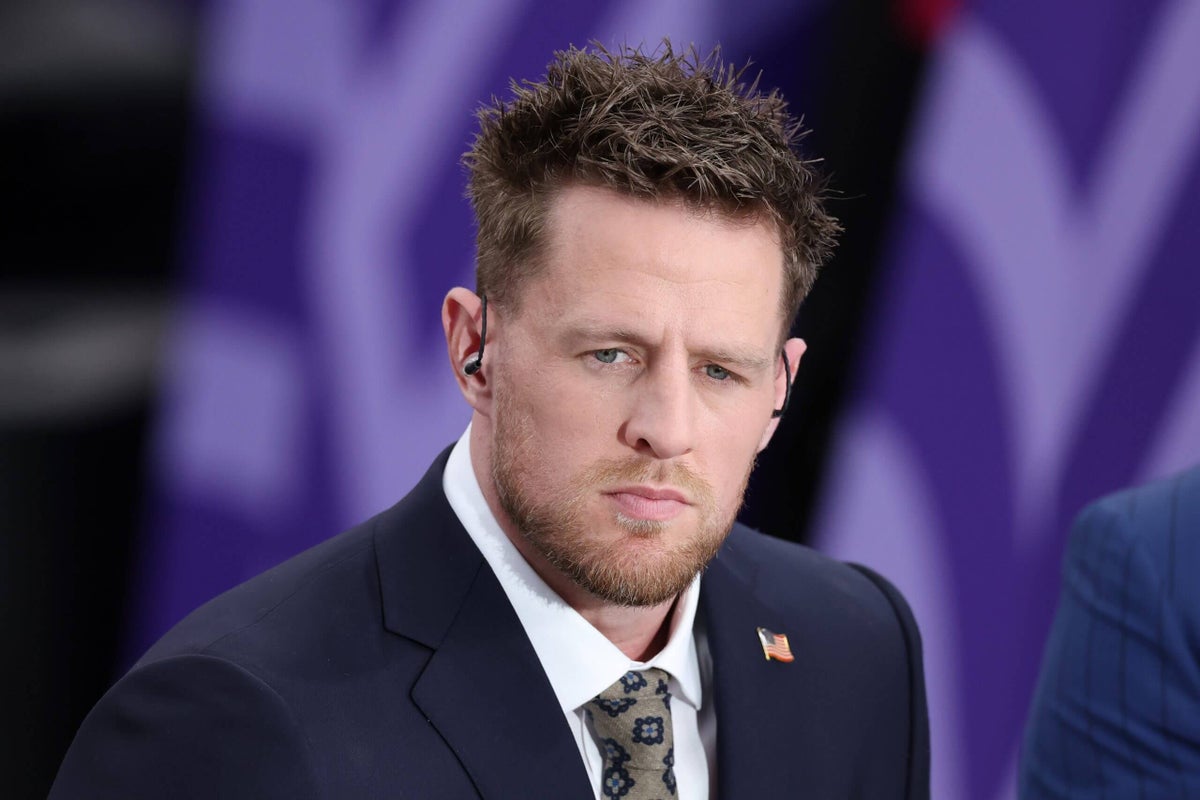
That is why J.J. Watt’s debut on CBS Sunday during the Pittsburgh Steelers’ 34-32 win over the New York Jets was so intriguing.
Watt, a future Hall of Famer in his second year since retiring as a player, chose to move from the studio to the booth and — like the huge pass rusher he was — you can see his shadow coming around the edge.
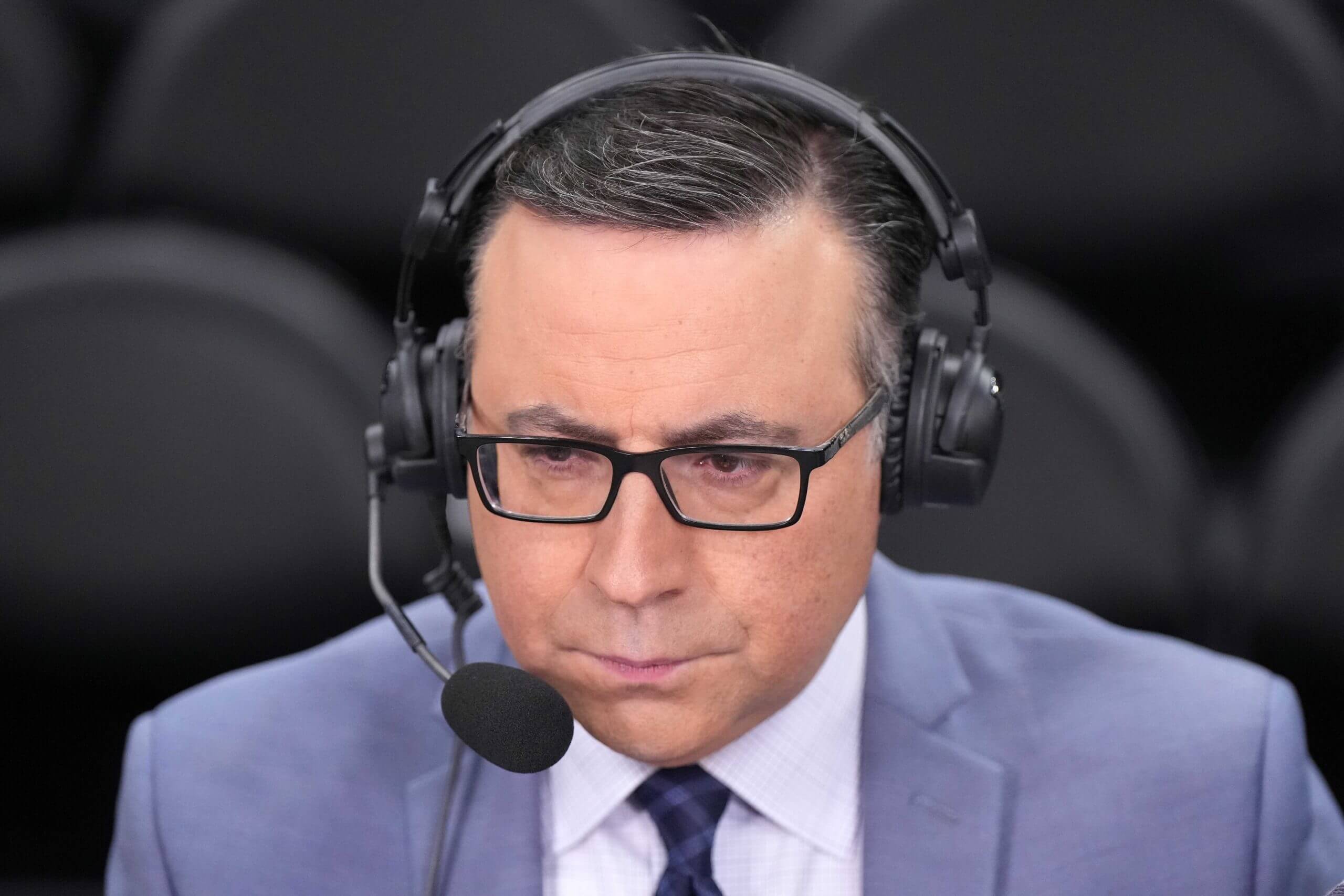
On Sunday, Watt showed potential — with a foundation to eventually be excellent. With the advantage of working with Ian Eagle, the best play-by-play announcer in the business at making his analysts better, Watt passed the first test: having the same enthusiasm for the game as the fans watching it.
After having made almost $130 million as a player, per OverTheCap.com, Watt is not doing it for the money right now. His salary as a No. 2 booth analyst is not close to the Brady-Romo-Aikman stratosphere. He is choosing to travel around the country each week, working on his new role as a broadcaster to see if he likes it and where it could go.
Besides coaching, being in a game booth is as close as you can get to the adrenaline of being in full pads, and Watt is pursuing it. Watt picked up the booth bug by working with Eagle on Christmas Day for Netflix last year.
Paired with Eagle on Sunday, Watt wasn’t perfect. There was sometimes too much “what” in his analysis instead of the “why,” especially on passing plays.
Even as an ex-defender, Watt should be able to clean this up by not only repeating the particulars of what just occurred, but also telling us one reason why it did.
Watt did not have a “wow” moment but showed some fundamentals and veteran poise. In describing the left D gap, Watt explained that it is between the left tackle and the left guard. This type of jargon is often left unexplained by analysts and misunderstood by fans.
Watt, with Eagle’s help, can really grow to become a legitimate No. 1 option by just having fun. On several occasions, Watt showed he has it in him, with humor and confidence.
The matchup included his brother, T.J., a pass rusher on the Steelers and another future Hall of Famer in the Watt family. On one occasion, J.J. referred to T.J. only by his jersey number (“90”) and, another time, when T.J. knocked down a pass, J.J. said he learned that from somewhere. Eagle, always lifting up his partners, provided the sarcastic rejoinder, wondering if it was legendary 6-foot-9 Dallas Cowboys’ defensive end Ed (Too Tall) Jones. It punctuated the bit.
Ian Eagle, the best in the business at helping analysts improve, can help J.J. Watt become a legitimate No. 1 NFL TV option. (Kirby Lee / Imagn Images)
During a late-game penalty reversal that the official first announced as being on the Jets but then said was on the Steelers, Watt exclaimed, “That was like a WWE heel turn!”
While Watt showed he did his homework with detailed information, he also focused on what was in front of him, noting in the second half that he had been most impressed with Justin Fields, the Jets’ quarterback, looking down the field as opposed to just running, a slight on the signal caller in the past.
Watt has room to improve. He sounded natural, but probably needs to up the excitement and inflection at times. That might be minor and nitpicky, but that is the kind of thing that will take his work to the next level.
However, it is already clear after just one week: It was smart for CBS to have turned to Watt.
In 2020, Eagle’s partner was Dan Fouts, the esteemed Hall of Fame quarterback at the end of a long run as a top-level NFL analyst. CBS not only did not consider Fouts a potential replacement for Romo, but it didn’t even retain him the following year. Instead, it brought over Charles Davis from Fox.
Eagle and Davis were an enjoyable listen, but Davis was never going to be an NFL No. 1 — not only did he not star in the league, but he also never played in it.
Watt has the stature to be a No. 1. If he continues to improve, he can join Fox’s No. 2 Greg Olsen (who was Fox’s No. 1 but, by no fault of his own, lost it to Brady) as a potential lead analyst. Meanwhile, Drew Brees, who will be on Netflix’s Christmas broadcast, keeps chirping about how he could be a top analyst now, even after his NBC one-season-and-done flameout.
Watt is doing what Brees should be. He has entered the arena weekly.
In 2017, as a rookie, Romo — with his partner Jim Nantz — was a sensation on CBS’ No. 1 NFL team. He was first-guessing plays and eventually had one of the greatest broadcasting performances ever in the January 2019 AFC Championship game between the Kansas City Chiefs and New England Patriots.
Romo has regressed over the years. He and Nantz blew the final call of the Kansas City Chiefs’ Super Bowl win over the San Francisco 49ers in February 2024.
Romo was a little better last season, so maybe he can build back up to the form that made him such a sensation ahead of his mega-deal. He still has another five years, including this one, left on his contract that changed NFL TV, so maybe he shows a little more drive.
With Watt, CBS Sports president David Berson has improved his star power in the No. 2 booth. Meanwhile, Watt can put himself in position for top jobs that can pay as much as he made as a player. Watt’s first game wasn’t like Romo blowing the doors off in 2017, predicting play after play, but you can see Watt coming around the corner. The potential is there.
(Photo of J.J. Watts: Steph Chambers / Getty Images)