

Bob McManaman and Theo Mackie on the Cardinals win over the Panthers
Bob McManaman and Theo Mackie on the Arizona Cardinals 27-22 win over the Carolina Panthers from State Farm Stadium
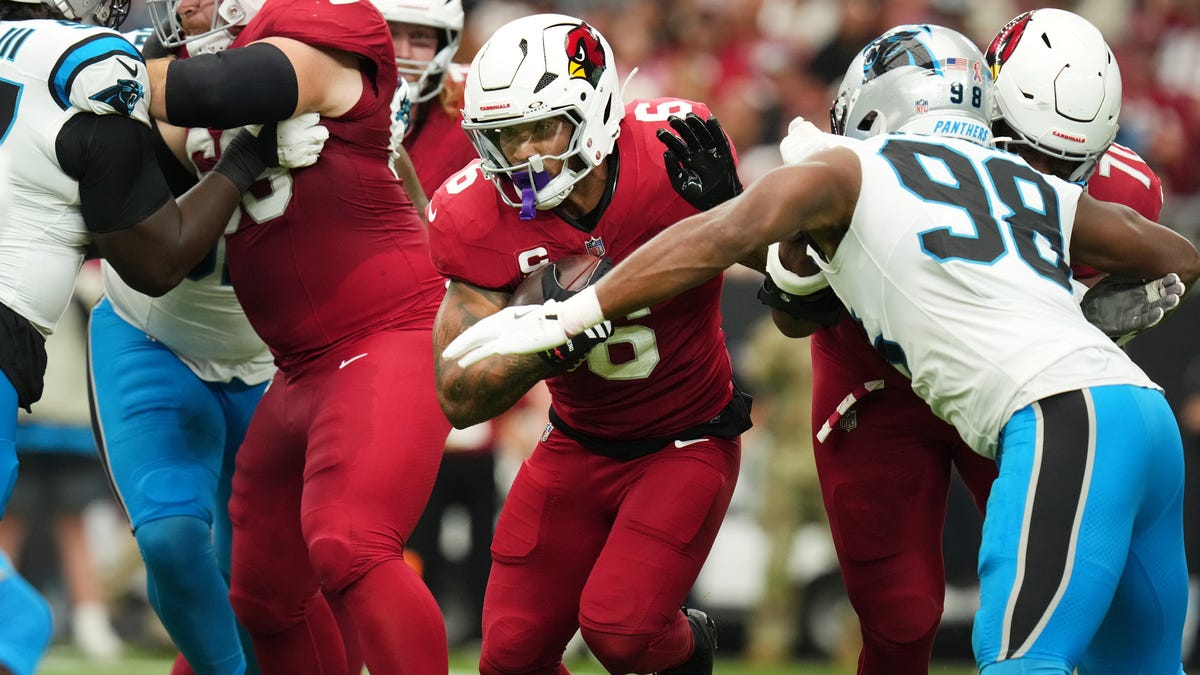
The Arizona Cardinals’ run game has struggled to start the 2025 season, a significant drop-off from their dominant performance last year.While the Cardinals ranked second in yards per carry in 2024, they have fallen to 31st in rushing success rate this season.Opposing defenses have adjusted to the Cardinals’ preferred gap scheme runs, limiting their effectiveness.
To ensure a stress-free win — to avoid all the hand-wringing of the past five days — the Arizona Cardinals just needed one more first down. That meant doing what they did so often a season ago: Rely on their run game, convert a second-and-3, milk the clock and emerge with a comfortable, 27-15, win.
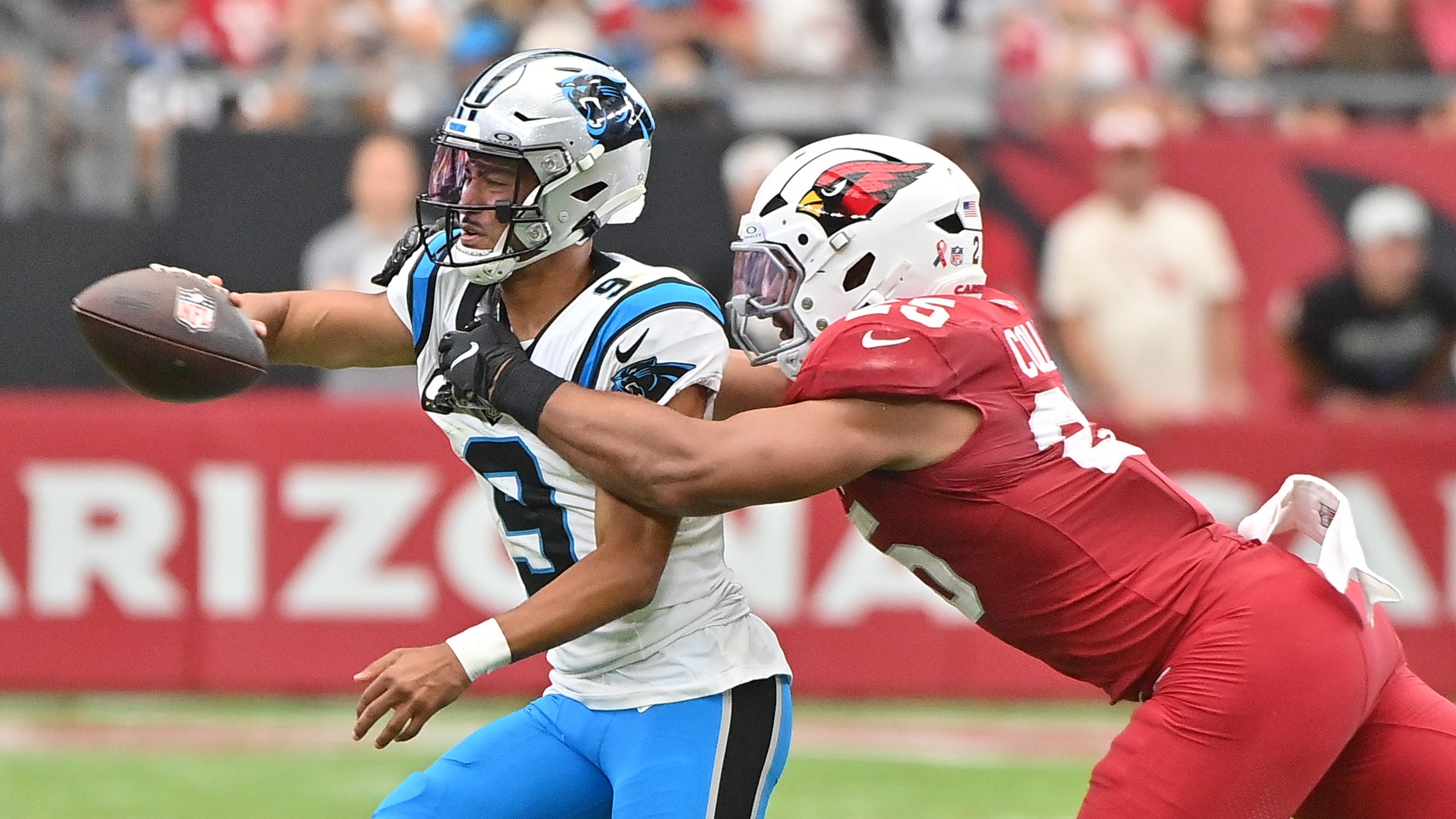
Only this time, it wasn’t so simple. A Carolina Panthers defender, Patrick Jones II, crashed the edge, blew up the play before it began and ripped James Conner to the ground for a three-yard loss. The Cardinals went to the air on third down, couldn’t convert and handed the ball back to the Panthers with their hopes still alive.
That play — the difference between a comfortable win and a heart-pounding one — is emblematic of the Cardinals’ start to 2025.
A year ago, their offense was dominant on the ground.
They ranked second in yards per carry and ninth in rushing success rate. Their rushers made magic happen, finishing third in rush yards over expected, but the offensive line was a crucial component as well, generating the third most expected yards, based on Next Gen Stats player tracking data. Good blocking and good running backs made, unsurprisingly, a winning formula.
This year, the run game has been stagnant.
They still rank 11th in yards per carry, at 4.7, but much of that has been on the back of two big runs, one from Trey Benson and one from Kyler Murray. By success rate — which measures the percentage of run plays that can be considered wins for the offense — the Cardinals rank 31st. The running backs have been solid, but they’ve had no room to run. Arizona has only generated the 20th most expected yards per carry.
“It has to be better,” head coach Jonathan Gannon said. “It has to be more efficient, a little more productive.”
In many ways, it starts with the offensive line. By Pro Football Focus grading, the Cardinals rank third in pass protection and 31st in running blocking.
That much was evident against the Panthers. Nearly every time the Cardinals ran the ball, it seemed as if at least one offensive lineman would miss his block, even if only by the finest of margins.
“It’s just a matter of us executing a little bit better,” right tackle Jonah Williams said. “And then we finish a couple blocks a little bit better, have a little better technique, block up that one last guy making the tackle, and then you start turning those little 4-yard runs into explosives.”
These moments are also not always as simple as they appear.
Take the crucial second-and-3 in the fourth quarter against the Panthers. The Cardinals ran a power run to the right side, with left guard Evan Brown pulling across the formation. Brown didn’t get to Jones — the edge defender — in time, letting him hit Conner nearly untouched.
But while Brown acknowledged that he “can play the situation better,” there was more happening on the play than meets the eye. All game, the Panthers had defended that play by keeping the edge defender inside and forcing the Cardinals to bounce outside. This time, in a key moment, they changed up their scheme, aggressively charging upfield.
“I didn’t have enough time to react on that,” Brown said.
Every play is a miniature chess match, with strategic games just like that one. Last year, the Cardinals excelled at that chess match. Their run schemes were widely hailed as among the league’s best.
This year, opponents have found more answers. The book is out: The Cardinals prefer gap scheme runs (in which each lineman has a specific assignment to block) to zone scheme runs (in which the offensive line blocks the same direction as a unit).
A year after averaging 5.4 yards per carry on their preferred gap schemes, the Cardinals are now averaging 4.2 yards per carry on them.
“Last year, we were a really good gap scheme team,” Brown said. “And I think you can see they’re playing it a little differently, fitting it a little aggressively, waiting on it. So now I think, what’s our next thing to do?”
That’s the challenge for offensive coordinator Drew Petzing to solve. Through two games, the Cardinals have only leaned stronger into their bread and butter. They’re using gap schemes on 88% of runs, up from 69% last year, which already led the league.
“In a lot of ways, I think we need to stay the course,” Petzing said. “I think we need to continue to work on the details of the blocks, the aiming points, the ball-handling, carrying out our fakes, all the things that I think make our run game dynamic.”
There are plenty of potential solutions. Maybe the Cardinals will lean more on zone runs. Maybe they’ll stick with their scheme and simply find more answers. Maybe they just need to block better.
Or maybe the answer comes down to personnel, with guard Will Hernandez nearing a return from his ACL injury and his replacement, Isaiah Adams, largely struggling.
Regardless, finding the solution will be crucial. Through two weeks, the Cardinals have not been punished for their struggles on the ground.
But they know tougher tests are here, beginning this week in San Francisco.
“The good thing is that we’re 2-0,” Williams said. “So we have a lot to improve on and we have a lot to get better at, but we don’t have to dig ourselves out of hole record-wise.”