
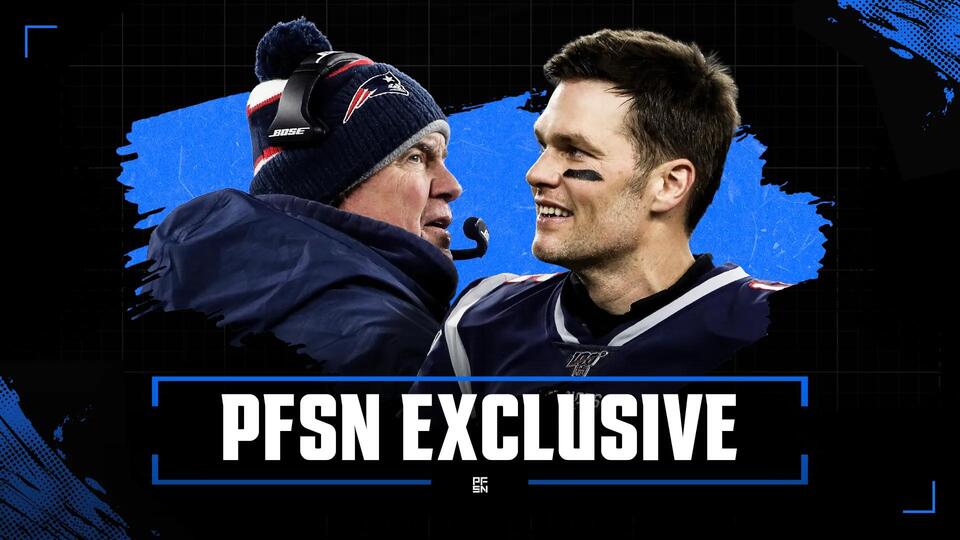
It is the defining debate of modern football: Who was more responsible for the New England Patriots’ two-decade dynasty, Tom Brady or Bill Belichick? The quarterback or the coach?
The question has been argued in bars, debated on camera, and analyzed in print for years. Veteran NFL author Gary Myers dives into this discussion in his new book, “Brady vs. Belichick: The Dynasty Debate,” offering a definitive look by speaking to a roster of football royalty.
Inside the Early Decisions That Cemented Tom Brady and Bill Belichick as NFL Icons
The book isn’t about determining who could win without the other. Brady’s Super Bowl victory in Tampa Bay and Belichick’s subsequent struggles in New England are part of their individual stories, but Myers focuses on their time together. “It counts as far as their legacy is concerned. But in terms of who gets the credit for what they did together, it didn’t matter because they weren’t together at that point,” Myers said.
“And I wasn’t trying to prove who can win without the other. It was how do you divide the credit for what they did together.” Through his interviews, Myers sought to dissect the most successful partnership in NFL history, and his findings reveal a complex collaboration that was nearly over before it began.
The Patriots’ dynasty, a modern sports monolith, was built on a foundation of incredible fortune. In 2001, Belichick was entering his second season as head coach, having come off a 5–11 record and faced immense pressure. He saw something in his lanky, sixth-round quarterback and wanted to make him the starter. But owner Robert Kraft was a fan of Drew Bledsoe, the established star he had just given a massive contract. Belichick was wary of the potential fallout from benching a popular veteran.
“Belichick had gone through all the chaos in Cleveland when he benched Bernie Kosar, who was a local hero,” said Myers. This hesitancy meant Bledsoe started the season. Then came the moment that changed NFL history: In the fourth quarter of the second game of the season, Bledsoe took a vicious hit from New York Jets linebacker Mo Lewis and suffered a sheared blood vessel in his chest.
The injury thrust Brady into the starting role. “That really just created the opportunity for Belichick to do what he wanted to do, which was to start Brady,” Myers said. “No coach wants to see any of his players get hurt whatsoever. But now that we look back on it, Bledsoe’s injury was the best thing that happened to Belichick.”
Just how close was the dynasty to never happening? Belichick himself feared he was on the verge of being fired. The team was struggling, and the fan base was restless. Had Bledsoe not been injured, Belichick may not have felt he had the political capital to make a quarterback change. A second failed head coaching tenure could have been a career-ender.
At the same time, Brady’s own future was far from certain. Had he not landed in New England, the world may never have known his name. “He could have gone anywhere else, probably would’ve been undrafted, may not have got an opportunity to do anything in training camp, and would have been cut at the end of camp,” said Myers. “He wound up in a situation where the coach gave him an opportunity to prove what he had, and he took advantage of it.”
Belichick’s Draft Gamble on Brady Became the NFL’s Greatest Fortune
With the dynasty established, the question of who deserved the lion’s share of the credit became central. Myers turned to other legends for their take, including Joe Montana. The San Francisco 49ers icon suggested a 60–40 split in favor of Brady. His reasoning came down to the head coach’s background. Montana viewed his own coach, Bill Walsh, as the architect of the offense.
“Joe said that Bill Walsh was an offensive coach, and he considered himself the mailman that Walsh put the letter in the mailbox, and Joe had to go deliver it,” Myers recalled. “With Brady and Belichick, he felt because Belichick was a defensive coach, that his influence wasn’t as great on Brady as Walsh was on him, which is true.”
However, Myers added a crucial piece of context from the dynasty’s first year. “Except early on, Belichick was very involved in the offense because in Tom’s second training camp, Dick Rehbein, the quarterback coach for the Patriots, passed away at the beginning of camp, and Belichick didn’t hire anybody else that year; in effect, he was the quarterback coach for that first Super Bowl championship team.”
Even Brady’s arrival in New England was a pure stroke of luck, not a sign of Belichick’s drafting genius. New England had 10 total picks in Brady’s 2000 draft class, three of which were in the sixth round. Belichick selected defensive back Antwan Harris at No. 187, with Brady a dozen picks behind at No. 199.
MORE: New England Patriots Draft History: A Look at Every Draft Class of All Time
“The fascinating thing is that Brady was not only the seventh quarterback taken in that draft, but he was the seventh player that Belichick picked in that draft,” Myers pointed out.
Belichick didn’t see a future Hall of Famer and use a high pick; he took a flier in the sixth round. “Obviously, Belichick did a great job with Brady, but to call him a genius for drafting him — no. He never would’ve waited until the sixth round to take him.” The partnership was a perfect storm: a coach who recognized potential and a player with an unshakeable drive to prove everyone wrong.
Why Brady’s Sacrifice and Belichick’s Philosophy Led to a Dynasty Divide
For over a decade, the partnership worked because Brady accepted Belichick’s demanding and often abrasive coaching style. He understood that by making an example of his Super Bowl-winning quarterback, Belichick could command the respect of every player in the locker room. But as the championships piled up, the dynamic began to fray. According to Brady’s father, Tom Brady Sr., the relationship became one of “expectation rather than appreciation.”
Myers identified the period after the Patriots’ fourth Super Bowl win against the Seattle Seahawks as a turning point. “I think it was then that instead of looking at Tom as okay, he was closing the gap on Peyton Manning, then he was even with Peyton Manning, then he surpassed Peyton Manning,” Myers said.
Yet, Belichick’s treatment of him never changed. “But I think once he won his fourth, maybe after he won his fifth, and for sure, after he won his sixth, he said, ‘Alright, coach, I get it. Enough is enough. Go pick on somebody else.’”
Compounding the issue was Brady’s willingness to take team-friendly contracts, giving Belichick salary cap flexibility to build a contender. As Belichick’s personnel decisions began to falter in later years, the frustration grew.
“Tom was going, ‘I’m taking these contracts way under what guys who haven’t accomplished 10% of what he did, and look at this roster you’ve given me,’” Myers said. The combination of relentless criticism and a declining supporting cast pushed Brady toward the exit.
Belichick, for his part, held fast to his philosophy of moving on from a player a year too early rather than a year too late, effectively pushing his legendary quarterback out the door. The coach’s biggest mistake, in Myers’ view, was the failure to plan for a successor after being forced to trade Jimmy Garoppolo, leaving the franchise without a direction post-Brady.
As tensions grew inside the building, another challenge loomed outside of it — one that threatened the Patriots’ image in a way that had nothing to do with wins and losses.
‘Trump’s Patriots’: A Political Minefield
During the dynasty’s later years, the Patriots faced a different kind of challenge, one that played out not on the field but in the court of public opinion. The close, public relationships of its three most powerful figures — Brady, Belichick, and Kraft — with Donald Trump led to the team being labeled “Trump’s Patriots.” While the perception was widespread, Myers’ reporting reveals a more complicated reality within the locker room.
The connection began with individual friendships long before Trump’s political career. Brady’s relationship with Trump was initially social, not political. “He was friendly with Trump. Trump, early on, after he won his first Super Bowl, made Brady the judge of the Miss USA beauty pageant,” Myers explained. “They would play golf together, and Trump would text with him. So they were friends, but had nothing to do with politics because Trump wasn’t in politics.”
The appearance of a red MAGA hat in Brady’s locker, a gift from Kraft, brought the association into the political realm. Brady, ever protective of team chemistry, quickly removed it. “When Tom realized that it had the potential to cause friction in the locker room, he immediately took it down,” Myers said.
Kraft’s friendship with Trump was forged during a time of personal tragedy. After Kraft’s wife, Myra, passed away in 2011, Trump provided significant personal support. “Trump was really a true friend to him,” Myers shared, recounting Kraft’s perspective. “He was always asking him to do things, trying to get him out of the house during a really dark period in Kraft’s life. So craft has never forgotten that — until January 6th, 2021.”
Belichick’s political alignment came to a head when he was slated to receive the Presidential Medal of Freedom just days after the events of Jan. 6, 2021. With the season over, players were still around the facility, and the news caused a stir. Safety Devin McCourty, a team captain, felt compelled to intervene.
“McCourty called Belichick, and he said, ‘You really need to reconsider accepting this award because of what just happened. You’re basically going to lose the team if you do that,” Myers recounted. “And Belichick told McCourty that he had already decided he wasn’t going to accept the award. That was a very smart move on his part.”
McCourty’s concern highlighted the disconnect between the team’s external image and its internal dynamics. Friends were asking him, “What’s with the Patriots and Trump? Right? Your quarterback, your owner, your coach, they’re all Trump supporters.”
Myers, however, believes the locker room’s political sentiment was very different from that of its leadership. “And I am pretty certain that if you took a vote of the Patriot locker room in either of the three presidential elections that Trump was a part of, he wouldn’t have won the popular vote in any of those.”
The politics faded with time, but the episode underscored how pressures on and off the field shaped the dynasty’s final chapters.
Ultimately, history will remember the unprecedented success. “They’ll remember that in 20 years with Brady, they got to nine Super Bowls … Brady was his starter for 18 years, and they made it to the Super Bowl 50% of the time and won it 33% of the time. I think that’s what people will eventually remember,” Myers said.
The two men have reportedly reached a better place, a mutual recognition of their shared greatness. “I think they look at each other now as, wow, we are an amazing team together, and we couldn’t have done it without each other, and I think they recognized that. But truth be told, if you ask each one of ’em who deserves more credit, I’m sure they’d say that they did.”