
With 5:50 left in the fourth quarter of Thursday’s game against the Seahawks, Kyler Murray completed a touchdown pass to Marvin Harrison Jr. to make the score 20-12.
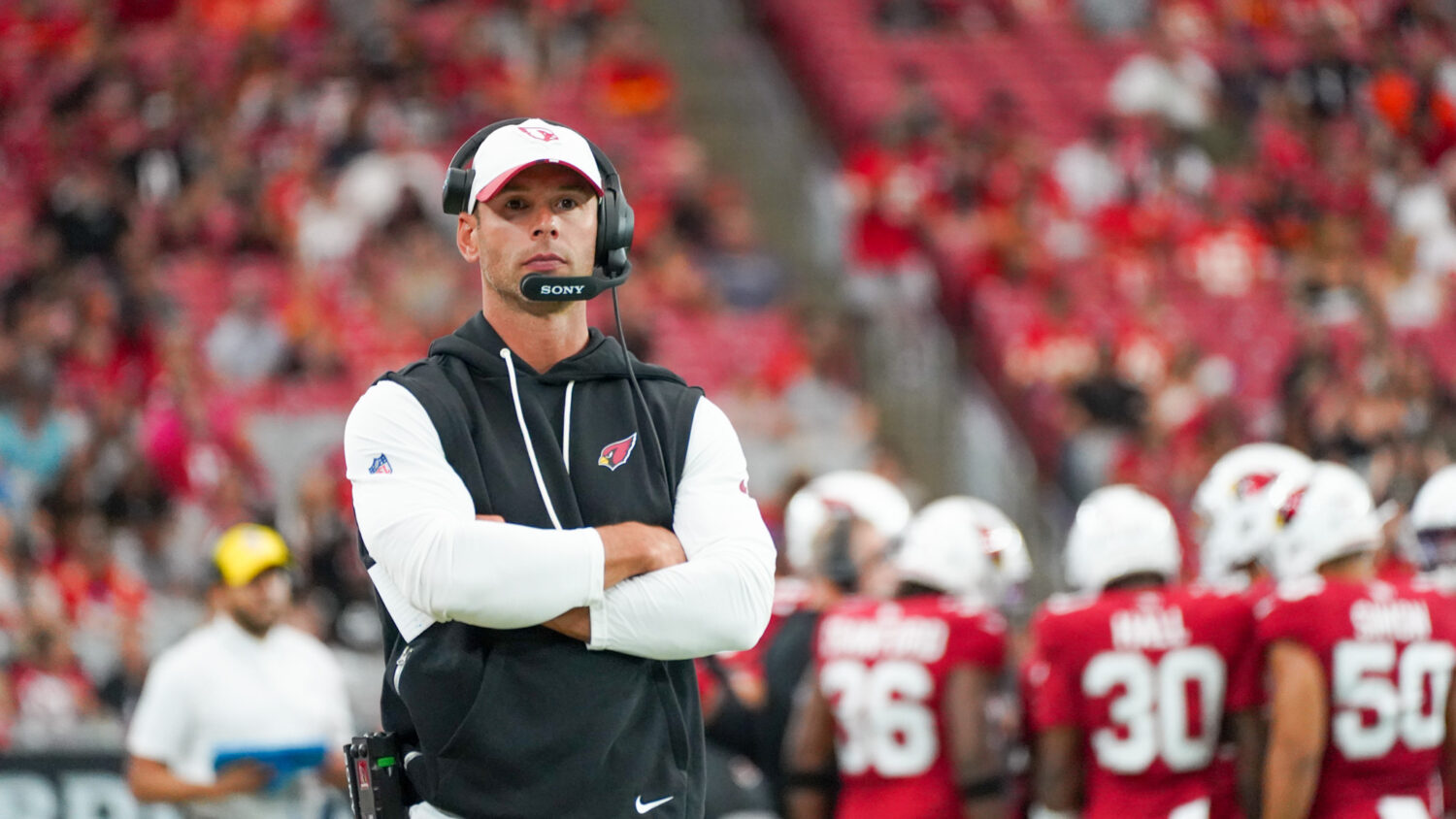
Head coach Jonathan Gannon then had a decision to make.
For years, the obvious choice was to kick the extra point to be down seven and prepare to score another touchdown and extra point to tie the game.
However, as sports have become more analytical, obvious choices are starting to be questioned.
In the end, Gannon elected to take the traditional route and kick the extra point.
“A little bit of game flow to that one,” Gannon told reporters of his decision Monday. “I liked putting another point on the board and putting it where it was at that point in the game.”
Chad Ryland’s extra point made it 20-13, and Arizona went on to tie it with another touchdown and extra point on its next drive before Seattle nailed a field goal in the final seconds to win 23-20.
This game won’t set a permanent precedent for Gannon and the Cardinals, though. The idea of going for two isn’t out of the question in his mind. There’s a decision be had around the context of the moment.
“We talk about it,” Gannon said. “I’ve went back and forth. There’s a lot of discussion around that. Not in our building, just around the world. It’s real. Some games we might.”
The idea of going for two when down eight is taking a high risk, which is outweighed by a high reward. Taking the kick maximizes the chance that the game goes to overtime. Attempting a two-point conversion maximizes the goal of winning.
By attempting the two-point conversion, success means another touchdown and extra point wins the game, while a failure means a touchdown has another two-point conversion chance to force overtime. The odds of losing decrease by decreasing the chance of overtime but it remains a safety net if the first two-point attempt fails.
