
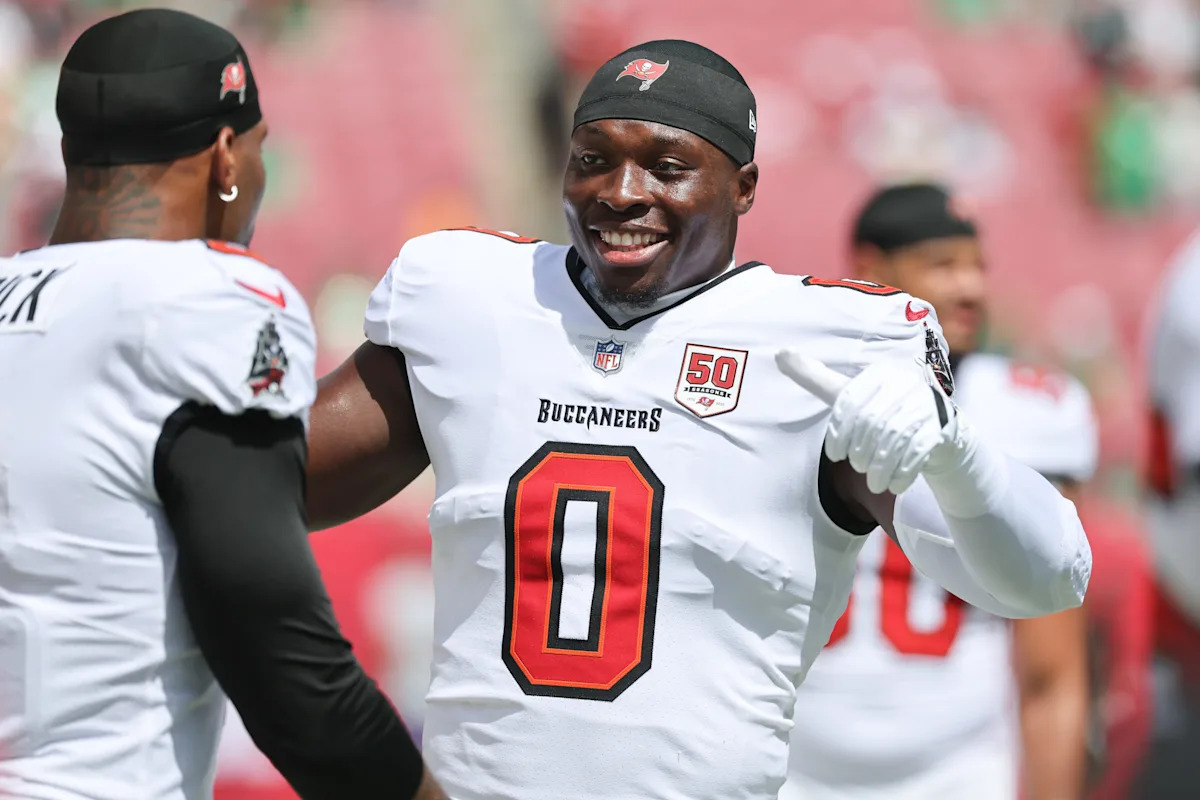
As Tampa Bay heads to Seattle on October 5, the Buccaneers’ defense must stay sharp and adjust to a Seahawks offense in transition. With longtime receivers Metcalf and Lockett gone, Seattle leans heavily on new targets and a rebuilt receiving corps, and the Bucs must attack the uncertainty.
Seattle’s top passing threat is now Jaxon Smith-Njigba, who led the Seahawks in catches, yards, and targets last season. Supporting him are additions like Marquez Valdes-Scantling and Cooper Kupp, who bring veteran presence and vertical ability. On the ground, Kenneth Walker III remains a focal point, and Seattle’s offense will try to mix run with pass to keep defenses off balance.
Advertisement
That means Tampa Bay’s front must dominate early, controlling gaps and pushing the line of scrimmage.
Up front, the Buccaneers will count on Vita Vea, Logan Hall, and depth rotational pieces to clog interior lanes. On the edges, Haason Reddick, Yaya Diaby, and Chris Braswell must win their one-on-ones and collapse pockets without over-blitzing. At linebacker, Lavonte David and SirVocea Dennis will need to manage the intermediate zones, flow to the perimeter, and keep an eye on tight ends leaking out.
They’ll also have to spy or contain any scrambling from Seattle’s quarterback situation.
In the secondary, Antoine Winfield Jr. remains the centerpiece, but the Bucs could be without Jamel Dean and Benjamin Morrison, who are both questionable. This puts extra pressure on cornerbacks like Zyon McCollum to tighten coverage, avoid giveaways, and turn contested catches into turnovers.
Advertisement
If Tampa Bay can disrupt Seattle’s adjusted aerial attack, prevent big plays, and force errant throws from a retooled offense, their defense can control momentum and give their offense a chance in hostile territory.
This article originally appeared on Bucs Wire: Keys for the Bucs’ defense against the Seahawks offense