
SEC official Ken Williamson, the head referee in the Oct. 11 Georgia-Auburn game that featured multiple controversial calls, has been removed from further assignments and is not expected to return to the conference’s officiating lineup, multiple sources briefed on the decision said.
The SEC declined to comment. Williamson did not respond to a message sent by The Athletic on Thursday.
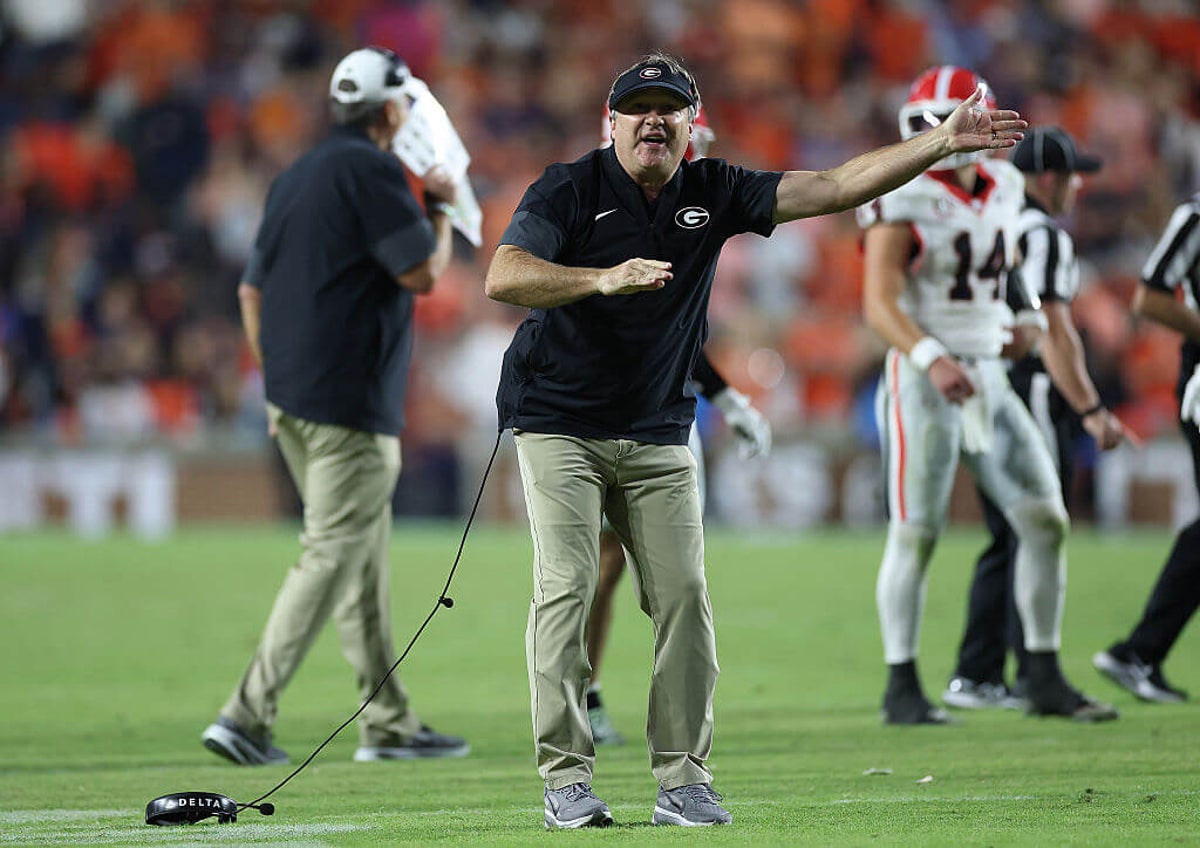
Williamson, who has worked SEC games for nearly two decades, reversed a charged Georgia timeout in the fourth quarter after coach Kirby Smart came up to him and insisted he did not call a timeout. Replays showed Smart appearing to give the timeout signal from the sideline just as the play clock was about to run out on the Dawgs’ offense, but Smart said afterward he was merely trying to alert Williamson that Auburn’s defense was making clapping sounds.
The game had a higher-than-usual number of questionable calls. The SEC’s usual after-action review found nine plays that could have been ruled differently, per sources familiar with the process; five ruled in Georgia’s favor, four for Auburn.
Georgia won 20-10, with the game turning on a controversial goal-line play. Auburn quarterback Jackson Arnold reached the ball for the goal-line on a “tush push” play. Arnold fumbled and Georgia recovered, but Auburn argued that he had already crossed the plane of the goal line before fumbling, which would have been a touchdown and a 16-0 lead. But the referees disagreed.
Georgia then drove down for a field goal as the half ended, then scored 17 more in the second half.
Auburn’s crowd booed the officials loudly, especially after the goal-line call. Auburn athletic director John Cohen had words for Williamson on the field at halftime.
The SEC apparently didn’t deem the goal-line play as one of the nine blown calls. Replays didn’t find enough evidence to overturn the fumble, and the SEC review backed that up, sources familiar with the process said.
Another twist to that play: Georgia could have been awarded a touchdown had officials not whistled the play over, because Kyron Jones somehow wound up with the ball and ran it back the length of the field. It was unclear if he would have been ruled down after recovering the fumble.
THE REFS RULED THIS A FUMBLE 😱
GEORGIA PUNCHES IT OUT AT THE GOAL LINE‼️ pic.twitter.com/XdIgYywx5s
— ESPN (@espn) October 12, 2025
Williamson did not officiate a game last weekend, but the rest of his crew did: Six members worked the Texas A&M-Arkansas game and another worked Mississippi State-Florida.
Yellowhammer News first reported Williamson’s removal from SEC assignments on Wednesday, saying he’d been “permanently suspended.” The Athletic could not confirm that the conference had taken permanent action. Game officials are not full-time employees and can be removed from a league’s rotation at any time.
Several other controversies
The SEC has had rough moments with officiating over the past two seasons, with Georgia and Auburn on the wrong ends of it. In last year’s Georgia win at Texas, a pass interference call against Texas was reversed after Longhorn fans threw debris on the field. Georgia won, anyway.
This year, Auburn lost at Oklahoma by a touchdown in a game where Oklahoma scored on a play when officials should have ruled it an illegal substitution. The SEC acknowledged the error in a statement, with Cohen venting his displeasure in a statement a few days later.
In the aftermath of the Georgia loss, Auburn coach Hugh Freeze said: “It sure feels like we’re not getting any breaks.”
Williamson, who’s based in Tampa and runs a financial coaching business, has been a football official for 41 years, including the past 21 at the FBS level and 17 with the SEC, according to a bio listed by the Gulf Atlantic Collegiate Officials Football Camp. Williamson graded well enough to receive several high-profile game assignments: The 2019 College Football Semifinal between Ohio State and Clemson, the 2021 SEC championship, and he was an alternate on last year’s CFP semifinal in the Fiesta Bowl.
— The Athletic’s Chris Vannini contributed reporting.