
Editor’s note: This story is part of Peak, The Athletic’s desk covering leadership, personal development and performance through the lens of sports. Follow Peak here.
Sebastian Vollmer had the opposite problem of other offensive linemen he knew. It was harder for him to gain weight than it was to lose it.
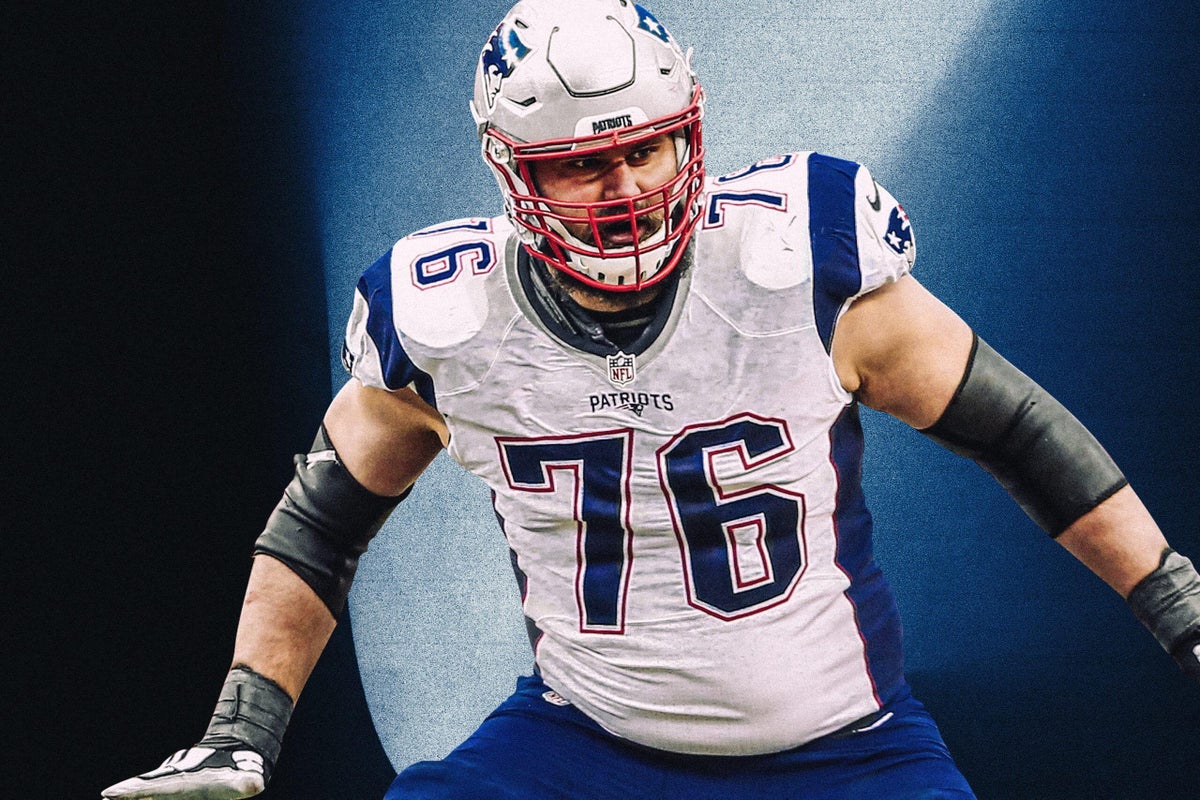
As an offensive tackle for the New England Patriots, Vollmer had to consume outrageous amounts of breakfast sandwiches, shakes, olive oil and anything else he could stomach. Every offseason, he received a letter from the Patriots informing him of his target weight. During his seven-year playing career, Vollmer became obsessed with reaching that target, anywhere between 320 and 340 pounds, believing it gave him the best chance to succeed.
However, as his career ended, he started to feel the effects of weighing 320 pounds and was getting hip and shoulder surgeries. At home, he struggled to make it up and down the stairs. His knees throbbed.
Then his wife, Lindsey, told him she was pregnant with their first child. One of Vollmer’s first thoughts was that he didn’t want to feel like this with a baby on the way.
Every year, dozens of linemen leave the NFL and enter the workforce, where it is no longer necessary to weigh 300-plus pounds. Some cut calories with drastic diets. Others transition to new forms of exercise tailored to leaning out rather than bulking up. One former lineman, Russell Okung, famously lost 100 pounds in 40 days through a water-only fast. All of them, though, are forced to redefine their identity in some way and merge what they learned about discipline and grit in the NFL with a new purpose.
For Vollmer, football had instilled the value of developing and maintaining habits to reach personal and team goals. In retirement, he settled on a new target: He wanted to lose weight — a lot of weight. Over the course of nine months, Vollmer lost 85 pounds.
He was still in “player mode,” which meant tying himself to a goal and finding ways to keep momentum. The same mindset and habits that helped him stay in the NFL also helped him on his new journey — and could help anyone achieve a goal, he believes.
“Working on something and having a goal, it’s about just trying to keep that momentum,” he said. “Having the goals, but then doing it right away.”
Based on his time in the NFL, he knew that having structure worked. If he could create his own plan to follow to lose weight, he knew he wouldn’t fall behind or feel lost.
He started by writing his new goal weight on a sticky note and hanging it on his mirror. The visual kept him on track, he said, as it forced him to keep it top of mind. Then he broke down the goal weight into smaller steps.
His starting weight at the time of his plan was 320 pounds. He set a goal to lose 10 pounds in five weeks, or two pounds per week. Instead of focusing on the larger task, the smaller one made it feel less daunting.
Next, he needed to plan out how he would conquer the smaller steps. He thought back to conversations he’d had with the Patriots’ head sports dietician, Ted Harper, in which he asked if there was anything else he could do to get ahead. It led to him getting a blood test to determine if he was deficient in anything. The results revealed he was slightly allergic to milk, causing inflammation. By largely cutting out dairy, he noticed a difference in how he felt.
Vollmer thought about that same idea — taking the extra time to learn — and wanted to apply it to his new goal. He researched the purpose of food groups and used that research to help craft his meal plan.
One of the biggest challenges Vollmer faced was changing the way he viewed food after years of what he called “mental torture,” or forcing himself to constantly eat more than he wanted to as an NFL player.
Now that he was in charge of his own days, he also realized he wasn’t showing up for his teammates and coaches anymore, just himself. That lack of accountability made it easier to want to skip some mornings.
In an effort to be proactive, he kept up with the sticky notes on his mirror, but he also started laying his clothes out each night before going to sleep. He found that if he set up everything he possibly could the night before waking up early to work out, it gave him less time to really think about what he was doing. He just did it.
“There’s literally no excuses, so it becomes easier,” he said. “I find if I don’t do that, if I let it slide, then my kids wake up, then I get an email, or a phone call, and then it’s just this or that. All the well-intentioned plans, I notice I don’t follow through most of the time, then. Or it becomes a quick workout, and not as intense.”
By focusing on hitting an attainable weekly goal, he eventually made the ultimate transformation, shedding 85 pounds in nine months. The process changed his life, he said, and gave him a sense of control. He was more energetic and felt happier and more organized.
Vollmer now works as a TV analyst for the German broadcaster RTL and as an ambassador for the Patriots and the NFL. He no longer attaches sticky notes to his mirror, but he does write goals down in the Notes app on his phone, ensuring he always has a visual of his purpose in front of him.
“It helps me stay on track,” he said. “I feel like I then have to cross things off that list, almost like I don’t have a choice of it slipping my mind.”
The same steps he used in football still work for him today, he’s found — no matter the goal.