
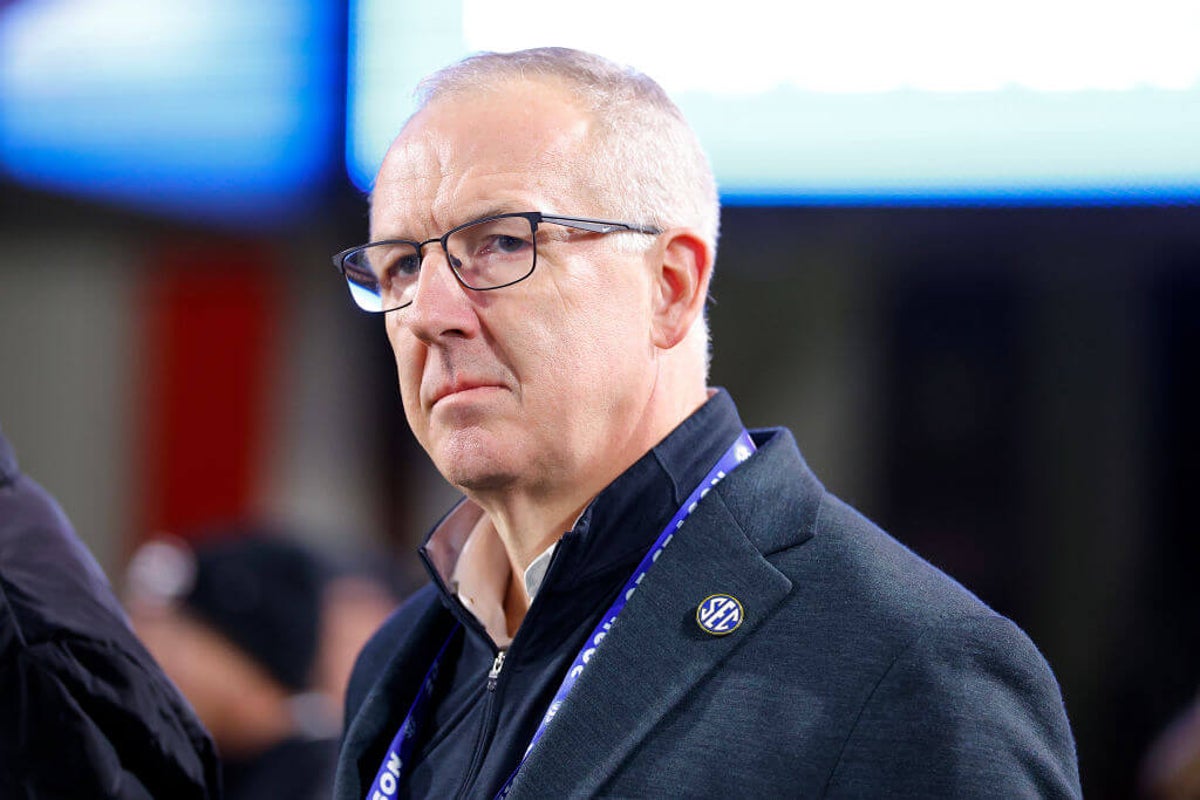
Less than a week after the NCAA decided to allow athletes to bet on pro sports, SEC commissioner Greg Sankey has asked for a reversal.
In a letter to NCAA President Charlie Baker, obtained by The Athletic on Tuesday, Sankey urged the NCAA Division I Board of Directors to rescind the rule change that would legalize pro sports betting by current college athletes. After Division II and III councils approved the change last week, the ban is set to be lifted Saturday.
“This policy change represents a major step in the wrong direction,” Sankey said.
Sankey cited last week’s FBI arrests of multiple NBA figures in a gambling scandal. Portland Trail Blazers coach Chauncey Billups, Miami Heat guard Terry Rozier and former NBA player Damon Jones were indicted last Thursday.
Sankey said he had met with SEC presidents and chancellors, who had discussed on Oct. 13 the potential change in the pro sports betting rule. The SEC has two representatives — South Carolina athletic director Jeremiah Donati and SEC assistant commissioner/compliance Matt Boyer — on the DI committee that adopted the rule change.
“The integrity of competition is directly threatened when anyone with insider access becomes involved in gambling. Even when the wagers are placed on professional sports, the simple act of participating in gambling normalizes behavior, blurs boundaries and erodes judgment,” Sankey wrote, adding that the SEC was “equally concerned” about the impact of gambling on athletes, including financial pressure and social influence. The NBA gambling scandal came despite oversight, education and support systems, Sankey added, while college athletes have “far fewer resources and far greater outside influence.”
The NCAA said in a statement on Oct. 8, when an administrative committee sent the lifting of the ban for a formal vote, that it remained concerned about the risks of sports gambling.
“This change allows the NCAA, the conferences and the member schools to focus on protecting the integrity of college games while, at the same time, encouraging healthy habits for student-athletes who choose to engage in betting activities on professional sports,” Josh Whitman, Illinois athletic director and chair of the committee, said in a statement.
College athletes are still prohibited from betting on college sports. The Athletic reported in April that multiple schools were being investigated by the federal government after alarms were raised over unnatural betting action in college basketball. In September, the NCAA said it was investigating college basketball players from multiple schools, including Arizona State and Temple, for alleged violations of gambling rules and failing to cooperate with investigators.
Sankey said there was “a broader message at stake,” and this was the wrong time to allow athletes to bet on pro sports, even as the ban on betting on college sports remains.
“The NCAA’s policy has long stood as an expression of our collective integrity, and its removal sends the wrong signal at a time when the gambling industry is expanding its reach and influence,” Sankey wrote.
There was no immediate response from the NCAA.
There have been some forceful responses to the NCAA’s removal of the ban, notably from Pittsburgh football coach Pat Narduzzi, who on Monday called it “absolutely one of the stupidest decisions I’ve ever seen.”