
Editor’s note: This story is part of Peak, The Athletic’s desk covering leadership, personal development and performance through the lens of sports. Follow Peak here.
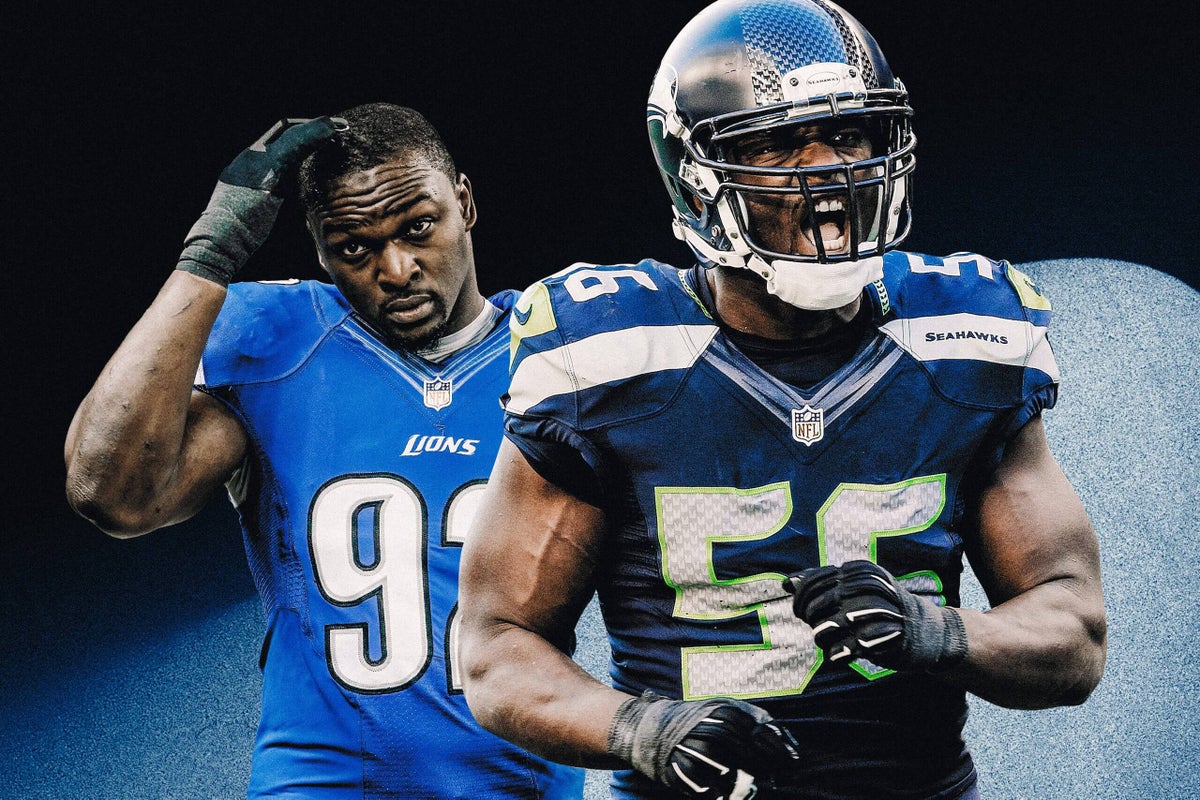
Cliff Avril played 10 seasons in the NFL. As a rookie in 2008, he was on the 0-16 Detroit Lions. He then won a Super Bowl with the 2013 Seattle Seahawks.
When the Droits Lions drafted me in 2008, my uncle told me, “Go be the reason why things turn around for the Lions. Go be the reason why.” I knew the Lions hadn’t been good in a while, but I was excited.
As a rookie, I was just trying to learn. I’m the kind of guy who sits in the locker room and pays attention to the veterans.
One time, we were watching film in the defensive meeting room. A coach asked what we were doing on a particular play and said we should have made a different defensive call. One of the defensive backs shot back: “That’s what I called! Look at my hand; I’m calling that play.” The coach told him he still lined up wrong.
They started to get heated to the point where they were cussing each other out. Finally, the defensive back yelled, “I’m tired of the disrespect. Meet me in the parking lot.” Like, let’s fight.
As a young player, I was like, Is this how it is in the NFL?
Looking back, the answer is … no! That’s not normal. That’s what losers do — and that’s what we ended up being that year: losers. We were the first team in NFL history to go 0-16, and that moment showed why we weren’t good that season.
I just kept telling myself: Don’t be the reason why we continue to keep losing. Try to be that one little sparkle of hope for the future.
In 2013, I was a free agent for the first time. Sports Illustrated’s Peter King had me ranked as the top free agent. I thought I was going to sign a major deal. But Day 1 went by, and I had no phone calls from my agent. Then I got an offer from the Browns. I sat on it and was like: Man, I’m going to go from Detroit to Cleveland? Oof.
Then my agent called me and said Seattle wanted to fly me out for a visit. Pete Carroll called me maybe an hour later: HEY HEY HEY MAN WHAT ARE YOU THINKING DO YOU WANT TO BE A SEAHAWK
He was hyping me up; it felt like I was being recruited for college again.
The first thing I noticed when I got to Seattle was the difference in culture. Detroit was very militant. We want players to wear their team-issued sweats. We want players to tuck in their shirts. When I got to Seattle, it was the complete opposite. Coach Carroll wanted guys to be different. He wanted guys to be themselves. He didn’t care about the small things like tucking your shirt in. We had music playing all the time; we were shooting hoops. It was very relaxed and very fun.
In Detroit, every day was kind of dreadful. Ah, man, I’ve got to go to work today. In Seattle, I couldn’t wait to go to work. Winning plays a role in that, obviously; we won in Seattle. But it was also just fun to be at work. We could joke around in the locker room or in meetings, but everyone knew what they needed to do when they got out on the field. In Detroit, everyone knew what they needed to do, but everyone was uptight about their jobs.
If you ask guys from my first season in Seattle, they’ll tell you I didn’t say much. I was trying to figure things out. You guys are playing music and joking around. What is this? This is not the NFL.
I’ll admit that it took me a while to buy into the culture and what coach Carroll was doing. The defense in 2013 was full of stars: Richard Sherman, Kam Chancellor, Earl Thomas, Bobby Wagner. I didn’t know where I fit into the puzzle. I wasn’t even starting. I remember Michael Bennett and I were sitting at our lockers around Week 5 and were talking to each other: Did we make the right decision to come here? It was all because we weren’t playing as much as we were used to.
But the biggest difference between Seattle and Detroit was when we lost a few games. In Detroit, you could feel the tension when you were on a two- or three-game losing streak. Coaches changed how they talked to players. They changed how they ran their meetings. It was like they were trying to find the recipe to get us out of the funk.
It’s natural for coaches to try to pivot when things get a little difficult. But they shouldn’t. If you believe what you’re feeding guys, you don’t pivot, you don’t move. This is what it is. Consistency is the name of the game. Whatever the message is, be consistent and stick to it.
There was a stretch in Seattle where we lost a couple of games in a row. I was sitting there like: I want to see how this all plays out. I was waiting for changes. Coach Carroll never wavered. We came in that Monday and still had music blasting. Guys were still shooting hoops and having a good time. Coach Carroll was still playing pranks on young players in front of the team.
Win, lose or draw, we were going to get the same person, which was very comforting as a player. It taught me that Coach Carroll believed in what he was coaching. You think it’s just a lot of fluff and talk. But Pete’s whole concept of “every day is championship football” became real to me around the middle of the season. It didn’t matter if we were playing in a 1 o’clock game or a prime-time game or in the Super Bowl. By the time we made the Super Bowl and won it that season, it just felt like another game. We kept everything the same.
To me, that’s culture. That’s what it’s all about.
— As told to Jayson Jenks