
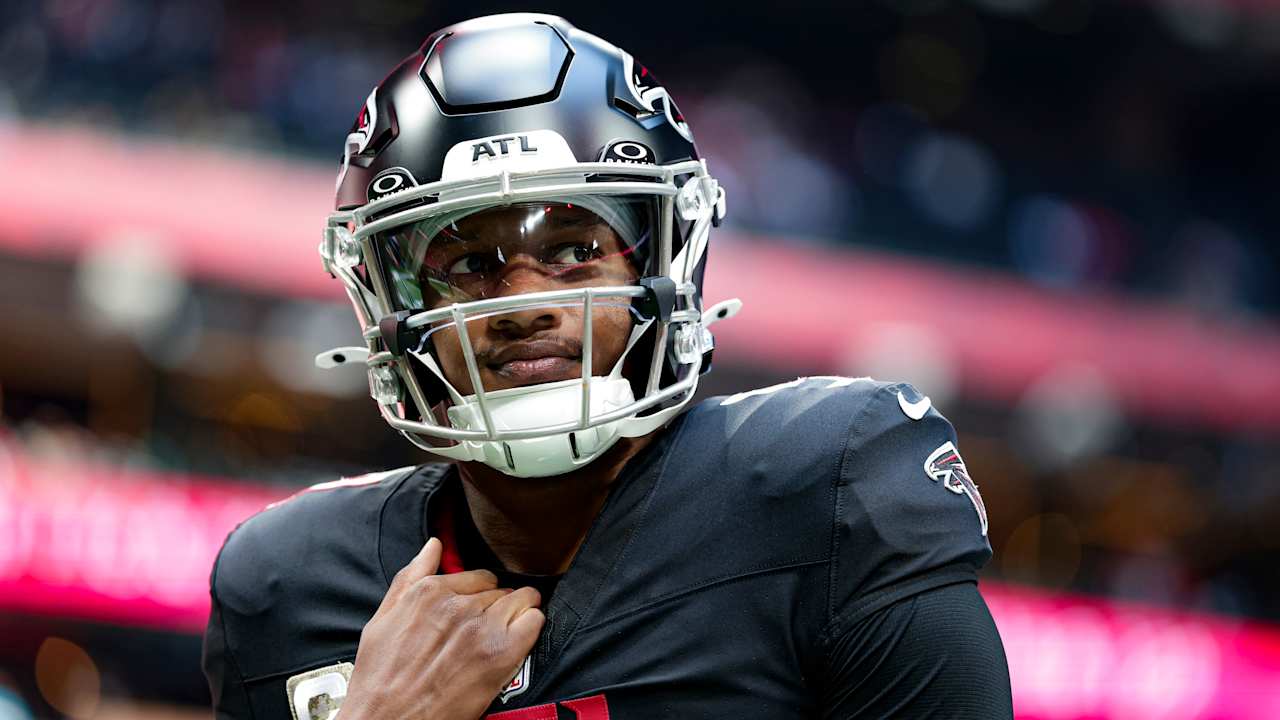
As for Morris, well, things were already looking bleak before we learned Penix would miss the rest of the season. In a year in which the Falcons largely went all-in on their hopes of reaching the playoffs, they’ve flopped under Morris. Their defense has improved in some stretches, but their offense has proved to be frustratingly inconsistent, with star running back Bijan Robinson disappearing from the game plan in some weeks. Morris might not yet be on the hot seat, but his offensive coordinator, Zac Robinson — a play-caller who has seemed determined to force Penix into his awkward fit of an offensive scheme — undoubtedly is.
With this in mind, the rest of 2025 becomes an audition for the coaching staff. Can they band together and direct their team to competitive showings despite not having their top quarterback available? Or is this the beginning of the end for this regime? Time will tell.
How does this change Atlanta’s offseason approach?
Morris said it himself Wednesday: The Falcons have received a harsh dose of reality that will force them to adjust accordingly in 2026.
“100 percent,” Morris said, via the team’s official site, when asked if Penix’s injury will change their approach to the new league year. “You definitely got to go out and make some different plans when you talk about the offseason. … Right now, we gotta prepare for the Saints.”
Penix’s timetable for return nudges him up against the start of the 2026 season, meaning the Falcons will need a viable backup plan in case Penix suffers a setback in his recovery. In order to do so, they’ll likely either need to accept Cousins is their next best option or commit to moving on from him at what could be an expensive cost.
Cousins’ bloated contract carries a $57 million cap hit into 2026 — a number well beyond the upper limit for a backup — and would account for $35 million in dead cap if the Falcons cut him before June 1. If Atlanta can find a willing trade partner for a quarterback who suddenly looks very much like the 38-year-old he’ll be in August, the Falcons can save $32.5 million in cap space via a pre-June 1 trade, a number that improves to $45 million after June 1.
Such a deal will likely require additional assets to sweeten it. The Falcons already surrendered their 2026 first-round pick in order to trade back into the first round of the 2025 draft and select Tennessee edge rusher James Pearce Jr., diminishing their available capital and dealing another significant blow to this nightmarish season, one that won’t even provide them with a valuable top pick in April.
No matter how you slice it, 2025 is quickly proving to be a disastrous year for Atlanta.