
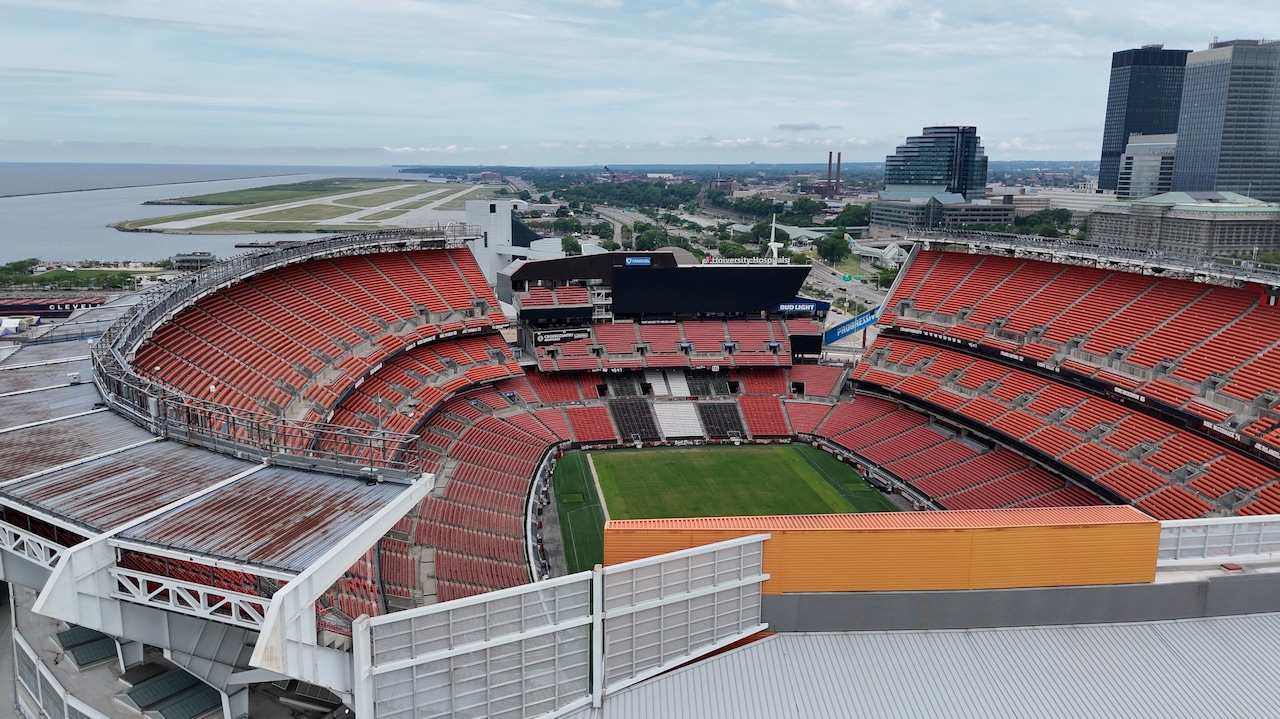
CLEVELAND, Ohio — After hours of tense back-and-forth Monday, Cleveland City Council approved last-minute changes to the $100 million settlement with the Browns that steers more money into neighborhoods and requires the team to pay more if they linger on the lakefront.
The amended agreement, hashed out after council leaders met with team owners Jimmy and Dee Haslam over the weekend, preserves the overall $100 million value but reshuffles how the cash will be spent and adds new obligations for the Browns once they leave the lakefront for Brook Park.
Mayor Justin Bibb first announced the settlement in October, sparking weeks of tense debate and line-by-line scrutiny from city council.
Council voted 13-2 to approve the deal that clears the way for the Browns to leave the downtown lakefront and build a new $2.4 billion stadium in Brook Park.
Mike Polensek and Brian Kazy were the lone “no” votes, while Stephanie Howse-Jones and Joe Jones were absent Monday night.
The settlement requires the Haslams to demolish the existing lakefront stadium at an estimated cost of $30 million — and they’re responsible if the price runs higher.
They’ll also make a $25 million upfront payment to Cleveland, followed by another $55 million spread over ten years once the Browns leave for Brook Park in 2029 (or 2031 if construction is delayed).
Originally, the cash was divided into two pots:
$25 million for lakefront development, paid in $5 million installments over five years, and $20 million for a Community Benefits Agreement, paid out over 10 years beginning in 2029.
Council shifted that balance Monday. Now:
the lakefront share drops to $20 million, still paid over five years, and neighborhoods receive $25 million over 10 years
The deal also lets the Browns extend their lease by up to two years for $250,000 annually if Brook Park isn’t ready. But extending the lease until 2031 would cost the Browns an extra $3 million that the city would spend on neighborhoods — $1 million for the first additional year of the lease, and $2 million for the second.
The Browns, when hiring contractors for stadium demolition, will also have to hit certain quotas for Cleveland-owned small businesses and minority-owned businesses.
And if, for some reason, the Brook Park stadium plan falls apart, which seems unlikely, the city will keep the initial $25 million payment in the settlement.
A reporter has reached out to the Cleveland Browns for comment on the amended settlement.
Former Cleveland Mayor Dennis Kucinich spoke to council for an hour at Monday afternoon’s committee meeting. In what sounded like a halftime pep talk to an underdog team, Kucinich asked council to table the settlement and continue fighting to keep the Browns.
“When I look at this council, collectively, I see Major League players here,” Kucinich said. “You have the ability to go toe-to-toe with the NFL.”
Mayor Justin Bibb’s Chief of Staff Bradford Davy gave a speech more akin to a team that’s ahead, with seconds left on the clock.
No other city Cleveland’s size has secured this kind of money from a team that’s leaving, Davy said. He encouraged council to approve the settlement, saying it “would be sealing a victory for our residents.”
Heading into Monday night’s meeting, council members made clear that they were voting on the $100 million settlement while holding their noses.
Councilman Kris Harsh said council can’t win the battle to keep the team downtown with Bibb ready to end it. Harsh said that leaves approving the settlement as the best option.
Law Director Mark Griffin countered, saying that when the state gave the Browns $600 million to move to Brook Park, it became harder for Cleveland to keep the team downtown.
Councilman Richard Starr — amid a tense exchange with Davy — said the deal leaves a lot on the table and doesn’t invest enough in Cleveland’s neighborhoods. He juxtaposed many of the problems faced by Clevelanders living in poverty, saying they should take precedence over the lakefront.
Davy countered and said Cleveland has a lot of work to do on many problems, but he expects residents will be happy that City Hall fought the Browns and secured money to help.
Councilman Charles Slife — comparing the situation to his 6-year-old son learning to play Blackjack — said luck is involved. He said Cleveland was dealt bad cards and is now in a lose-lose situation.
Slife said enforcing the Modell Law and accusing the Browns of breaking their lease are likely not enough to keep the team in Cleveland. And if the city somehow kept the team downtown, residents would continue to subsidize it.
“This is not a vote that I am making with a smile on my face,” Slife said, but he argued voting yes on the settlement was the best path forward to avoid inflicting more financial pain on the city and its residents.
During Monday’s meeting, Kazy said he’d vote no and keep fighting, vowing to investigate in 2026 how talks between Bibb and the Browns fell apart.
Polensek — who voted against the taxpayer-funded stadium deal in 1996, calling it a bad deal — told colleagues Monday night he believes the city is again repeating history.
“My gut tells me this is not a good deal for the city of Cleveland,” Polensek said.