
Even before Wednesday’s news that the Cleveland Browns were opening the 21-day practice window for Deshaun Watson, it was time to explore the awkward position the team is in. Not just the losing, but the uncertainty surrounding so many players likely coming to the end of their runs in Cleveland, Myles Garrett still ascending and chasing the NFL’s single-season sacks record in another losing season and the unquestioned arrival of the team’s first four 2025 drafted rookies.
Watson remains a big, expensive question mark — and one of the primary reasons the Browns are in the position they’re in, with their record and their future salary-cap issues. This is about the time last year that Garrett started publicly telling the truth about how bad things were. He later took a bunch of money to stay, and he’s playing the best he ever has.
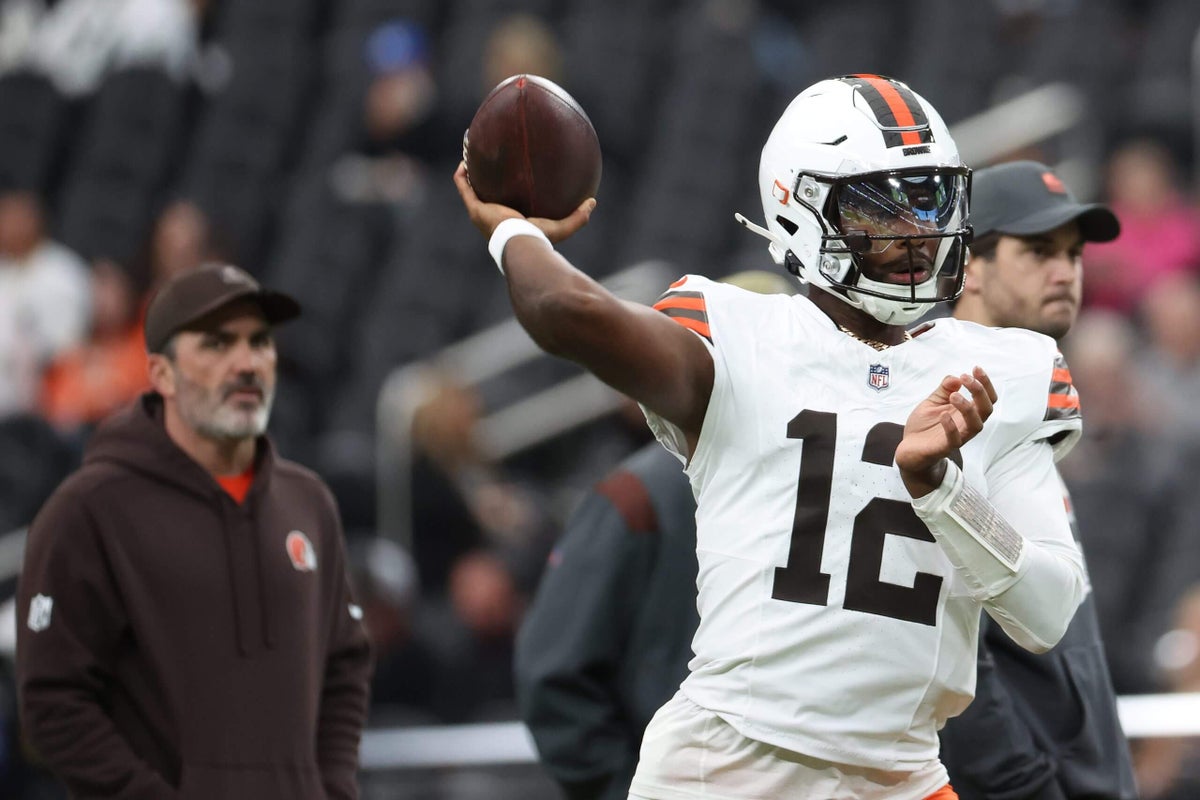
The rookies as a whole look good, and while 13 of them remain on the 53-man roster, the most interesting and still most mysterious one, quarterback Shedeur Sanders, is headed for his third NFL start Sunday.
On the other side is the Tennessee Titans’ Cam Ward, the player the Browns almost assuredly would have drafted if they had owned the No. 1 pick. Instead, they had the No. 2 selection and traded it for a package of picks that landed them Mason Graham, Quinshon Judkins and a 2026 first-rounder, a pick that might have to be packaged to land the quarterback of the future.
Dane Brugler, The Athletic’s NFL Draft guru, put out a mock draft Wednesday that has the Browns trading up with the Titans to get the No. 1 pick in April.
It’s long been draft-talk season in Nashville and Cleveland, but five games remain. They’re important ones for Sanders, the 42nd starter of the Browns’ post-1999 era, who would like to stop the carousel. He’d love to score his first home win this Sunday and ensure more opportunities over the rest of the season.
Sanders has made some good throws. He’s clearly made progress with his comfort level and grasp of the offense, considering Wednesday marked the start of just his third week of practice leading the huddle and working with the team’s regulars. But he’s far from a finished product or a sure thing in any realm.
Whether you’re optimistic about Sanders’ ability to clean up his bad habits or a believer that the Browns can find better prospects in April, you should probably still believe that Sanders should get more time this season to audition.
It’s OK to call it an audition, just like it’s OK to acknowledge that the Browns treated Sanders like a developmental prospect in the spring and summer because he was (and is). For most of the pre-draft process, Ward and Sanders were the top two quarterbacks in almost every public ranking. But Ward emerged as the clear No. 1 once teams began the formal interview process, and the Titans quickly made it clear that he was their choice.
What happens if Tennessee has the No. 1 pick again? What do the Titans think of Ward now that he’s been in their building for seven months? Is there even a world where the Titans like another quarterback atop the draft and make Ward available to other teams?
We’re just spitballing here, but there’s precedent. Arizona drafted quarterback Josh Rosen in the top 10 in 2018 and immediately picked quarterback Kyler Murray at No. 1 in 2019. The Titans will probably keep Ward and address their leaky defense, but it’s too early to know.
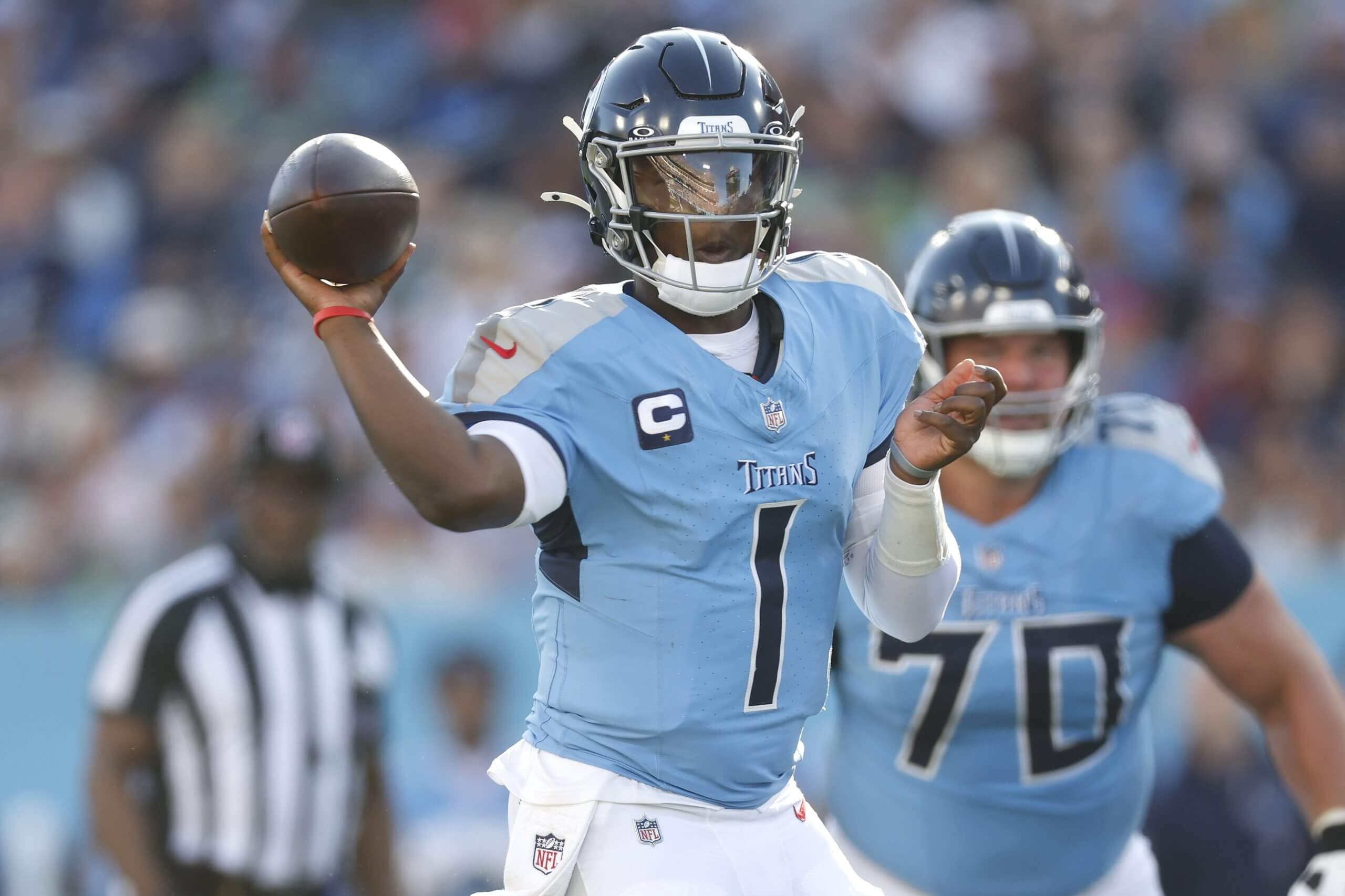
Cam Ward has thrown just seven touchdown passes and six interceptions in 12 games this season. (Wesley Hitt / Getty Images)
The Browns had back-to-back No. 1 picks in 2017 and 2018, when they landed Garrett and then Baker Mayfield. More recently, the Jacksonville Jaguars had consecutive No. 1 picks and took quarterback Trevor Lawrence in 2021 and edge rusher Travon Walker in 2022.
Ward and Sanders weren’t just linked during the pre-draft process. They worked out together, though both said in separate interviews Wednesday that they’re too focused right now to maintain a relationship via text messages. And though this Ward-Sanders meeting doesn’t come with the level of hype it might have earlier this year, there’s still intrigue and plenty of potential draft positioning at stake.
The 1-11 Titans fired coach Brian Callahan in October, and Ward has thrown just seven touchdown passes all season. His completion percentage over the last seven games has been better than it was over the first five, and that’s a sign he’s progressing. Life is hard for rookie quarterbacks, especially on bad teams.
Garrett is just 3.5 sacks short of tying the single-season record and has shown the ability to post that kind of number in one game. Sanders talked Wednesday about his relative inexperience being no excuse for some of the mistakes he’s made, and said he needs to trust his eyes and his studies and just let it fly. Let’s see if he carries that to the field Sunday.
If there’s a confidence booster out there, it might come against the hapless Titans. If there’s a way to make another losing December even sadder, it would be for Sanders to flop against Tennessee. It’s a big game Sunday, even if it doesn’t register as such among other matchups with playoff implications.
What Watson’s return to practice means for QB room
I don’t think Sanders is looking over his shoulder with Watson at practice. Nor should he be, even as there’s no guarantee for Sanders keeping the spot atop the depth chart.
Watson returning to practice is not any indication of where he is (or isn’t) with the franchise. It’s another reminder that the Browns still have Watson under contract and have around $135 million in salary-cap commitments after this season to a player who’s gone 9-10 as a starter and whose failures and injuries led Cleveland to a four-man quarterback competition in the summer.
Watson has been with the Browns all season. He was on the preseason trip to Carolina. He watched most training camp practices from the weight room. He was out of public sight, but he’s long been in the team’s quarterback meetings and has been part of the weekly prep before and after Sanders was promoted to starter.
Wednesday’s return to the practice field was notable but procedural. As long as Watson made the proper steps in the eyes of the Browns’ medical team, he was always going to return to practice at some point. There’s no deadline for players to be activated from the physically unable to perform list. There’s no mandate that they actually get activated, either.
Watson will go through three days of highly scripted, limited practice this week, then continue his regular rehab workouts through early next week. At that point, the Browns will have a better idea of how he’s feeling. They’ll also still have two weeks to make any decision. Even if Watson gets activated later this month, the Browns don’t have to play him.
If there’s any hesitation or setback on Watson’s end, he won’t be activated. The season will march to its sad end. If the Browns think Watson is back to full health and want to play him, they’ll still have a window to do that. The Browns don’t want him getting booed in their stadium in late December, but maybe they want to see him play and see if maybe there’s still something in there that needs a chance and some confidence.
The team should focus on playing and evaluating Sanders. But that’s my view, and how this process plays out is entirely up to the doctors and the people who created this situation in the first place. It’s hard to imagine that Watson playing a game or two this season would affect the decisions the Browns have to make in early 2026 regarding his future and the structure of Cleveland’s entire decision-making process.
If the Browns have to restructure Watson’s contract again (from a cap number of around $80 million to about $39 million) and keep him for 2026, they can then decide where he should fit into what will again be a changed quarterback depth chart.
If there’s still hope that he’ll play for the Browns again, it’s best that his return comes with a full offseason and at least somewhat of a blank slate. But even that would come with Watson only under contract for 2026, and the team would have at least $90 million in cap commitments to him divided among future years, so the awkwardness would only continue. What would be gained if Watson played in 2026 and performed mildly well?
We’re getting ahead of things, which happens when the Browns are 3-9 for the second consecutive season. They have injury insurance on Watson’s contract, but the cash they’re due back wouldn’t be greatly affected by him joining the active roster late in the season. The team should expect only small cap relief from that insurance, but those details still need to be finalized.
For now, the quarterback story of the week that matters is Sanders getting another home start and Ward playing against a nasty Cleveland defense.
Finding the positives in another losing season
Things aren’t all rainbows and snow angels for the Browns. Last week, they failed to reach 17 points for the seventh time this season. Sanders and Jerry Jeudy had a sideline spat that they say has been squashed. The team mysteriously demoted guard Wyatt Teller, and a subsequent injury to Teller will cause two backups to play on the right side of the offensive line this week, with Jack Conklin in concussion protocol.
It would be one thing if the Browns were limiting Teller to play second-year guard Zak Zinter, the only offensive lineman the team has drafted over the last two years. But with Teller out this week, the start goes to Teven Jenkins, who doesn’t have a contract for next season.
Jenkins has started 38 career games. Given his experience and position versatility, he always seemed a sensible addition for the Browns. But he’s going from the sixth offensive lineman to one of the starting five, and none of the top six are signed for next year. Zinter will be active Sunday for just his second game this season.
The Browns’ defense is, quite obviously, legit. Maliek Collins’ season-ending quad injury is a significant blow, which means more playing time for second-year defensive tackle Mike Hall Jr. Garrett’s pursuit of history will continue, and Carson Schwesinger can keep running down opposing backs and the NFL’s Defensive Rookie of the Year award.
This was always going to be an awkward transition year, even before the Browns traded away their only non-rookie quarterbacks and the rest of the AFC North turned into a trainwreck.
Has it been more awkward and more disappointing than it needed to be, given that Jeudy has gone from Pro Bowler to having 35 catches and 10 drops? If you look at the state of the offensive line and wide receiver groups, yes.
If you look at players like Schwesinger, Graham, Judkins and Harold Fannin Jr. and think there are brighter spots than there were on previous versions of bad Browns teams, you’re undoubtedly correct. But it’s impossible right now to look at Sunday’s fourth-down failures and special teams nightmares and think this is a team trending in any positive direction, so we look back to the defense, to Garrett’s ongoing dominance and to Sanders’ extended (for now) tryout.
With the Titans up this week and the Browns facing at least two (and maybe as many as four) teams playing for their own playoff lives and seeding over the final four weeks, we’re going to get a full evaluation. Not that what we already think is necessarily wrong, but NFL seasons are long — and longer if you only win seven or eight games over two years.