
We’re only two years into the 12-team College Football Playoff, and you can already see an annual tradition brewing: People screaming, “THEY’VE GOT TO FIX THIS!”
Last year, it was the No. 9 (Boise State) and No. 12 (Arizona State) teams getting first-round byes instead of No. 3 Texas and No. 4 Penn State due to a conference champion requirement. The commissioners stepped in a few months later and changed the format to keep that from happening again.
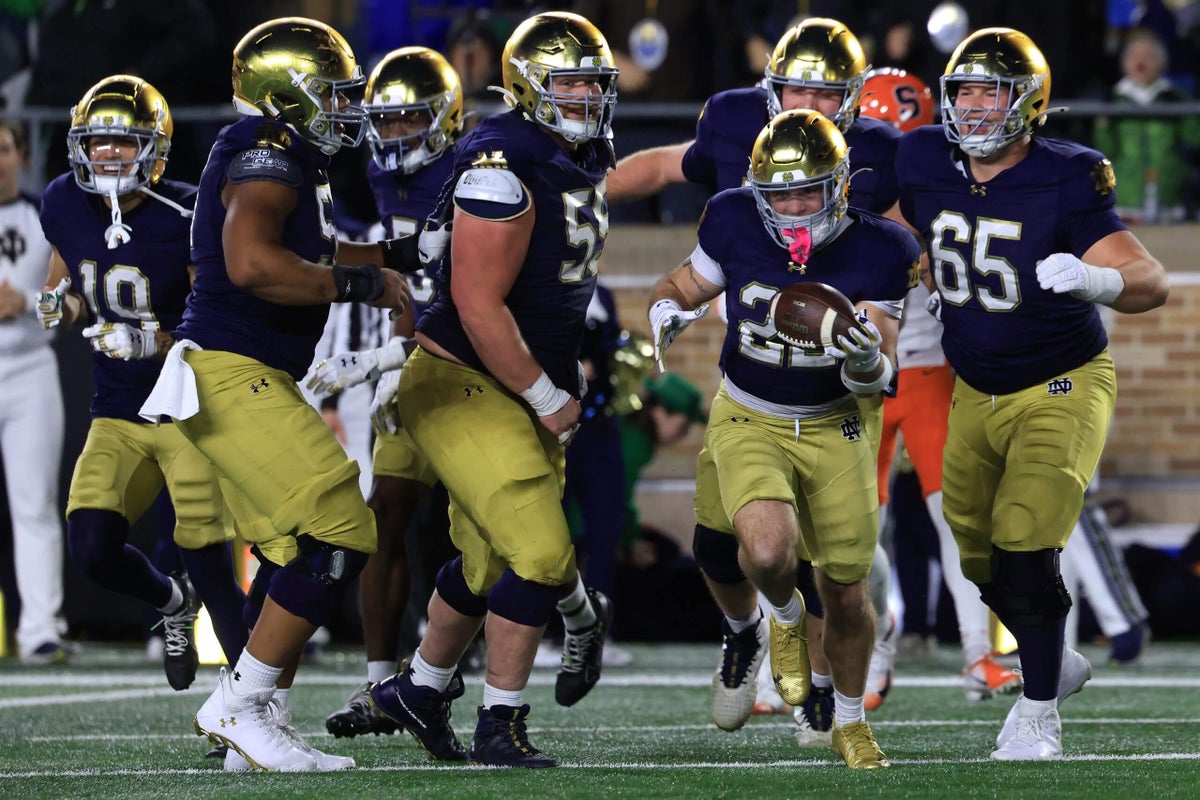
This year, it’s No. 20 Tulane and No. 24 James Madison getting automatic berths while No. 11 Notre Dame stays home, thanks to 8-5 Duke winning the ACC. There were immediate calls on ESPN and on X to introduce a minimum-ranking threshold to keep that from happening again.
They’re all focused on the wrong problem.
The chief takeaway from the 2025 College Football Playoff race is the need to end the selection committee’s weekly Tuesday night rankings show to make sure this never happens again.
This being Alabama losing the SEC title game by three touchdowns and remaining in the same No. 9 spot as last week, thus ensuring the 10-3 Tide an at-large berth, and Miami and Notre Dame finally swapping places without either playing another game.
None of those things would have happened if the committee hadn’t spent five weeks boxing itself into a corner so ESPN could fill a half hour of programming on Tuesday nights. Or more accurately, so that ESPN will pay the conferences more money than it otherwise would.
“Any rankings or show before this last one is an absolute joke and a waste of time,” jilted Notre Dame AD Pete Bevacqua told Yahoo Sports after the selections. “If the rankings shows are legitimate, there is no logical explanation for what happened to us.”
Worth noting: Bevacqua’s predecessor, Jack Swarbrick, along with the FBS conference commissioners, signed off on the ESPN contract that birthed those rankings shows.
Were there no weekly rankings, I do believe Alabama, which lost two of its last three Power 4 games (at home to Oklahoma and 28-7 to Georgia), would be out. No one could accuse the committee of “punishing” the Tide for losing a 13th game because no one would know where they were ranked in the first place.
Both 10-2 Miami and 10-2 Notre Dame would then be in, their seeding properly reflecting the Canes’ head-to-head win. No one would have ever known the order was flipped for five weeks before that, because there would have been no five-week pecking order.
The Tuesday night shows have always been a silly exercise full of inconsistencies and contradictory statements by the selection committee chair, but in the four-team CFP, they were fairly harmless. Everyone got predictably worked up, but also, everyone knew only the final edition mattered.
But now that spots 9 through 11 matter far more than they used to, we’re seeing just how drastically five weeks of fake rankings can taint the selection process. But the conferences can’t shake them, because the conferences like money.
Next season marks the beginning of the CFP’s new six-year contract with ESPN, which will pay the FBS conferences $7.8 billion. And yes, it still includes a stipulation that the committee release five sets of rankings before Selection Sunday. This year, the Nov. 4, 11 and 25 shows averaged between 714,000 and 961,000 viewers, with the Nov. 18 edition that aired between games of the Champions Classic in basketball spiking to 1.6 million.
Even the lower-rated ones are the same or better than ESPN gets for one of those weeknight Tulane-UTSA games. And studio shows are a lot cheaper to produce.
The only way they’ll ever go away is if the commissioners are willing to take a little less money in exchange for eliminating the CFP’s single biggest credibility killer.
“I think what happens over the course of the five or six weeks that we have this show, it really sets the expectations, allows us to share a little bit of a peek behind the curtain of how we’re ranking teams from week to week,” committee chairman Hunter Yurachek said Sunday.
Fine. They should give everyone a peek behind the curtain a month ahead of time, like the basketball committee does with its top-16 reveal, then go back behind the curtain and stay there until Dec. 7.
Instead, the commissioners will probably focus on finding a way to exclude the next James Madison, as if it’s the Sun Belt school’s fault that a five-loss team won the ACC. And they’ll spend at least another year locked in a Tony Petitti-vs.-Greg Sankey stalemate over the best format for a 16- or 24-team Playoff.
This is all too familiar to those of us who lived through 16 years of the BCS. Every year, without fail, some unforeseen controversy would arise, prompting them to tweak the formula used to select the teams, only to do it again after the next inevitable unforeseen controversy. It was needlessly confusing, and it damaged the system’s credibility to the point where we had Congressional hearings and threats of antitrust investigations.
If they’re not careful, this generation of commissioners will take the CFP down the same path.
Why not try this instead: Keep the format the same for a while. Don’t force the public to reeducate itself every year as to how the Playoff works. And don’t make it so exhausting that it’s too intimidating for a new or casual fan to understand.
Focus on the one change that would benefit the product more than anything: A selection process that doesn’t undermine itself before the committee even selects the teams.