
With all of the struggles the Minnesota Vikings have had surrounding the quarterback position this year, they have to diversify their options at the position for 2026. There have been cases made for five veteran options. Let’s add a sixth.
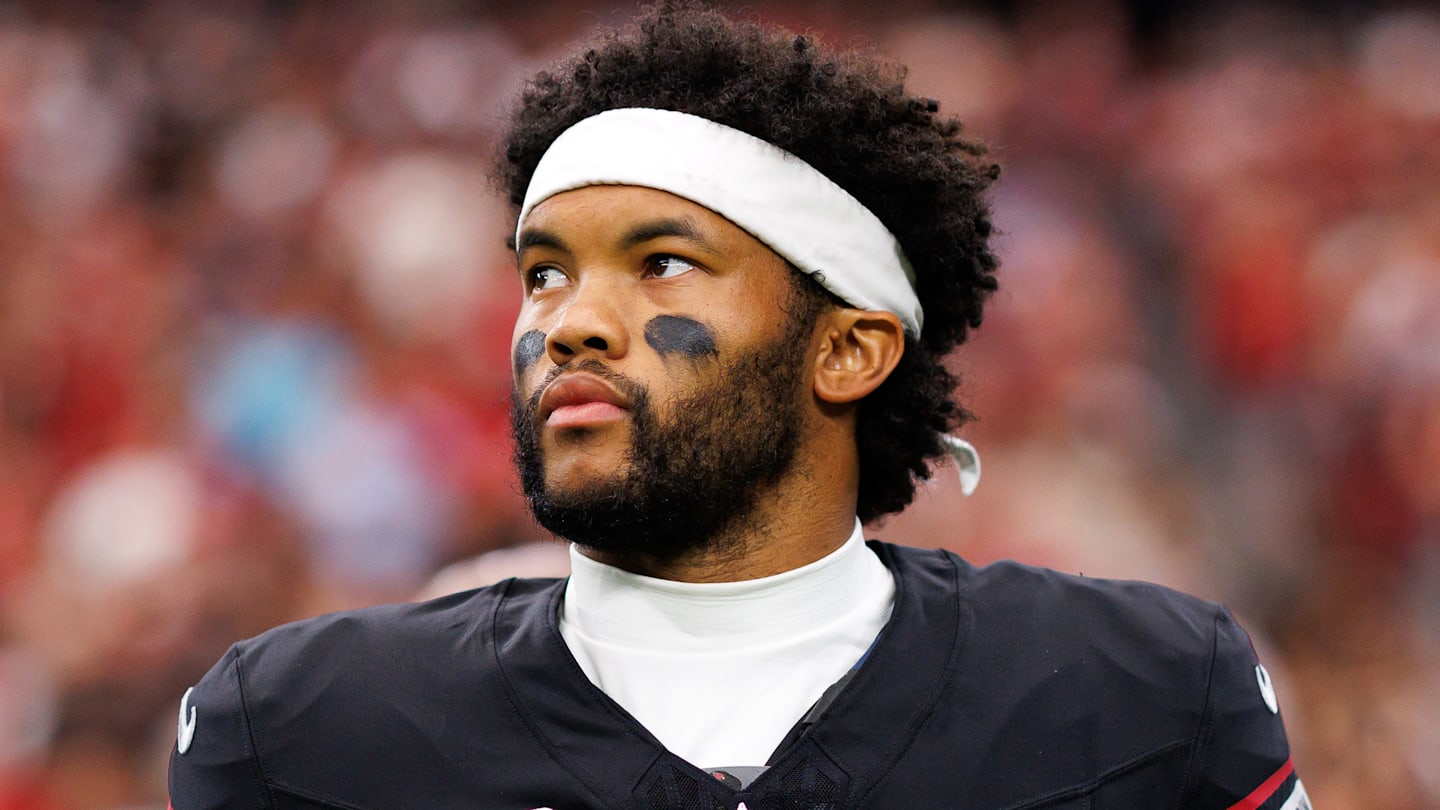
Kyler Murray and the Arizona Cardinals are seemingly headed to a divorce at the end of this season. A shadow benching has occurred as the Cardinals’ passing attack operates more efficiently with journeyman backup Jacoby Brissett at the helm.
How that divorce transpires is up for some debate, though. As a former first-round pick still under contract through 2028, who is still owed a guaranteed $36.8 million next year, the general consensus is that the Cardinals will trade their one-time franchise quarterback.
How Arizona Cardinals QB Kyler Murray could end up with the Minnesota Vikings in 2026Cardinals Trade Window
The trade option is one Arizona will surely pursue. The problem is the market. That’s not to say he won’t have suitors next season. But the cost to acquire Murray via trade is not one any team is likely to agree to. Not in terms of draft assets, they will be asked to turn over. But frankly, the balk will come from the assumed contract.
If Things Go Well
It’s easy to find the appeal in picking up Murray and his contract, if things go well. His 2026 compensation is $42,542,500 followed by $36,335,000 in 2027 and $46,357,360 in 2028. The three-year total for any team considering a trade would be $125,234,560.
At an average of $41,744,853, the rest of his contract would be just the 16th-highest contract in the NFL by APY. That’s a reasonable contract by today’s standards.
If Things Don’t Go Well
In addition to Murray’s salary next year, he has a trigger early in the offseason (March 22nd) that guarantees another $19.5 million in 2027. That means, in addition to giving up trade assets to bring Murray into the fold, there is a $62,042,200 financial commitment at a minimum.
Imagine being a team that has struggled in recent years. You give up draft picks for a quarterback who does not help turn around your fortunes, only to find out that you have dead cash still owed to that quarterback in the following year.
There is a difference between dead cap and dead cash. Owners absolutely hate paying money to players who are no longer on the team. And the decision makers who put them in that position usually aren’t around for long.
Kyler Murray’s Trade Value
Now that the financial considerations are understood, what would Murray cost in trade assets? I maintain a contract projection database that currently sets Murray’s per-year value at $27 million.
Looking at just the years that would include guaranteed money, he has $54 million in on-field value. But when considering the cash owed over those two years ($78,877,500), his overall value comes down to $24,877,500 in trade compensation.
That would equate to a late third-round pick. Most potential suitors don’t own late-round picks, so a fourth or fourth+ would be the likely compensation.
Where Do The Vikings Come In?
Does this mean the Vikings could, would, or should give up a day three pick and pay Murray the remainder of his contract to fix their own quarterback woes? Could? Sure.
They don’t have a fourth-round pick in the upcoming 2026 NFL Draft. But they could still create a facsimile of the value using other later picks, future draft picks, or shipping their third-rounder in exchange for multiple later picks.
Minnesota could also create the cap space and afford the cash commitments. But don’t expect them to be in on a potential trade.
No, the Vikings’ best shot at having Murray in purple in 2026 comes from the likelihood that Arizona will find no trade partners. In the event that happens, Minnesota becomes one of the most desirable locations for Murray to choose to play in order to rebuild his value.
Much like Russell Wilson in 2024, if the Cardinals cut Murray as many expect them to, he won’t need a big contract from his next team. Any money that he agrees to with his next home will offset the money owed from Arizona. So he will sign for league minimum.
With financial considerations being even for all potential suitors, Murray will prioritize opportunities to start and overall support to help set up a future long-term deal.
These considerations will mirror Wilson’s thought process when he inked a one-year deal with the Pittsburgh Steelers in 2024, and similar to Sam Darnold’s decision to sign with Minnesota that same year, as well as Baker Mayfield’s original pact with the Tampa Bay Buccaneers in 2023.
With ecosystem driving his decision, there are few potential landing spots that will stack up as well as Minnesota’s. It starts with Kevin O’Connell’s ability to get the most out of quarterbacks. Darnold has entered the chat as a top 10-15 or better quarterback in part because of his fantastic 2024 campaign with O’Connell.
Beyond O’Connell, there is the offensive weaponry of Justin Jefferson, Jordan Addison, and T.J. Hockenson, and an offensive line with promise of being better next year due to improved health, and a defense that can still hang with the best of them, and the case for the Vikings being an ideal stop for Murray to rebuild value really takes shape.
Compare that to other QB-needy ecosystems. The Las Vegas Raiders have perhaps the worst roster in the NFL. The Cleveland Browns have an aging offensive line.
The Vikings make the most sense for Murray in 2026. If O’Connell is interested in a higher upside play than what they have trotted out this year, he will come cheap and give the team more assets to build around him.