
CINCINNATI – The Bengals played in one of the most entertaining, dazzling games of the 2025 NFL season. Two elite quarterbacks, not just going toe to toe, but as the best versions of themselves, exchanging haymakers in a high-stakes environment.
Throw in snow, Joe Burrow’s dramatic path back from injury, one-handed catches and desperate hopes of two seasons feeling dramatically different with one result, and the snow show in Buffalo was peak NFL theater.
Losing it, in such a familiar fashion for the Bengals, left a considerable impact as the team started to see the shift into offseason mode unfold while sifting through a newsy fallout from the 39-34 defeat.
Here’s an inside view of the topics having the biggest impact on the Bengals coming out of Sunday’s loss in Buffalo.
1. Jermaine Burton saga over
The Bengals waiving 2024 third-round pick Burton could have included one final airing of the transgressions that filled the background of team operations this season. The Bengals didn’t want to go that route.
Instead, a one-sentence release announcing the end of his tenure and a “we wish him well” sentiment from head coach Zac Taylor were all that was offered. That’s about all that was deserved.
Burton was given opportunity upon opportunity to repair trust lost during his disastrous rookie season. Teammates were supportive in helping him. The organization extended help where he wanted it.
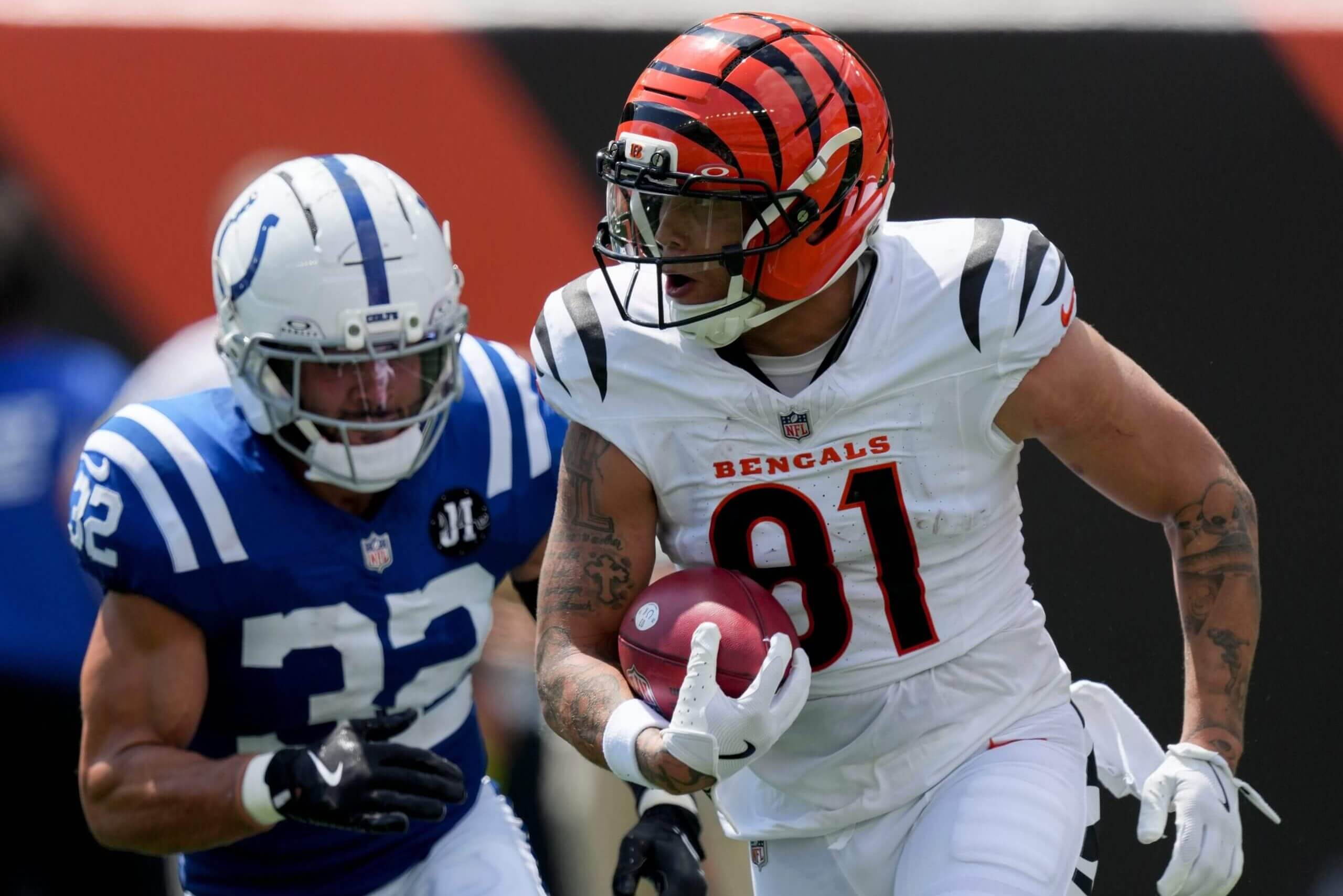
Jermaine Burton played in 14 games as a rookie last season but didn’t play in any this year. (Grace Hollars / Imagn Images)
He never took advantage. You could hear the locker room turning as the season went on, as well. The supportive sentiments disappeared and were replaced by the idea that it would be disrespectful to give him a shot over other players who were doing all the right things.
Whenever the Bengals opened the door for Burton to have an opportunity, he would blow it by not showing up on time or failing to execute the most basic aspects of the job.
They blew that pick. They took a risk that a room run by respected receivers coach Troy Walters and led by stars on and off the field, Ja’Marr Chase and Tee Higgins, could be the key to making the light turn on. They weren’t. Not even close. The risk blew up in their face. The Bengals probably should have moved on after last season, but they wanted to give him a chance to mature and fix his mistakes. That will have to come somewhere else.
2. The end of Trey Hendrickson
Hendrickson opting for surgery at this point in the season only fuels speculation about what really went on behind the scenes in Cincinnati. Inevitably, only Hendrickson knows how possible it was for him to play through pain to give even a little something to a defense badly in need of a pass rush and closer.
Cincinnati never put Hendrickson on injured reserve after he reaggravated the hip/pelvis/core muscle injury against the Jets. They left the door open for a return. That return never came. Neither did enough wins to make the season relevant.
So, rather than have the surgery immediately or try to play through it, the solution ended up being resting for six weeks until the team was essentially eliminated, then having a surgery that would have him healed in six weeks, well before free agency.
Only Hendrickson knows how compromised he would have been if he returned and attempted to play versus just calling it quits on the season. The idea of playing through significant pain is a gray area that nobody can specifically speak to except for him. The way his contract negotiations went down this past summer and the lack of loyalty the Bengals showed to him by not agreeing to a long-term deal certainly wouldn’t push anyone to put the last big paycheck of their career at risk.
Hendrickson needed to get healthy rather than put a lesser version of his game on tape. This game is dangerous and players need to look out for their own physical well-being. The optics on how it all went down, however, won’t quiet the speculation that he didn’t do all he could to earn his $29 million and help the 2025 Bengals.
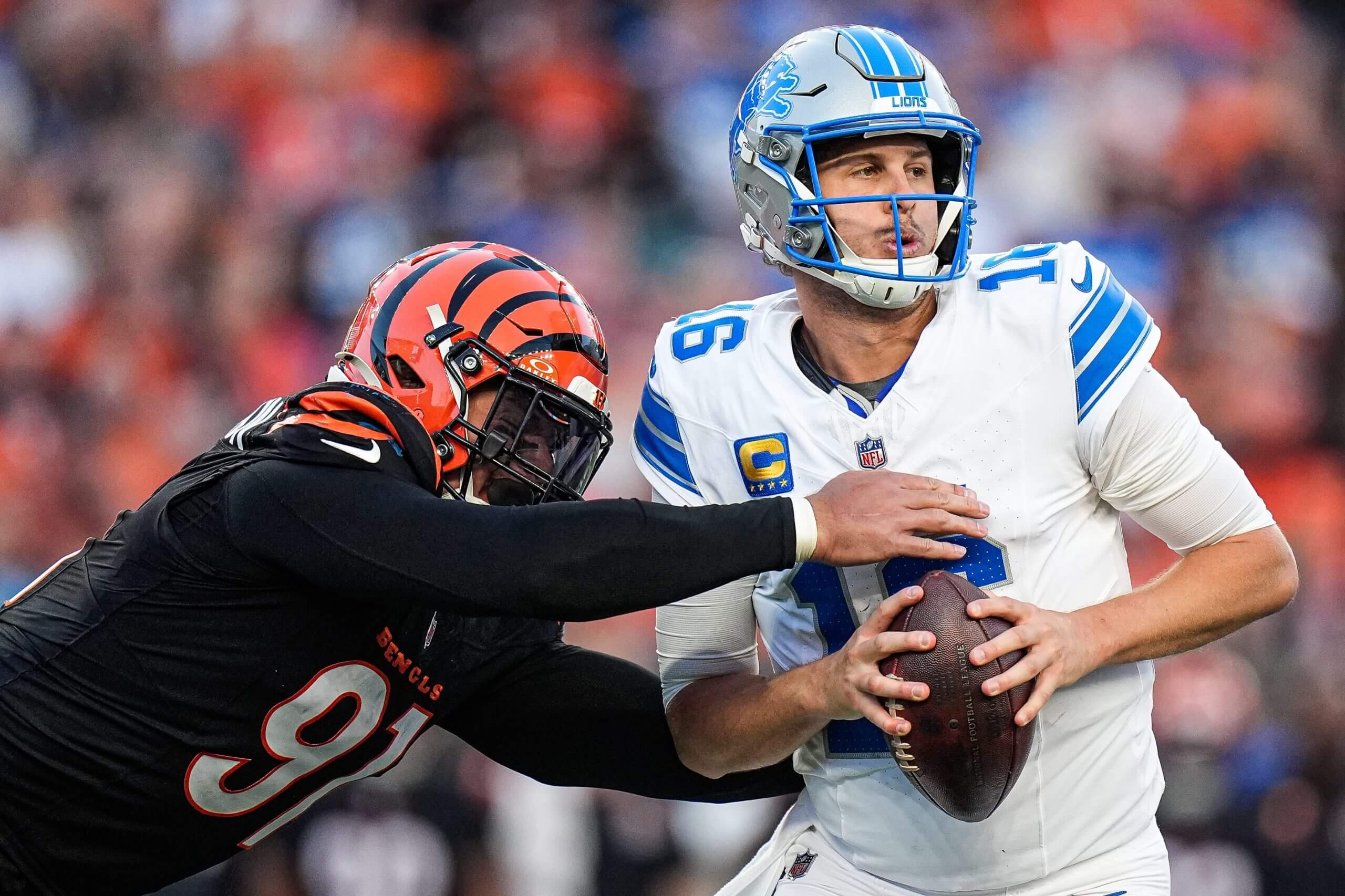
Trey Hendrickson had four sacks this season after leading the league with 17.5 last year. (Junfu Han / Imagn Images)
3. The tight end problem
Sunday’s loss was the latest example of the most obvious flaw in coordinator Al Golden’s defense.
They can’t stop tight ends. They haven’t been able to all season. On Sunday, it was from the first play, a 32-yard crosser to Dawson Knox, where both linebackers bit on the play action. And it extended to the final touchdown, where Jackson Hawes was left all alone on fourth-and-goal from the 3.
Tight ends and running backs totaled 137 yards and touchdowns on the day.
Now, for the unbelievable reality.
With four games remaining, the Bengals have already allowed the third-most yards to tight ends in a season in NFL history. They’ve allowed 1,258 yards on 97 receptions.
That’s a direct result of playing two rookie linebackers and enduring poor safety play behind them. Geno Stone, Jordan Battle, Demetrius Knight Jr. and Barrett Carter all have at least 14 missed tackles. There are only 18 safeties and linebackers in the entire NFL with 14 missed tackles and the Bengals have four of them.
The lack of awareness to track tight ends — and running backs to a lesser degree — in coverage stands out above even the worst traits.
“We’ve been better against the run these last couple weeks,” Taylor said. “To combat that, some teams are hard action and trying to get the tight end to slip behind you. I’m not saying we’ve done a great job against it. There are snaps where we have done a great job, where you don’t even notice it because it has been taken away. There have been some times where we give up explosives and we have to be much better there.”
Offensive coordinators show up every week looking to take advantage of the two rookie linebackers’ confusion. It nearly always works.
There’s still optimism that they are trending in a positive direction despite all the issues.
“That is one of those key positions where the experience really helps you the more you can gain,” Taylor said. “We are trying to get that experience to them as quickly as possible so that the payoff can be as quick as possible because we see high-end traits from those guys, and I think they are making really good progress. I still have really high hopes for them and (I am) proud of the growth that they’ve had and it doesn’t mean there is not going to be some hiccups.”
One of the most critical decisions of the defensive rebuild will be what to do with these two linebackers. Will they replace both or stand by the belief that all the growing pains from this year are setting up a Year 2 leap? That’s a dangerous notion, but one that could be decided based on what the last month of the season looks like for those two. While there’s been marked improvement, specifically in tackling the last three weeks, there’s a long way to go before you even talk about a role in 2026.
4. Tee Higgins’ concerning Sunday
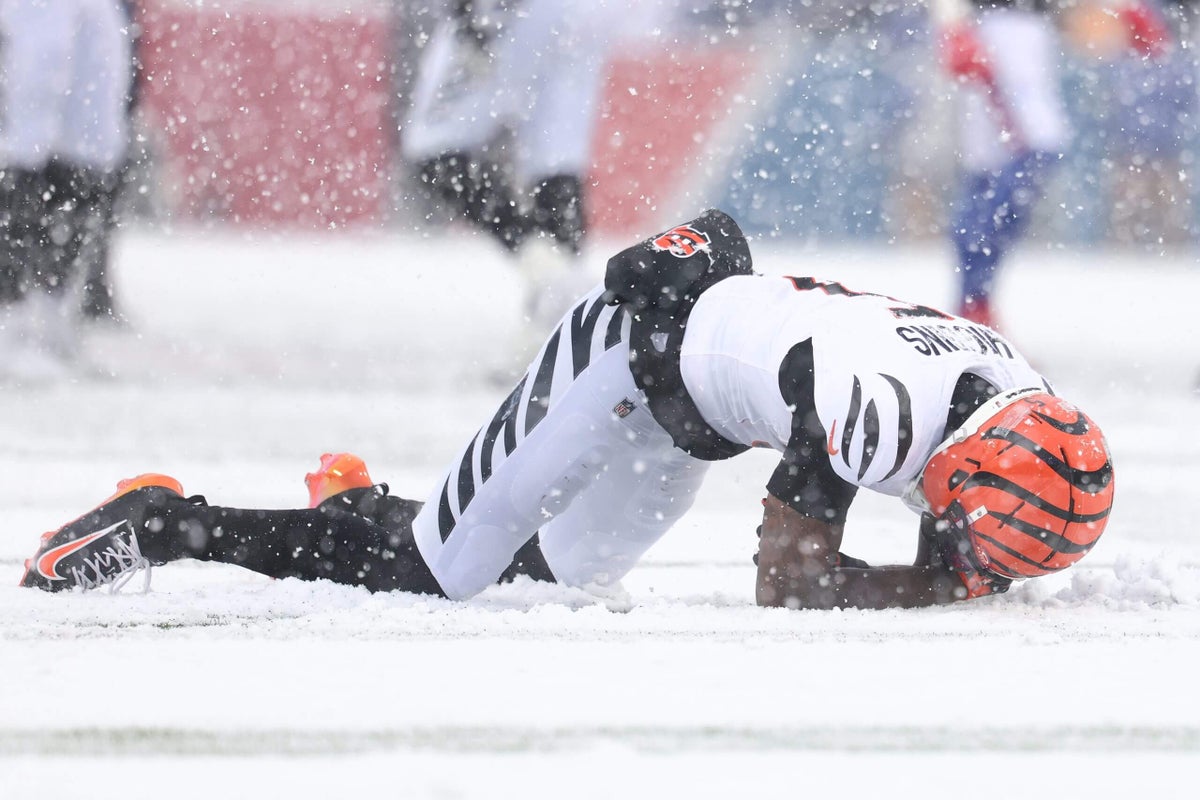
In Higgins’ first game coming off a concussion suffered in Week 12 in New England, there he was banging his head against the turf in Buffalo. It didn’t look great. He ended up going into the blue tent twice to be checked for different incidents during the game.
For those watching at home, the obvious concern existed over Higgins returning to the game. He even hauled in a one-handed touchdown catch in the final minutes.
The NFL and NFLPA put out a joint statement: “Tee Higgins was evaluated twice in-game and cleared to return. After the game, in discussion with club medical personnel as part of a postgame evaluation, he notified the team he was experiencing symptoms and was immediately placed in the concussion protocol.”
It’s a concern any time a player fresh off a concussion goes through a game and has another incident.
This was a reminder of the frightening reality of this game. Players sign up knowing the risks and all they can do is take the direction of the independent neurologist on the sideline. If they don’t see any issues during the game, that’s the truth in that moment. Until a better method is invented, these guardrails are put in place for just this type of situation.
As Higgins said after the game, “I’m a soldier.” The neurologist takes soldiering out of his control. That goes both ways. In this case, if the neurologist says he is good to play, he should be able to do so. There’s just such a gray area around concussions even now, decades into the protocols and processes of preventing them.
Until a better process is figured out, these guidelines dictate how to act, no matter how scary the situation.
Nobody expects Higgins to return Sunday against the Ravens. If the Bengals lose and are eliminated from playoff contention, that might be a prime opportunity to shut Higgins down for the rest of the year. No need to take a risk of a third concussion in a month while playing out the string. That is the kind of lasting effect nobody wants to risk.