
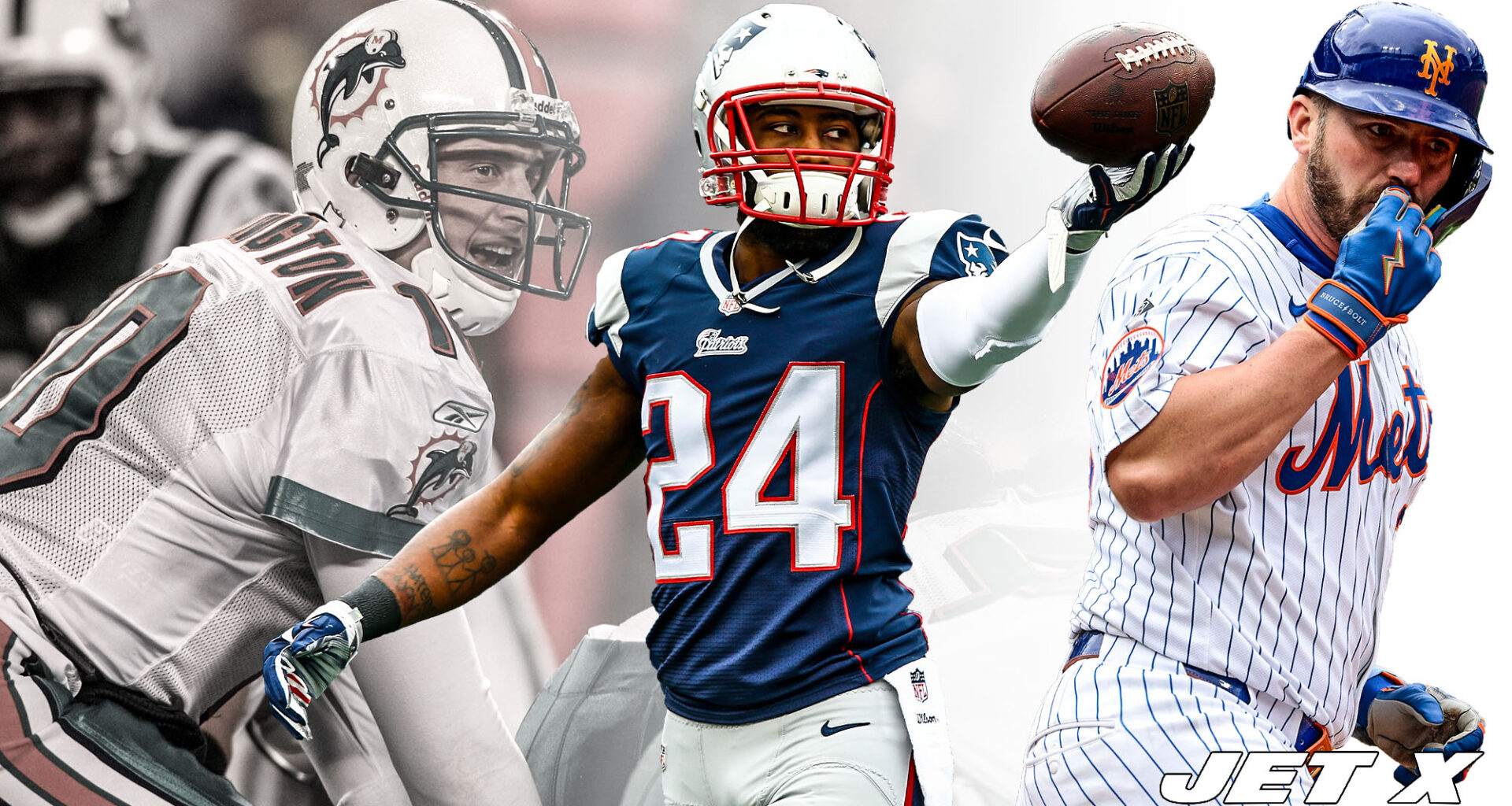
For the New York Jets fans who also bleed Yankee blue, harkening back to the glory days is never a dull thought. The New York Yankees’ dynasty of the late 1990s was nearly perfect in too many ways.
Led by the presentably flawless Derek Jeter, Joe Torre led a group of unassuming ball players to four World Series titles in five seasons. While the Yanks’ $112 million payroll led the big leagues—around $3 million clear of the Boston Red Sox and Los Angeles Dodgers—the idea that the dynasty was spearheaded by Buck Showalter and Stick Michael’s patient development plan earlier that decade cannot be disputed.
Sure, once George Steinbrenner fully reimmersed himself in the day-to-day baseball operations, after returning from his notorious suspension, the Yankees turned into the drunken-spending team that went after everybody (Jason Giambi, Alex Rodriguez, etc.). And thus, the championships were much harder to snag.
Meanwhile, Mets fans walked around Queens with envy. The 2000 Subway Series was just the beginning.
While it’s true that Fred Wilpon put together several high-spending offseasons in recent memory, the Mets fan could never quite boast that their team could match the same sort of green their Bronx counterparts could dole out. That was until Steve Cohen announced his presence with authority in 2020.
Cohen’s purchase of the Mets meant the world to the baseball fans of Queens. Finally, the Metropolitans wouldn’t have to play the role of little brother. Finally, the payroll imbalance can be put behind us. Finally, the Mets fans wouldn’t have to watch their most beloved players leave town for greener pastures.
Oops.
A day after watching closer Edwin Diaz choose the defending champion Los Angeles Dodgers, Mets fans found themselves in front of a Mack truck going 90 miles per hour on the freeway. Pete Alonso is now the Baltimore Orioles’ first baseman.
No fan wants to see one of their most productive players leave town, no matter the sport, but extra hysteria is reversed when a homegrown individual somehow wiggles away. Mets fans watched Tom Seaver leave for the Chicago White Sox, Darryl Strawberry head to Los Angeles, and now, are forced to witness the franchise’s all-time leading home run smacker head to Babe Ruth’s birth city without having the ability to mull over an official Mets contract offer.
Considering the Mets fan is most likely also a fan of the New York Jets, the pain isn’t just plentiful … it’s doubled.
With Alonso’s exit on the mind, we take a walk down memory lane on the football side of the younger New York team by remembering the most painful Jets player departures in franchise history.
Joe Namath: Los Angeles Rams
Before we dive into the first entry, let’s make one thing crystal clear: None of these items fall under the brutally painful category. In other words, one would think a list like this for such a downtrodden group would be more torturous.
Although the entire Jets fanbase knew Joe Namath’s best days were behind him, it still hurt to see him wearing blue and yellow.
Jets fans knew Namath’s days were numbered when the team drafted Alabama quarterback Richard Todd sixth overall in the 1976 NFL draft. After failing to trade the Jets’ legend, Namath was thrown on waivers, where the Rams snagged him.
Namath’s lone season in Los Angeles produced pedestrian numbers—606 yards and 3 touchdowns to 5 interceptions—but the strangeness of seeing the man don a Rams uniform will never escape diehard fans.
September 25, 1977
Joe Namath’s Final Touchdown Pass
In his thirteenth pro season, quarterback Joe Namath collects his first win for a team other than the #Jets — an impressive 20-0 #Rams victory over the Eagles in Los Angeles.
Namath throws two touchdowns — his second (and… pic.twitter.com/eNJ7AqmY5P
— Kevin Gallagher (@KevG163) September 25, 2025
Darrelle Revis: Tampa Bay Buccaneers / New England Patriots
The Darrelle Revis situation was one of the more unique departures in sports history. Despite the love New York Jets fans felt for the most dominant cover man in the NFL at one point, turmoil entered the picture.
Continual contract squabbles deflated the love affair. So much so that once John Idzik took Mike Tannenbaum’s position as general manager and dealt him to the Tampa Bay Buccaneers in 2013, a sizable part of the fanbase was cool with it.
Then, however, he signed with Bill Belichick’s New England Patriots and went on to win a Super Bowl.
That changed everything.
Despite a reunion in 2015 during Mike Maccagnan’s infamous “aggressive rebuild,” the Revis departure still stings many fans.
Keyshawn Johnson: Tampa Bay Buccaneers
Bill Parcells swooped in like the new and all-powerful sheriff, and that’s precisely what then-owner Leon Hess wanted. (Mr. Hess even admitted as much during the Big Tuna’s introductory presser.)
Parcells was handed a No. 1 overall wide receiver in Keyshawn Johnson, who helped him turn a hapless 1-15 squad into a playoff-contending 9-7 team in 1997. Ultimately, Parcells’s program building led the Jets to a 12-4 season in 1998, and afterwards, a decade of stability under the likes of Al Groh, Herm Edwards, Eric Mangini, and even Rex Ryan.
One of the keys to establishing that identity was the Keyshawn trade in 2000.
Parcells, having already stepped down from his head coaching perch, still controlled the front office as top dog. Trading Johnson to Tampa for two first-round picks set up the Jets’ 2000 NFL draft that allowed them to draft Shaun Ellis, John Abraham, Chad Pennington, and Anthony Becht.
By and large, the Jets fanbase was anything but furious over the Keyshawn trade (as he sort of falls in the Revis class of heartbreak). Yet, there’s no doubt that, at the end of the day, he firmly belongs on this list.
John Abraham: Atlanta Falcons
Though Jets fans fondly look back on the Eric Mangini-Mike Tannenbaum personnel era, which set the stage for the Rex Ryan years (his first two seasons), it started rocky. There’s no other way around that idea.
New York went as boring as possible in the 2006 NFL draft, when selecting D’Brickashaw Ferguson and Nick Mangold, and they also sent one of the franchise’s all-time best pass-rushers packing. Well, that’s not entirely true.
When the Jets traded John Abraham to the Atlanta Falcons, the word around the campfire was that he desperately wanted to play closer to his home state (South Carolina).
Mangini’s surprise 10-6 season in his first year helped fans get over the loss, but make no mistake about it: A decent chunk of the fanbase was unhappy that the EDGE demon was traded.
Chad Pennington: Miami Dolphins
Perhaps only one (two, tops) quarterback is more beloved by Jets fans than Chad Pennington. Waving his Jets towel like a madman dancing on the team’s sideline bench, Pennington introduced himself to fans in the purest of fashions.
As accurate and mentally savvy as they come, Pennington dragged a left-for-dead 2-5 Jets team to the AFC East title in 2002. Once the dust settled on the season—represented by a disappointing divisional round loss to the Oakland Raiders—Jets fans felt they had finally found their franchise quarterback.
If not for injuries, they most likely did find their guy.
Pennington’s oft-injured body produced an up-and-down Jets career, which meant the outcry for his 2008 departure wasn’t insanely loud. Plus, when the man’s departure coincides with the introduction of one of the greatest gunslingers of all time—Brett Favre—the usual fan fervor is sent sideways.
Much like Revis, the torture didn’t officially hit home until later on in the process. This time, as opposed to watching Pennington find success elsewhere, far away, he achieved it by tormenting his former team in their own house (see Week 17 of the 2008 season, when the Miami Dolphins devastated the Jets at the Meadowlands).
Notables
Al Toon: Retirement
Joe Klecko: Indianapolis Colts
Kevin Mawae: Tennessee Titans
John Riggins: Washington
Jerricho Cotchery: Pittsburgh Steelers
John Franklin-Myers: Denver Broncos
David Harris: New England Patriots
Uber-talented wideout Al Toon is the lone man forced into retirement on this list purely due to the circumstances behind it. Once lauded as arguably the best wide receiver in the NFL—below Jerry Rice—Toon’s concussion concerns forced him into early retirement.
The what-could-have-been story of Al Toon could aptly be described as the most painful departure in Jets history, if we’re all honest with ourselves—even if it can’t be classified as a “departure” in the traditional sense.
The beloved Joe Klecko falls under the Joe Namath category of “past-their-prime Jets who departed.” In that sense, Jets understood the deal when he played his only non-Jets season with the Indianapolis Colts in 1988.
Still, experiencing the now-Hall of Famer in a Colts helmet is undoubtedly impossible for any old-school Jets fan.
John Riggins’s departure after the 1975 season remains one of the toughest to evaluate. After his first four seasons were workmanlike, Riggins finally eclipsed the 1,000-yard mark in 1975, good enough to make his first Pro Bowl.
It wasn’t until Riggins starred on the biggest football stage in the world—Super Bowl XVII—that New York Jets fans were placed in a position to feel all the pain in the world.