
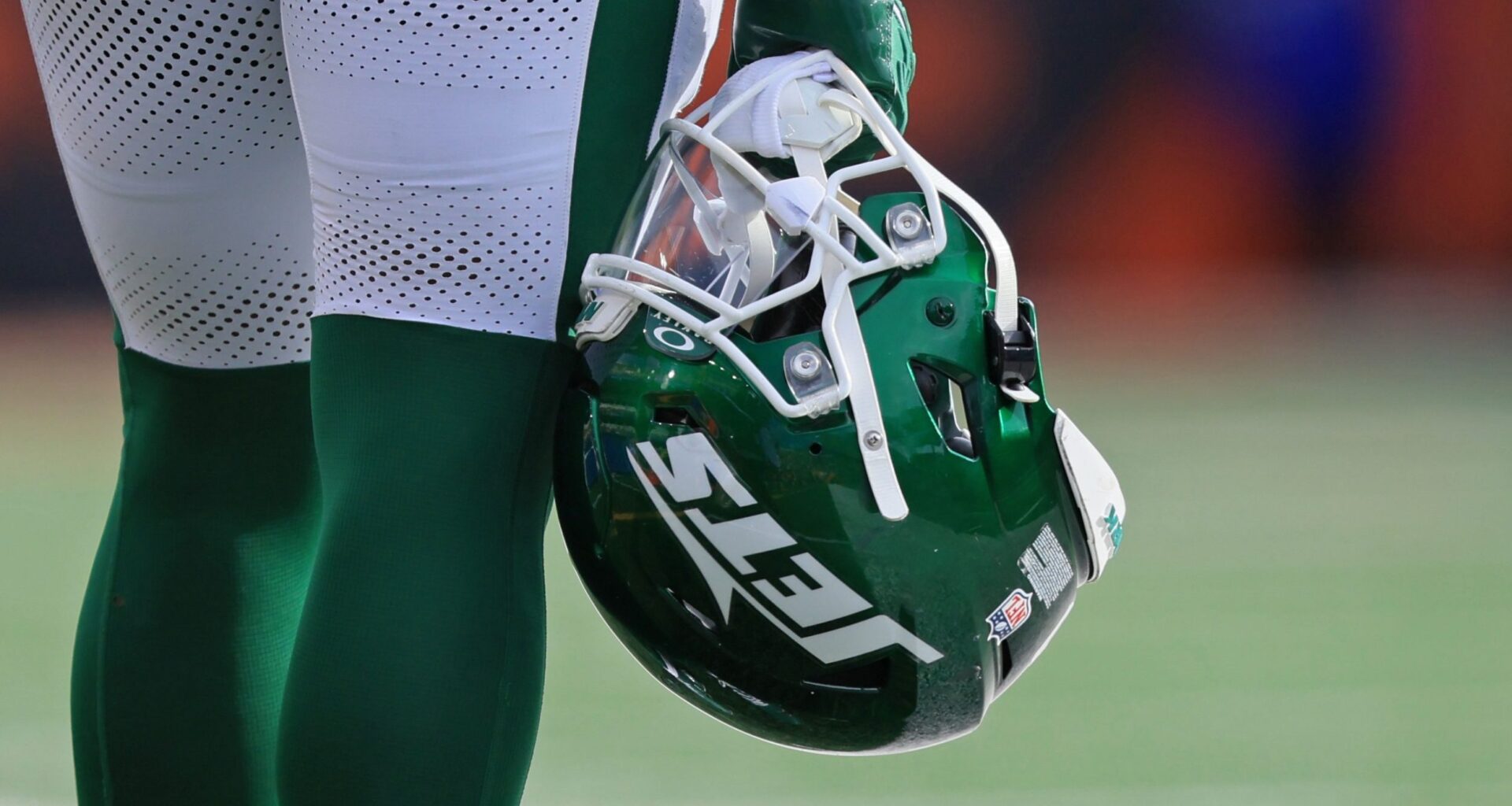
It was a day to forget for the New York Jets defense on Sunday.
The downtrodden Jets, entering the day down their top two quarterbacks and sporting a 3-10 record, are playing for pride at this point in the season. Their Week 15 opponent, the Jacksonville Jaguars, were not.
As one might expect in that scenario, the Jags blew the doors off the Jets, winning by a scoreline of 48-20 on Sunday. Even throughout a string of poor seasons from the Jets, the team’s defense has regularly been among the better units in the league, frequently keeping less-than-stellar offenses in games they otherwise wouldn’t deserve to be in. That was not the case on Sunday.
The performance frustrated some of the Jets’ defenders, at least two of whom decided not to make themselves available to the media after the blowout loss. According to Jets beat writer Zack Rosenblatt, both defensive end Jermaine Johnson and linebacker Quincy Williams did not speak with the press after Sunday’s game.
Some Jets defensive players declined interviews in the locker room when approached:
Jermaine Johnson: “Nah.”
Quincy Williams: “I have nothing positive to say today so I’m not doing media.”
— Zack Rosenblatt (@ZackBlatt) December 14, 2025
Per Rosenblatt, Johnson communicated this to media members simply by saying, “Nah.” Williams, on the other hand, gave a bit more detail as to why he wouldn’t be speaking. “I have nothing positive to say today so I’m not doing media,” the linebacker said.
The NFL, of course, requires players to be made available for the media throughout the week and after games. Players that choose not to comply are subject to fines.
It’s hard to blame athletes for not wanting to talk about a blowout loss immediately after it happened. The reaction is completely human and understandable. But the policy exists for a reason. The media is able to communicate how players feel to the masses, and often can even turn a negative narrative into a sympathetic one. Even players that performed poorly can stand to benefit from talking with the media afterwards.
For Johnson and Williams, this doesn’t seem to be a pattern of behavior, so it’s reasonable to extend some grace after a particularly bad game.