
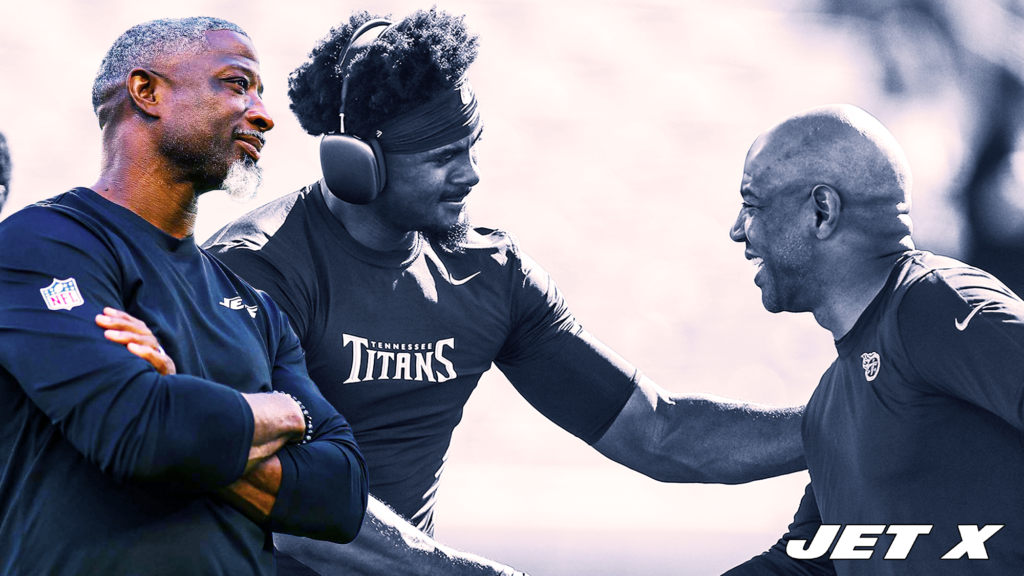
New York Jets head coach Aaron Glenn showed Monday that he is willing to make tough decisions when a unit falls short of expectations, relieving defensive coordinator Steve Wilks of his duties after a prolonged stretch of struggles.
That willingness to act, however, must not end with one move.
As the Jets head into a pivotal offseason, Glenn must also take a hard look at the rest of his staff, including quarterbacks coach Charles London.
Why New York needs to consider moving on from London
The Jets’ decision to bring in London as their quarterbacks coach never made much sense. There was no overlap with head coach Aaron Glenn, and nothing in London’s resume suggested a proven history of elevating quarterbacks.
London entered coaching through the running backs room and spent the majority of his career there before transitioning to quarterbacks in 2021 at age 46. That shift never produced consistent results.
During his time in Atlanta (2021-22), the Falcons’ offense stagnated, and Desmond Ridder failed to make meaningful strides over two seasons. The same pattern followed in Tennessee in 2023, where Will Levis endured a rough rookie campaign.
London later joined Seattle in 2024 as part of Mike Macdonald’s inaugural staff, working with Geno Smith. Under London, the veteran quarterback regressed. Smith threw 15 interceptions, his most in a season with the Seahawks, and dropped to a 50.4 QBR after exceeding 60 in his first two seasons as Seattle’s starter.
Taken as a whole, London’s lack of experience at the quarterback position, inability to oversee sustained quarterback development, and absence of a direct connection to Glenn made the hire difficult to justify from the start.
Nothing that has taken place since then has materially shifted London’s outlook.
QB coach will become a crucial job for the Jets next season
The Jets signed Justin Fields to a two-year, $40 million deal in hopes that they could help the former first-round pick finally unlock his potential. Instead, Fields looked even worse than he did with the Pittsburgh Steelers last season. It continued London’s trend of overseeing poor results at the quarterback position.
For a Jets quarterback room built around two veterans in Fields and Tyrod Taylor, the quarterbacks coach was unlikely to have a significant impact in 2025. Fields and Taylor are who they are at this point in their careers. However, the role’s importance is expected to shift this offseason.
With the Jets expected to invest in a young quarterback, the quarterbacks coach is set to play a far more critical role. He will be instrumental in shaping the development of the franchise’s most important player.
In today’s NFL, quarterbacks rarely succeed by simply “figuring it out” on their own. The teams that get it right have clear, tangible development plans, facilitated by coaches with track records of sustained success. That applies not only to the head coach and offensive coordinator, but also to the quarterbacks coach.
New York needs a quarterbacks coach with real experience developing young passers and a track record that reflects established success. At this point, London does not offer either of those things.