
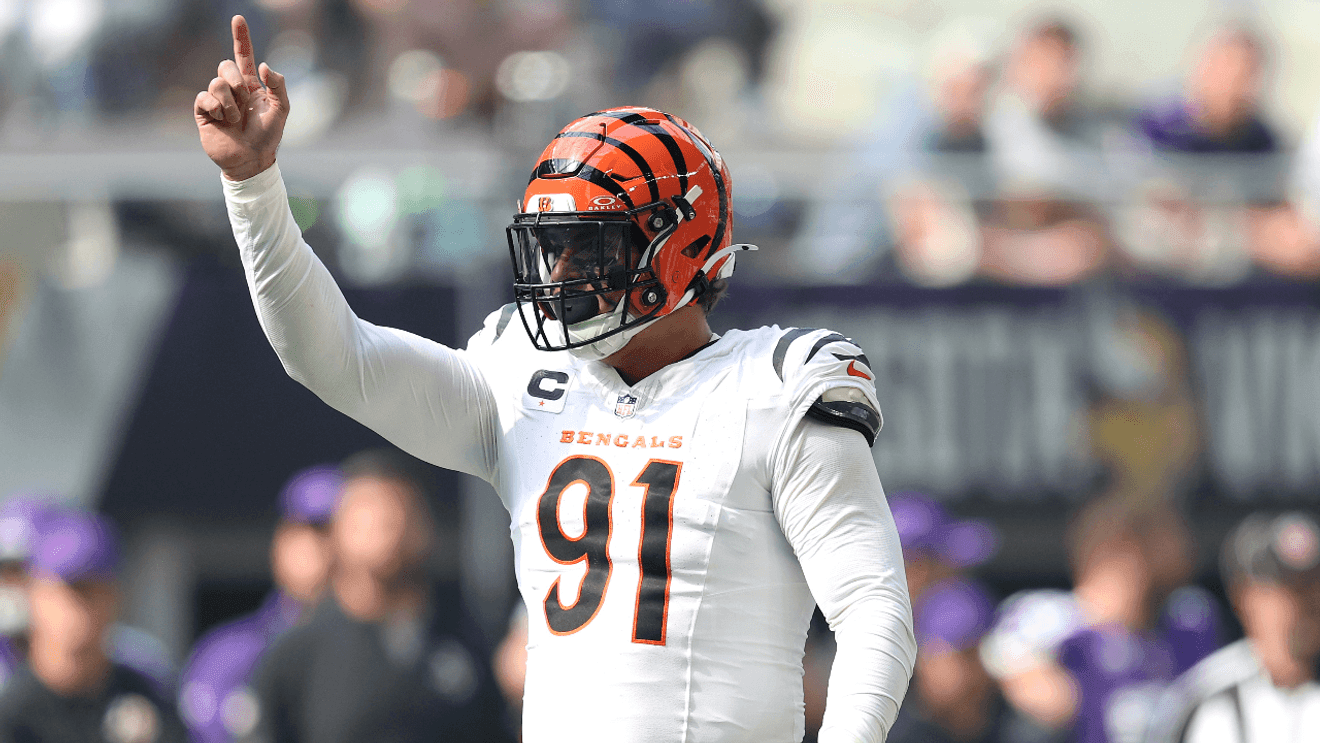
CINCINNATI (WKRC) – There are multiple reasons the Bengals are headed toward their first losing season since 2020, missing the playoffs for a third consecutive year. Chief among them is how the roster was constructed, particularly on defense.
While questions remain about whether re-signing wide receiver Tee Higgins for significant money would have been better allocated elsewhere — given that Higgins has missed 12 full games and parts of three others over the past three seasons because of injuries — even that move does not explain all of the roster shortcomings. There were several other areas in which the front office could have acted differently to improve the team.
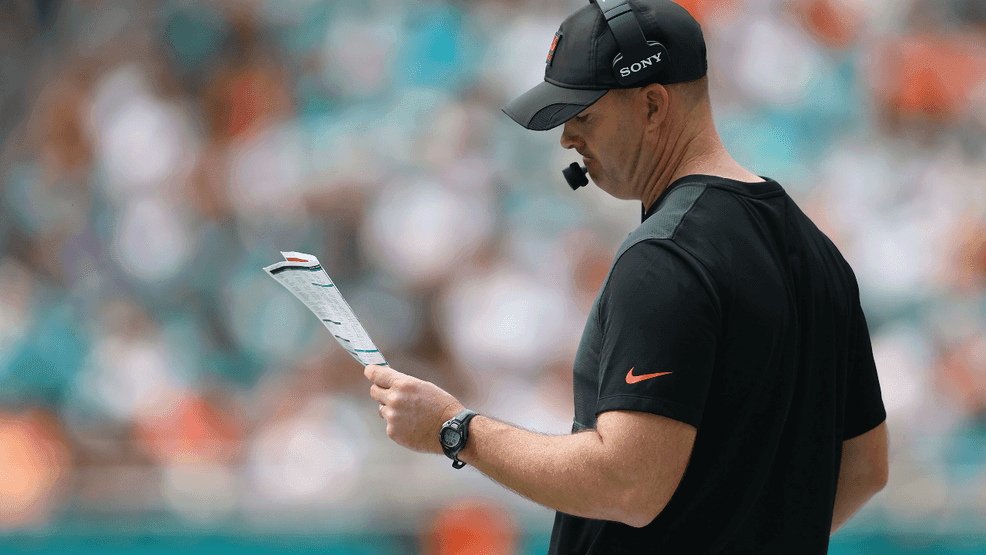
Head coach Zac Taylor of the Cincinnati Bengals looks at his play sheet in the first quarter of a game against the Miami Dolphins at Hard Rock Stadium on December 21, 2025 in Miami Gardens, Florida. (Photo by Megan Briggs/Getty Images)
Here is a look at five moves the Bengals could have made last offseason, acknowledging that hindsight is 20/20, though some decisions appeared obvious at the time.
5. Signing a capable free agent guard earlier
The Skinny: The Bengals entered the offseason with two guard positions to address. Left guard Cordell Volson fell out of favor late last season after struggling, and right guard Alex Cappa was allowed to leave in free agency.
The team signed veteran Lucas Patrick on March 21, and he became the opening-game starter largely by default. Patrick was injured in the opener and appeared in only three games afterward, none as a starter.
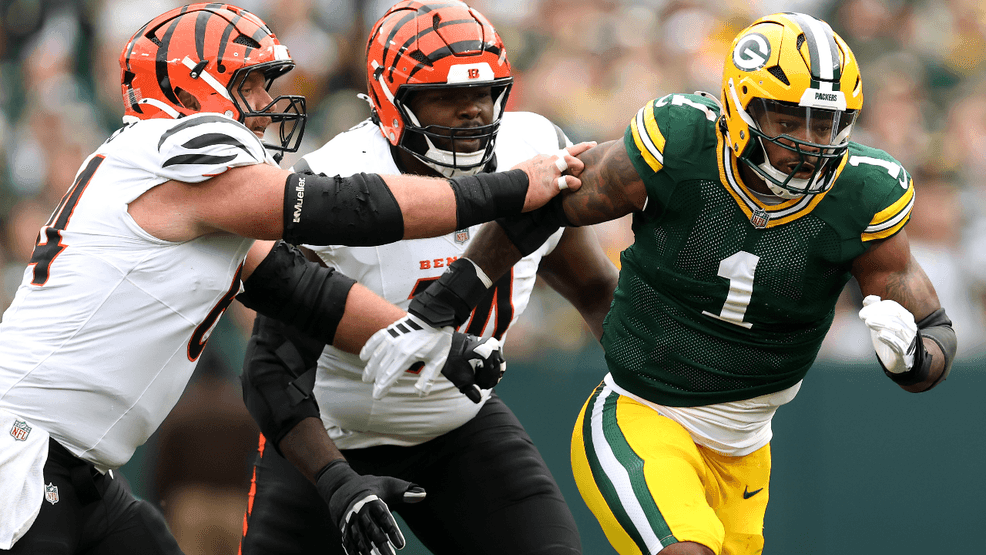
Micah Parsons #1 of the Green Bay Packers rushes past Ted Karras #64 and Jalen Rivers #74 of the Cincinnati Bengals during the second quarter in the game at Lambeau Field on October 12, 2025 in Green Bay, Wisconsin. (Photo by Michael Reaves/Getty Images)
After drafting Dylan Fairchild and Jalen Rivers, the former emerged as the starting left guard and improved steadily. Rivers started from Weeks 4 through 10 before being replaced by veteran Dalton Risner, who has started each of the last five games and played well.
Risner was not signed until Aug. 28 despite being available throughout the offseason. That late addition may have contributed to his slow start after being thrust into action when Patrick was injured.
4. Adding a 3-technique defensive tackle either in free agency or the draft
The Skinny: The Bengals needed to improve their interior pass rush after defensive tackles combined for just nine sacks last season. Instead of addressing that need, they added only nose tackle T.J. Slaton and otherwise retained the same defensive tackle group.
With two games remaining this season, Bengals defensive tackles have combined for just 5.5 sacks.
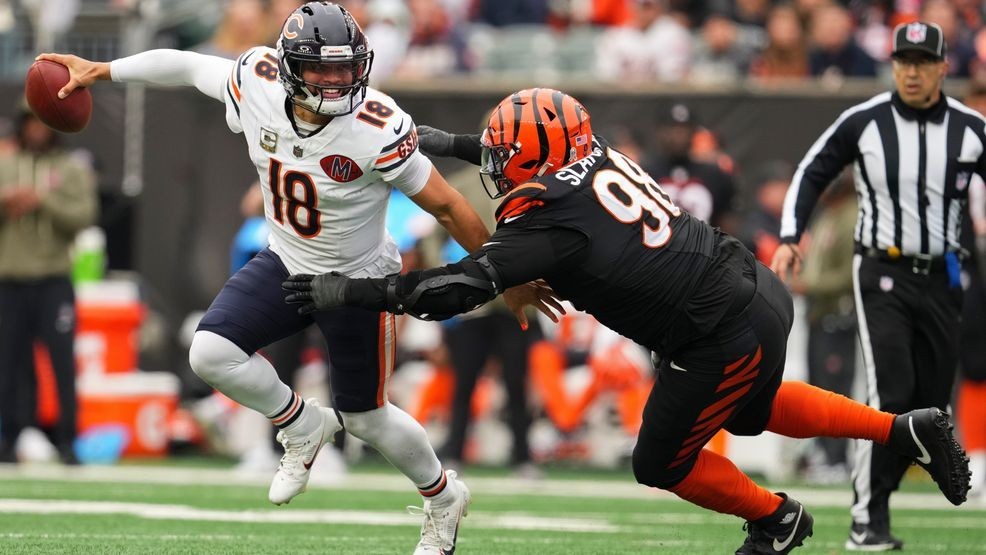
Cincinnati Bengals defensive tackle T.J. Slaton Jr. (98) pressures Chicago Bears quarterback Caleb Williams (18) during the first half of an NFL football game, Sunday, Nov. 2, 2025, in Cincinnati. (AP Photo/Jeff Dean)
Defensive end Trey Hendrickson’s limited availability has not helped, but the lack of interior pressure remained a clear issue that went unaddressed.
3. Adding a veteran starting-caliber safety
The Skinny: The Bengals entered the season relying on Geno Stone and Jordan Battle, who tied for 136th among 171 safeties graded by Pro Football Focus last season. Depth behind them was unproven, with backup safeties combining for just 10 regular-season snaps entering the year.
More competition was needed at the position. While Battle has improved — ranking 60th among 100 graded safeties this season — he ranks second in the NFL with 21 missed tackles. Stone ranks 84th by PFF and leads the league with 22 missed tackles.
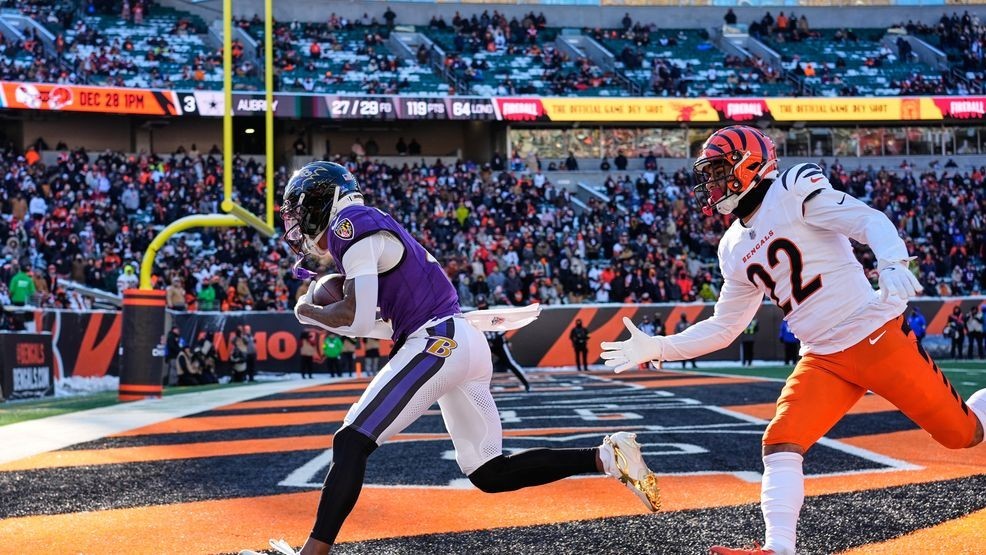
Baltimore Ravens wide receiver Zay Flowers, left, makes a catch for a touchdown past Cincinnati Bengals safety Geno Stone (22) during the first half of an NFL football game, Sunday, Dec. 14, 2025, in Cincinnati. (AP Photo/Carolyn Kaster)
Despite inconsistent play, they have logged the most defensive snaps on the team, with Battle playing 97.35% of the snaps and Stone 95.51%. Backup safeties have appeared on just 58 defensive snaps all season.
2. Trading Hendrickson in March or April
The Skinny: Hendrickson’s contract situation was unlikely to result in a long-term extension with significant guaranteed money. After a prolonged holdout and hold-in during the offseason, the sides agreed to a reworked one-year deal worth $29 million.
Hendrickson started the season solidly with four sacks and eight quarterback hits over the first five games. He then suffered a back injury in Week 6, missed time, returned briefly and was injured again. He recorded no sacks or quarterback hits in his final two games and later underwent core muscle surgery, landing on season-ending injured reserve.
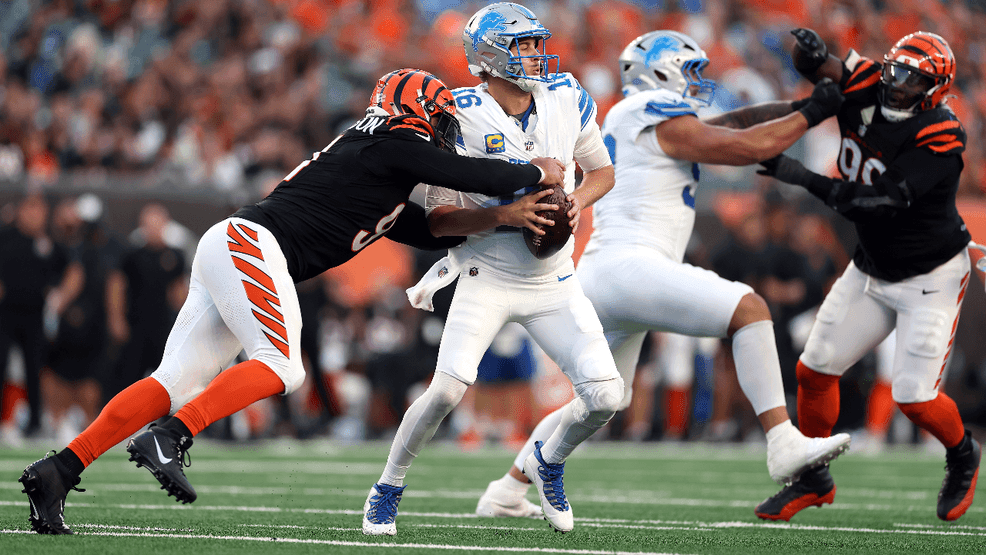
Trey Hendrickson #91 of the Cincinnati Bengals sacks Jared Goff #16 of the Detroit Lions during the fourth quarter at Paycor Stadium on October 05, 2025 in Cincinnati, Ohio. (Photo by Andy Lyons/Getty Images)
The Bengals made the right decision in not offering a long-term extension, particularly with Hendrickson turning 31 on Dec. 5 and coming off surgery. Given that the situation was short-term, the team could have traded him in March or April for draft picks and potentially a veteran defensive end.
1. Drafting much differently than they did
The Skinny: The Bengals’ draft could have unfolded far differently had they not taken a risk on traits over production by selecting defensive end Shemar Stewart in the first round.
Stewart missed nine games due to injury and has struggled when healthy. In 207 defensive snaps across six games, including four starts, he has recorded eight tackles, one tackle for loss, one quarterback hit and no sacks.
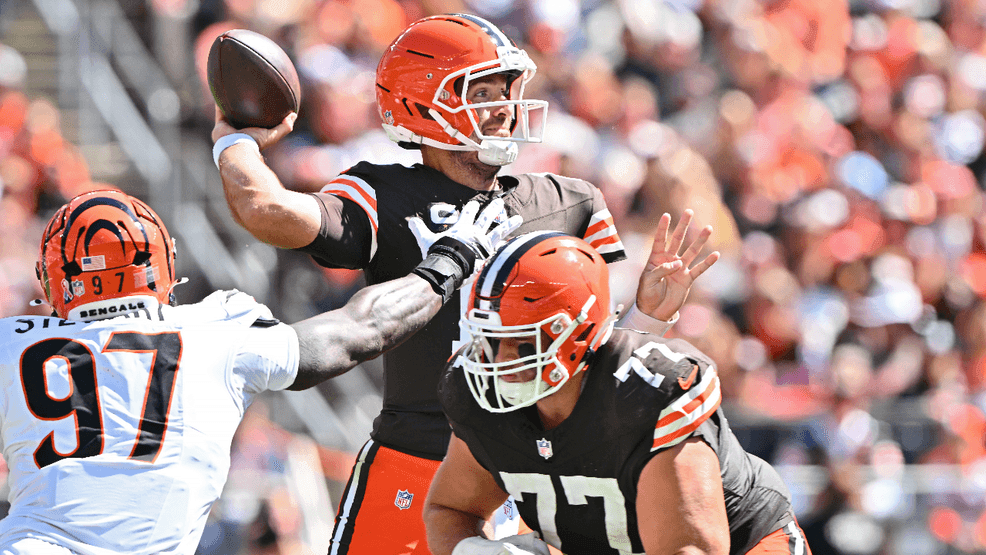
Shemar Stewart #97 of the Cincinnati Bengals pressures Joe Flacco #15 of the Cleveland Browns during the third quarter of a game at Huntington Bank Field on September 07, 2025 in Cleveland, Ohio. (Photo by Jason Miller/Getty Images)
The jury remains out, but Stewart was always considered a risky pick — one the Bengals could ill afford at this stage.
An alternative draft approach would have yielded more immediate production. Linebacker Jihaad Campbell, selected 31st overall by Philadelphia, ranks 13th among 86 graded linebackers by PFF and could have filled a major need.
Selecting Campbell would have allowed the Bengals to bypass linebacker Demetrius Knight in the second round and instead select Georgia guard Tate Ratledge, who has started all 15 games for Detroit and ranks 23rd among 79 guards by PFF.
In the third round, the Bengals could have taken Notre Dame safety Xavier Watts, who ranks 48th among 100 safeties by PFF — ahead of both Stone and Battle. Instead, the Bengals selected Fairchild out of necessity at guard, where he ranks 47th among 79 guards.