
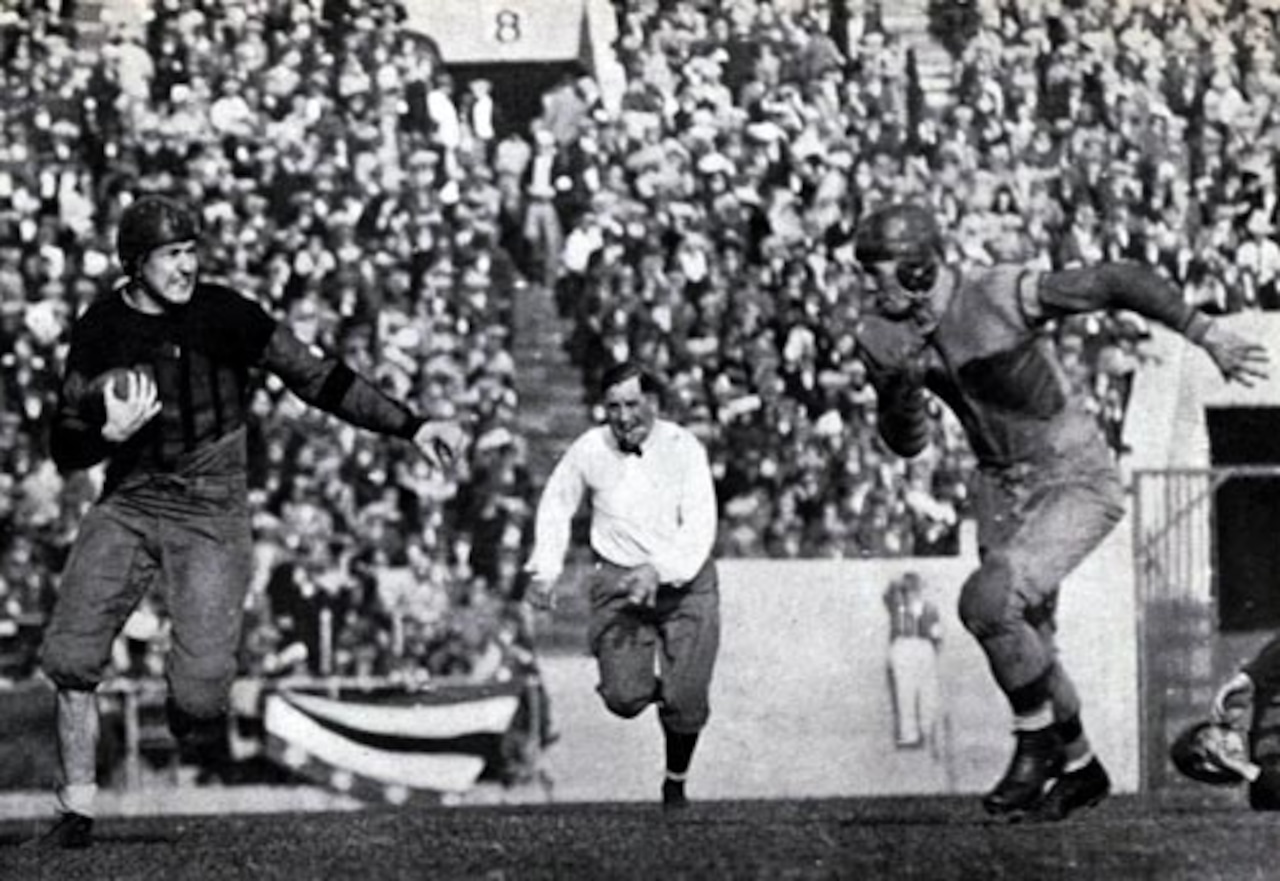
Editor’s note: This story first ran on AL.com in 2016, in the lead-up to Alabama’s College Football Playoff semifinal meeting with Washington, its opponent in its first trip to the Rose Bowl on Jan. 1, 1926. With the Crimson Tide set to meet top-ranked Indiana in Pasadena on the 100th anniversary of that game, we are re-publishing the story with slight updates and modifications.
Alabama football did not begin on Jan. 1, 1926, but Alabama football as a national power almost certainly did.
The Crimson Tide stunned heavily favored Washington 20-19 on that day in the Rose Bowl, capping a 10-0 season and resulting in the school’s first national championship. It was the first of seven trips to Pasadena for Alabama, and came in an era when Southern football was not yet taken seriously on a national level.
No. 8 Alabama meets No. 1 Indiana on Thursday in the 2026 Rose Bowl, a College Football Playoff quarterfinal game. One hundred years ago to the day, the stakes were different, but no less lofty for the Crimson Tide and football in this region of the country.
“If you ask people from the South or people from other sections about the importance of football to the South, almost all of them will say ‘college football is tremendously important to southerners,’” noted state historian Wayne Flynt said in the 2007 Alabama Public Television documentary “Roses of Crimson.” “Therefore, if you start from the premise that football is important in defining who we are as a people, and our sense of mastery over other regions of the United States, and we take inordinate pride in football in the 1950s, 1960s, 1970s and after. And you have to ask yourself ‘When did this begin? What triggered it? What magical moment was there, that causes it to think of itself in these terms, that is, our athletic prowess vs. your eggheaded-ism,’ and that moment is 1925.”
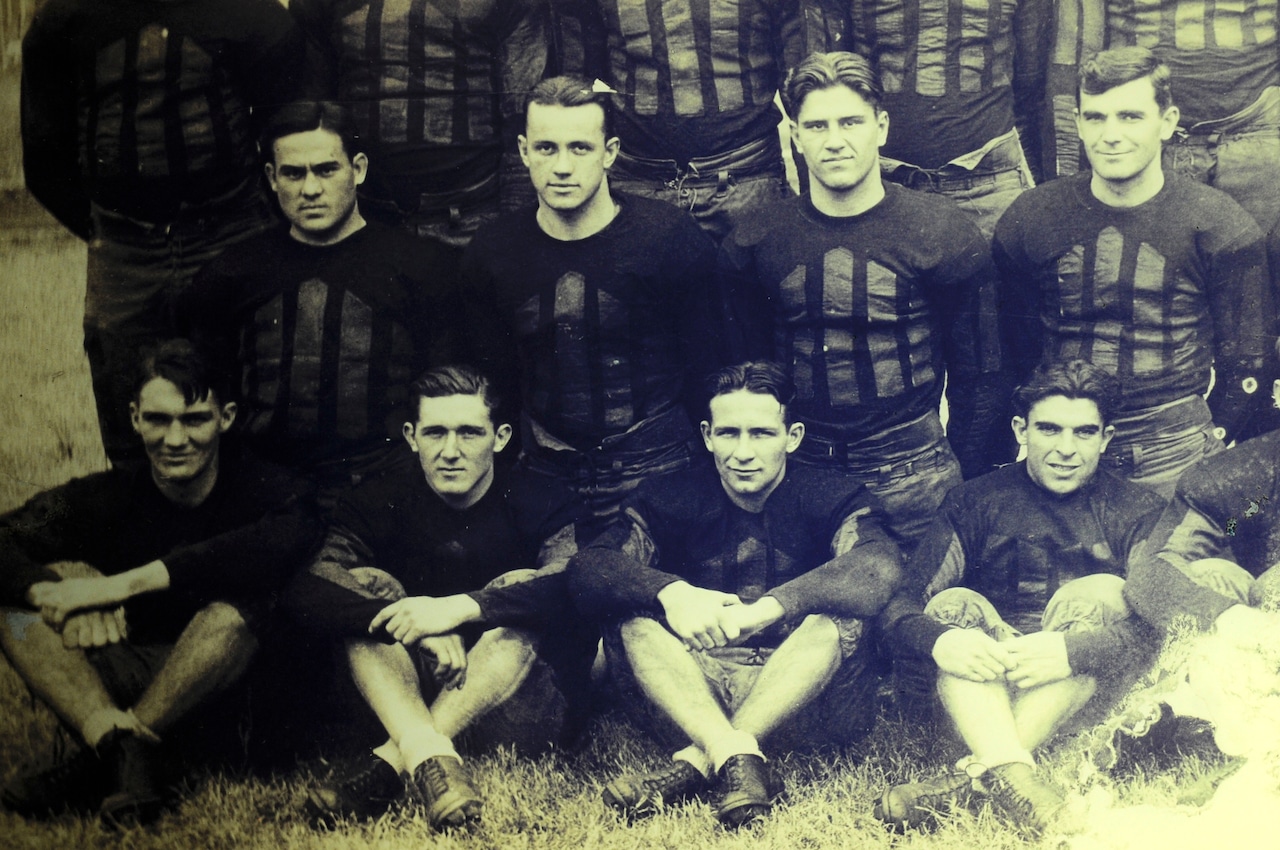 An Alabama team photo from the 1926 Rose Bowl team is displayed at the Alabama Sports Hall of Fame in Birmingham. (Birmingham News file photo by Tamika Moore)Alabama Sports Hall of FameA rough time for Alabama
The year 1925 was a bad one for the state of Alabama and the southern United States in general. The famed Scopes “Monkey Trial” — which took place in Tennessee — had reinforced stereotypes that Southerners will poorly-educated and anti-intellectual.
Ku Klux Klan membership also reached an all-time high that year, Flynt said. The South needed something about which to be proud.
As fortune would have it, Alabama was building a powerful football program in the early 1920s at the behest of school president George “Mike” Denny (for whom Denny Chimes and Bryant-Denny Stadium are named). Under coach Xen C. Scott, the Crimson Tide won 9-7 at Pennsylvania in 1922 for its first victory against a Northern power, and one of the first wins outside the South for a Southern college football team.
Scott retired for health reasons after that season, and died of cancer a short time later. Hired to replace him was Wallace Wade, the top assistant under legendary Vanderbilt coach Dan McGugin.
Wade’s first Alabama team went 7-2-1, then finished 8-1 and won its first Southern Conference championship in 1924. Led by quarterback Allison “Pooley” Hubert and halfback Johnny Mack Brown, Wade’s 1925 Crimson Tide proved to be the school’s best team to that point.
“Wallace Wade was a fine gentleman, knew football, expected you would carry out your duty and do it well,” Alabama halfback Hoyt “Wu” Winslett said in an interview with the Paul W. Bryant Museum in the early 1990s. “If you didn’t, you didn’t stay there long.”
Alabama went 9-0 during the 1925 regular season, including a 7-0 victory at Georgia Tech that featured a 55-yard touchdown by Brown and 23 tackles by Hubert. The Crimson Tide beat Georgia 27-0 in the regular-season finale at Birmingham’s Rickwood Field.
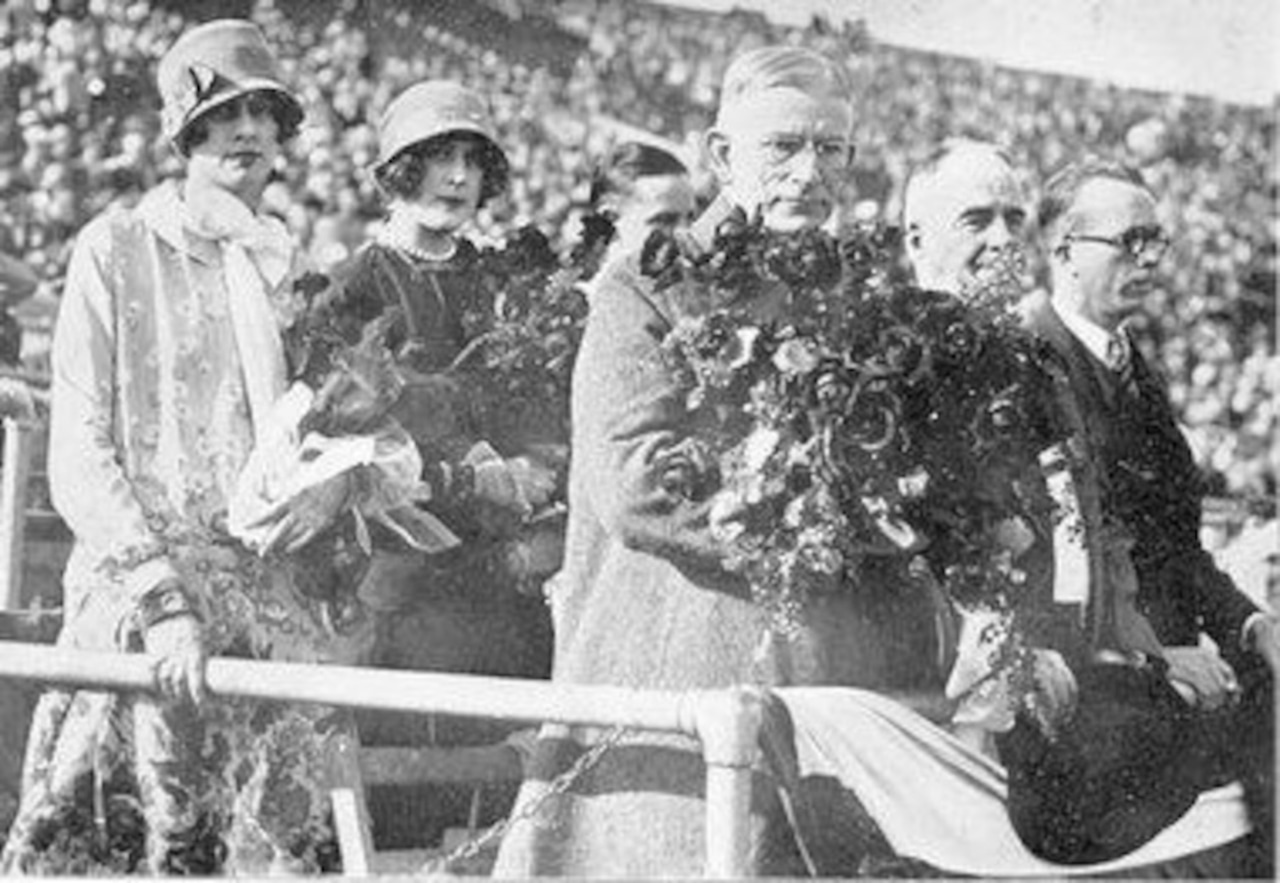 Alabama school president George “Mike” Denny (with roses) and Southern Conference president S.V. Sanford are seen in the crowd at the 1926 Rose Bowl game between Alabama and Washington. (Photo from Champ Pickens’ “The Will to Win,” courtesy of the Paul W. Bryant Museum)Paul W. Bryant Museum photoThe only bowl game
In those days, the Rose Bowl — first played in 1902 and continuously since 1916 — was the only postseason bowl game. And a Southern team had never played in the prestigious California New Year’s Day classic.
Despite its lofty record, Alabama was not the Rose Bowl’s first choice to face Pacific Coast Conference champion Washington in Pasadena. But after Dartmouth, Yale, Illinois and Tulane dropped out of consideration, an invitation was finally extended to — and accepted by — the Crimson Tide.
As you might expect, West Coast football power brokers — and even Washington coach Enoch Bradshaw — were not particularly enamored of the idea of a team from the Deep South such as Alabama playing in the Rose Bowl. Remember, this was a mere 60 years after end of the Civil War, and regional biases were even stronger then than they are today.
The Los Angeles Times referred to Alabama players as “swamp students,” while noted Hollywood actor and humorist Will Rogers joked that the school’s home city should be referred to as “Tusca-loser.” In a 1969 interview, Johnny Mack Brown explained how the Crimson Tide players felt they were perceived.
“In those days, Alabama, or the Southern teams, weren’t noted for great football potential,” Brown said. “But it seems like they thought perhaps we were lazy, full of hookworms or something of that sort. But nevertheless, after winning a couple of conference championships back in the South, we were invited out to play against the University of Washington, which at that time was one of the greatest football teams in America.”
Indeed, the Huskies — alternately referred to at the time as the “Purple Tornado” — were a true football powerhouse. Washington recorded nine consecutive undefeated seasons from 1908-1916 and won PCC titles in 1916, 1919 and 1925.
The 1925 Huskies entered the Rose Bowl at 9-0-1, with a 6-6 tie at Nebraska in October the only blemish. Washington was the nation’s highest-scoring team, with victories by margins such as 108-0, 59-0, 56-0, 64-2 and 80-7 to their credit.
The Huskies were inordinately large for their era, averaging more than 6-feet tall and 190 pounds per man in a time where the average college football player was considerably shorter and lighter. Leading the way for Washington was George “Wildcat” Wilson, an All-America halfback who scored 37 touchdowns in his college career.
“He was tough, heavy — weighed over 200, very fast, and mean as hell,” Winslett said. “He looked like a bale of cotton.”
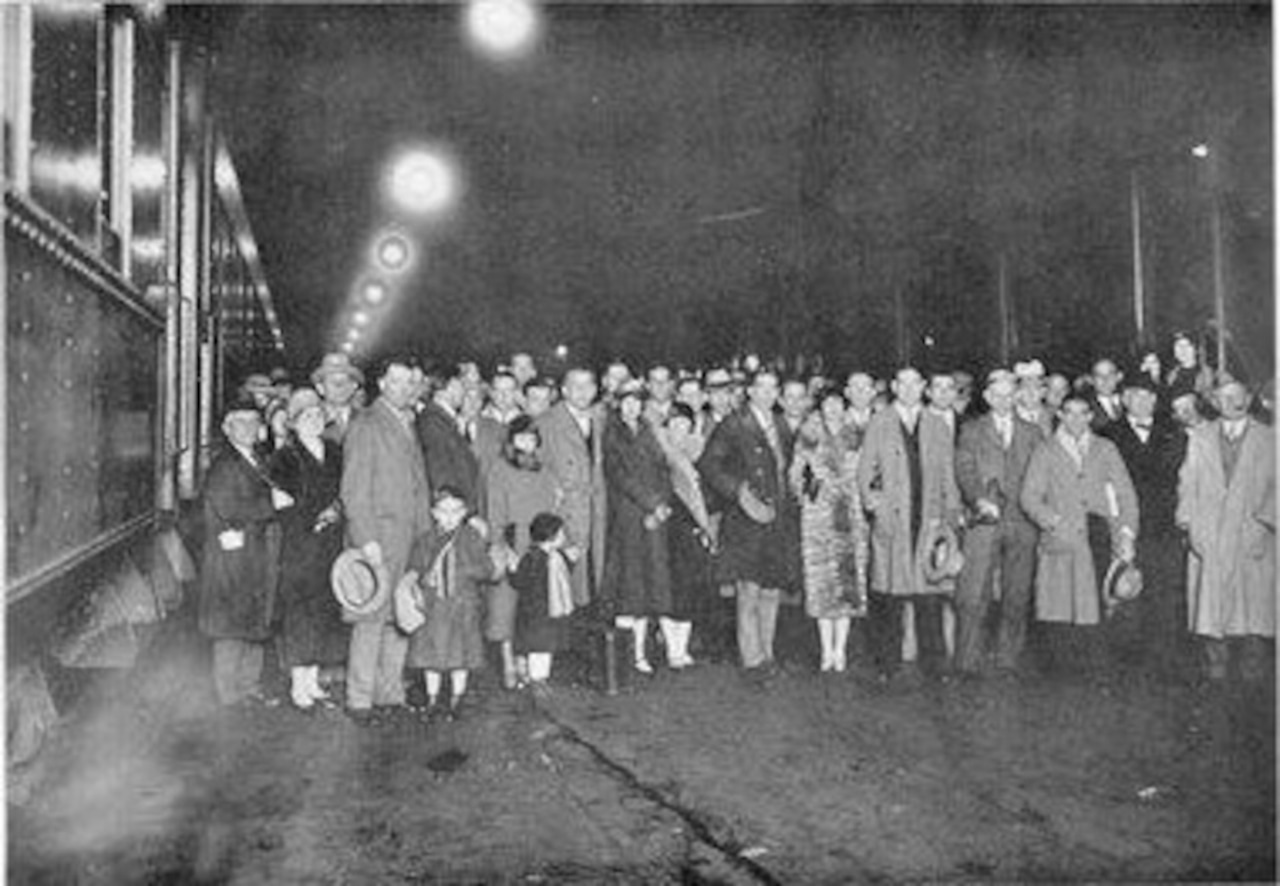 The Alabama football team prepares to board the train for California prior to the 1926 Rose Bowl against Washington. Alabama won the game 20-19. (Photo from Champ Pickens’ “The Will to Win,” courtesy of the Paul W. Bryant Museum)Paul W. Bryant Museum photoHeading West
Its Rose Bowl invitation secured, Alabama embarked on a four-day train trip to California in mid-December 1925. Once on the West Coast, the Crimson Tide set up at the famed Hotel Huntington in Pasadena.
After a few days of cavorting with Hollywood movie stars and Alabama alumni who lived in or near Los Angeles, Wade laid down the law with his players and put a stop to non-football activities. The Alabama coach held closed practices sessions, putting his team through grueling physical workouts in the days leading up to the game.
One member of Alabama’s traveling party that year was publicity man Champ Pickens, who was known for giving name to the “Million Dollar Band” and would later found the Blue-Gray All-Star Classic in Montgomery. As former Birmingham News sportswriter and noted Alabama football historian Clyde Bolton explained in “Roses of Crimson,” Pickens arranged for the various civic clubs in Alabama to send telegrams to the Crimson Tide players, imploring them to win the Rose Bowl for the glory of the Southern states.
Wade relayed a similar message to his team in the pre-game, telling the Crimson Tide that “Southern football is not recognized or respected. Boys, here’s your chance to change that forever.”
With a crowd of close to 50,000 in attendance, Washington jumped out to an early lead. Wilson had an interception and a touchdown pass as the Huskies built a 12-0 advantage at halftime.
It was Hubert — one of Alabama’s team captains — who first tried to inspire the Crimson Tide at halftime. Then Wade tried a little reverse psychology.
“We were dejected country boys, had our lip out,” Alabama fullback Grant Gillis said many years later. “Wade came in late after everybody was sitting down. He said, ‘and they told me that boys from the South would fight.’ And he walked out. That’s all he said.”
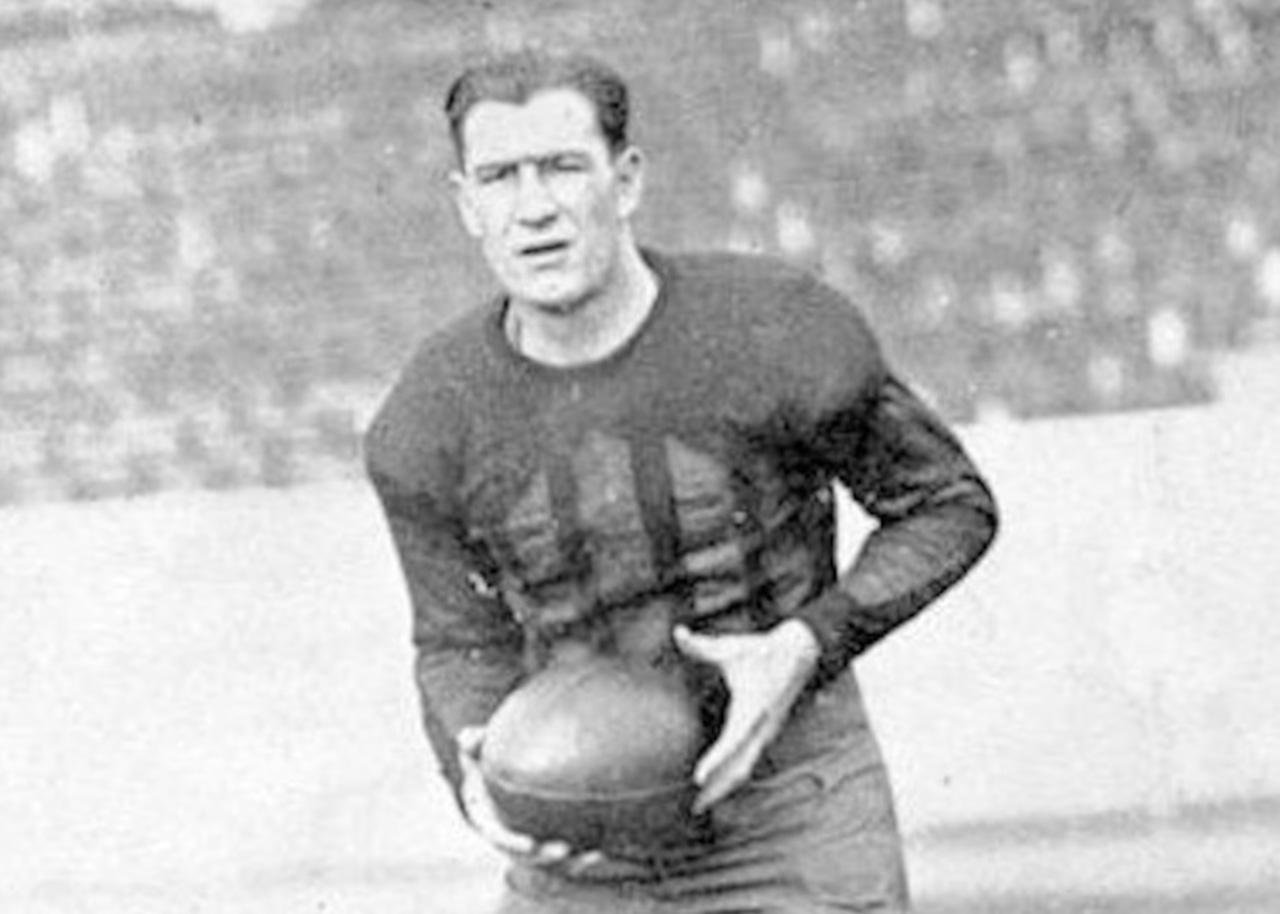 Alabama fullback Allison “Pooley” Hubert is shown at practice prior to the 1926 Rose Bowl against Washington. One sportswriter referred to Hubert as a “species of human wildcat.” (Photo from Champ Pickens’ “The Will to Win,” courtesy of the Paul W. Bryant Museum)Paul W. Bryant Museum photoA furious rally
Alabama dominated the third quarter, and thereby secured the victory. After the Crimson Tide received the second-half kickoff, Hubert scored on a 1-yard touchdown run and Bill Buckler added the extra point to make it 12-7.
Following a defensive stop, Gillis hit Brown on a 59-yard touchdown to make it 14-12. Washington then fumbled the kickoff, and Hubert found Brown wide open for a 30-yard score — Alabama’s third touchdown in seven minutes — for a 20-12 lead after three quarters.
“Pooley told me to run straight upfield as fast as I could,” Brown said. “When I reached the 3-yard line I looked back and sure enough the ball was coming over my shoulder. I took it in stride and went over carrying somebody. The place was really in an uproar.”
Washington rallied with an 88-yard drive in the fourth quarter, capped by Wilson’s 20-yard touchdown pass to George Guttormsen, which made the score 20-19. Alabama killed any further threats by the Huskies with a pair of turnovers, plus what was described as a brilliant open-field tackle by Brown on Wilson.
“It was almost unbelievable what we accomplished,” Winslett said.
Wilson was a star in defeat for Washington, totaling 317 yards rushing and passing and making several big plays on defense. He was twice knocked out of the game due to injury, including once with a hip problem that coincided with Alabama’s third-quarter scoring spree.
Legendary New York sportswriter Damon Runyon was in attendance that day, and wrote in his Universal Syndicate column that Wilson might have been playing with broken ribs. Runyon also referred to Alabama’s Hubert as “a species of human wildcat.”
In his post-game remarks to The Birmingham News, Wade made note of the Rose Bowl crowd. The stadium being filled with USC fans, the initially skeptical Pasadena patrons quickly turned against conference rival Washington once Alabama proved its championship mettle.
“Washington was undoubtedly one of the greatest football teams I have ever seen and I am filled with much gladness that we won,” Wade said. “The fact that the crowd at the game gave our team such wonderful support made the triumph a still more joyous one. The people here have been mighty courteous to all of us and I, as well as the rest of the party, certainly appreciate it. Our team was in the best shape Friday it has ever been. They all fought hard and gave their every ounce — I am mighty proud of each and every one of them.”
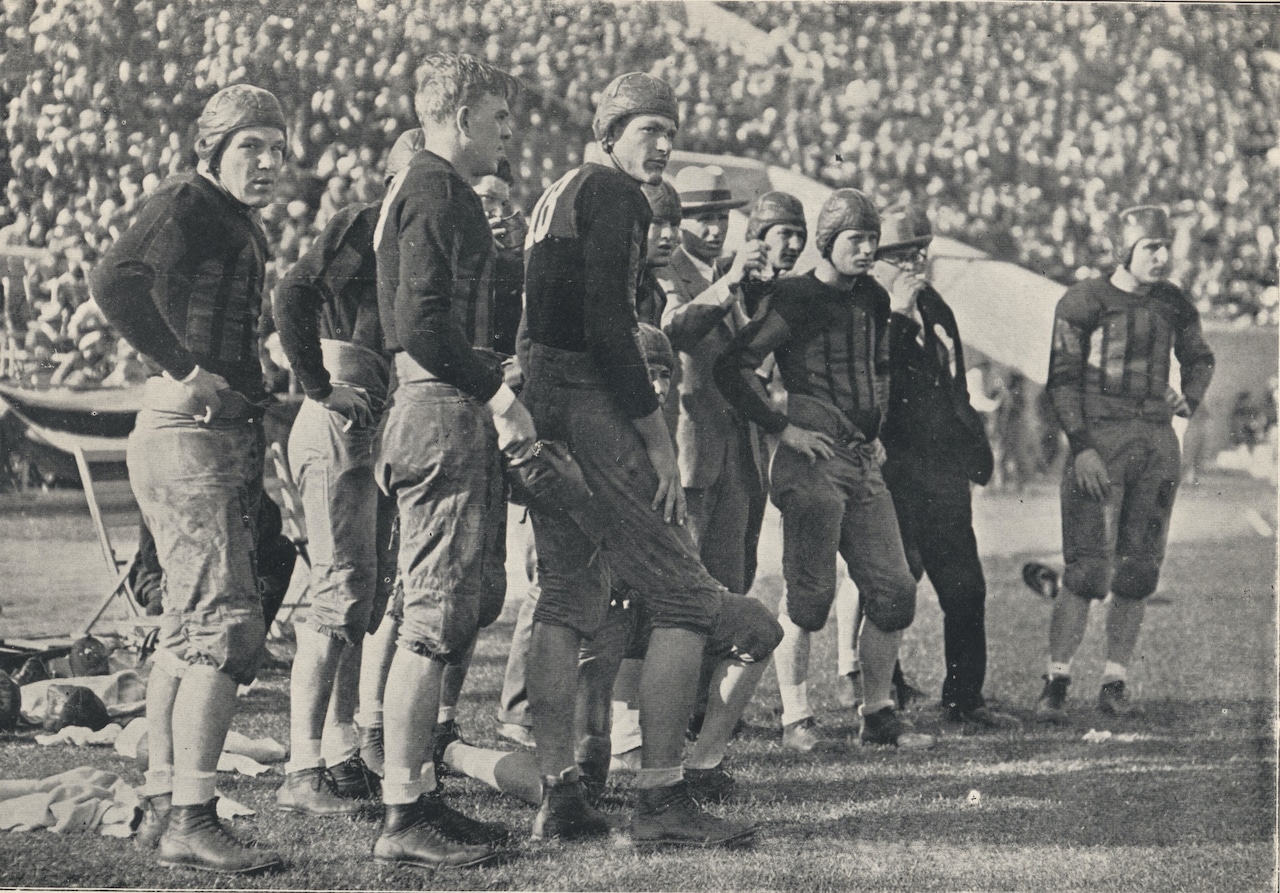 Alabama football coach Wallace Wade is shown with his team on the sideline at the 1926 Rose Bowl (Photo courtesy of the Paul W. Bryant Museum)bn‘The shock of a tidal wave’
Writing in The Birmingham News the next day, sports editor Zipp Newman compared the shock of Alabama’s victory over Washington to the great 1906 earthquake that destroyed much of San Francisco. So monumental was the Crimson Tide’s win, Newman wrote, that “the whole Pacific coast cringed, while the Middle West and East trembled from the shock of a tidal wave that came after being disturbed by a vicious tornado.”
Rose Bowl historian Maxwell Stiles for many years referred to the 1926 game as the greatest ever played. Some 80 years after the fact in “Roses of Crimson” Flynt was quick to note its significance to the South.
“It was as if Southerners had proven something that the South had been trying to prove ever since the Civil War, that we were as good as anybody else,” Flynt said, “that, given a level playing field, and the same number of players on the field, that we could go out there and beat anybody, even the best that the country could possibly produce.”
The Alabama team took the train back to Tuscaloosa in victorious fashion, stopping at several small towns along the way, where they were feted with cheers and gifts. Once they arrived back on campus, they received a parade to downtown and a hero’s welcome from local and state dignitaries.
In his official remarks at the victory rally, Alabama governor William Brandon spoke prophetically, saying “You have stamped your character on the lives of thousands. You have written history for Alabama that will never be forgotten.”
Alabama returned to the Rose Bowl in 1927, 1931, 1935, 1938 and 1946, winning three of those, losing once and tying another (in other words, there’s a reason the line “Remember the Rose Bowl” is included in the Crimson Tide’s fight song, “Yea Alabama”). Coincidentally or not, following the Crimson Tide’s 34-14 rout of USC in 1946, the game entered into an exclusive agreement with the PCC (the pro-genitor of the modern Pac-12) and the Big Nine (now the Big Ten) that would last until the Rose Bowl reluctantly joined the Bowl Championship Series in 2002.
Wade left Alabama after the 1931 Rose Bowl due to a power struggle with Denny, and for many years coached at Duke (the Blue Devils’ stadium is named for him). He lived until 1986, when he died at age 94.
Brown became a famed movie cowboy, appearing in more than 200 Hollywood films before his death in 1974. Hubert went into coaching, enjoying success at both the college and high school levels before his death in 1978.
After leaving Washington, Wilson joined Illinois’ Red Grange among the first college stars to sign on with the upstart National Football League. Wilson died in 1963.
(Winslett, who became an All-American as a senior in 1926, was among the longest-lived of Alabama’s original Rose Bowl players. He died in 1998 at age 94.)
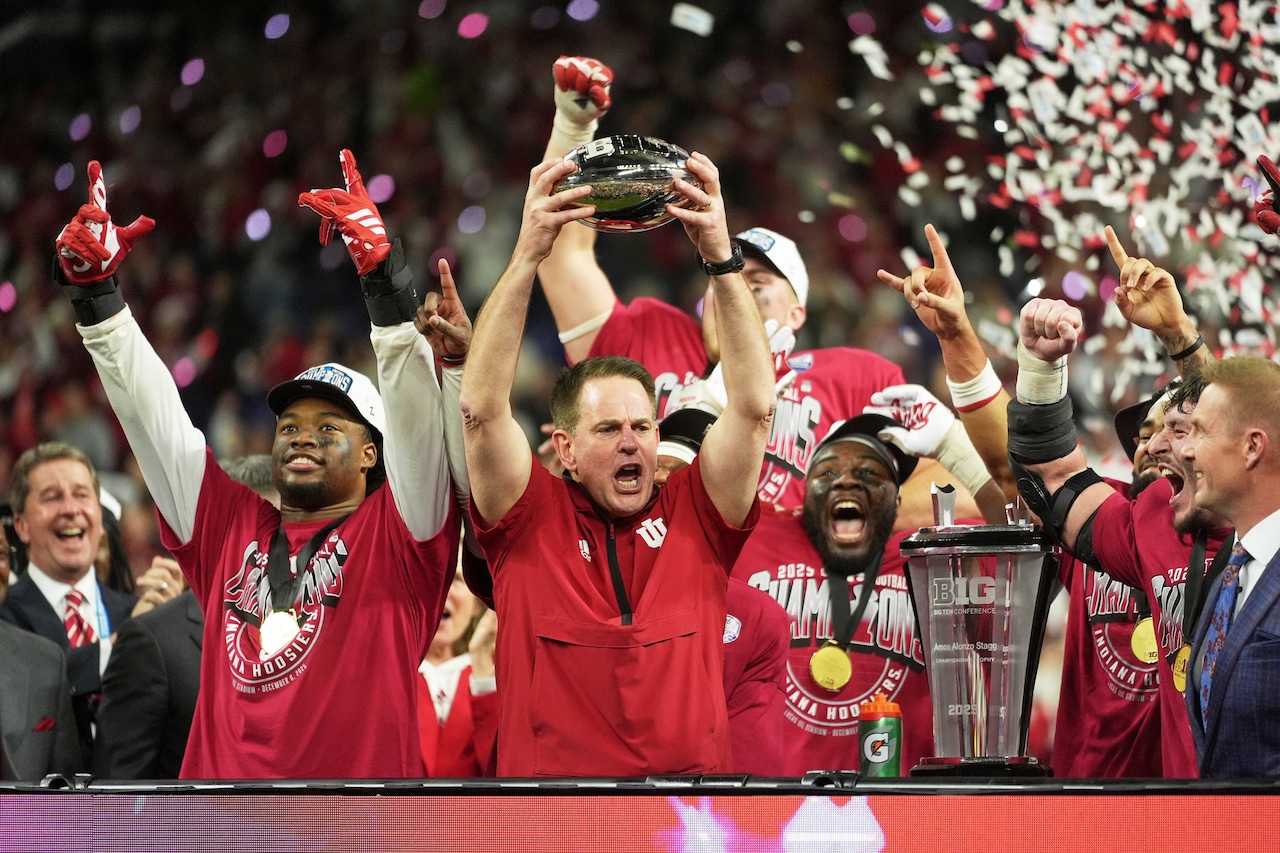 Top-ranked Indiana, coached by former Alabama assistant Curt Cignetti, awaits Alabama in the Rose Bowl on Jan. 1. (AP Photo/Michael Conroy)APHappy returns to Pasadena
As the 50th anniversary of the 1926 Rose Bowl approached, Alabama scheduled a game with Washington for Oct. 11, 1975, at Denny Stadium in Tuscaloosa. With many of the 1926 Rose Bowl luminaries in attendance — including Hubert, Gillis, Buckler and Wade, as well as several former Washington players — the Crimson Tide won 52-0.
Alabama and Washington have played three times since, with the Crimson Tide winning in Seattle during the regular season in 1977, in the Sun Bowl in 1986 and in the Peach Bowl CFP semifinal game after the 2016 season. Alabama will play Indiana in football for the first time on Jan. 1.
Alabama did return to Pasadena for the 2010 BCS national championship game, beating Texas 37-21 for the first of six titles won under Nick Saban. The Crimson Tide beat Notre Dame 31-14 in the Rose Bowl CFP semifinal game on Jan. 1, 2021, but due to COVID restrictions put in place in California during the COVID pandemic, that game took place in Arlington, Texas.
Alabama played in the Rose Bowl game in Pasadena for the first time since 1946 two years ago, losing 27-20 to Michigan in overtime of a CFP semifinal that was also Saban’s last game with the Crimson Tide. But had Alabama not beaten Washington on that long-ago New Year’s Day in Pasadena, it’s fair to wonder if Southern college football would have ever become the national institution and regional point of pride we now recognize it to be.
“Suppose Alabama had lost badly in 1926,” Flynt said in “Roses of Crimson.” “Suppose they had lost by 40 points. Would football have then become the sort of important, defining experience for Southerners that it is going to become over the next five decades? And my answer to that is, no it would not have. Because the South would have then been proved to be inferior again in some other dimension of life, and what have happened is the South would have found something else in which to excel. It would have invested this kind of emotional energy and physical commitment into something else.”
But Alabama did win the 1926 Rose Bowl, claiming the first nationally recognized football victory in its history. And that game deserves to be remembered today, if in a slightly less colorful way than how Newman described it then, when “the plunging, ruthless Crimson Tide of Alabama hurled the Purple Tornado of Washington far out into a dizzy sea.”