
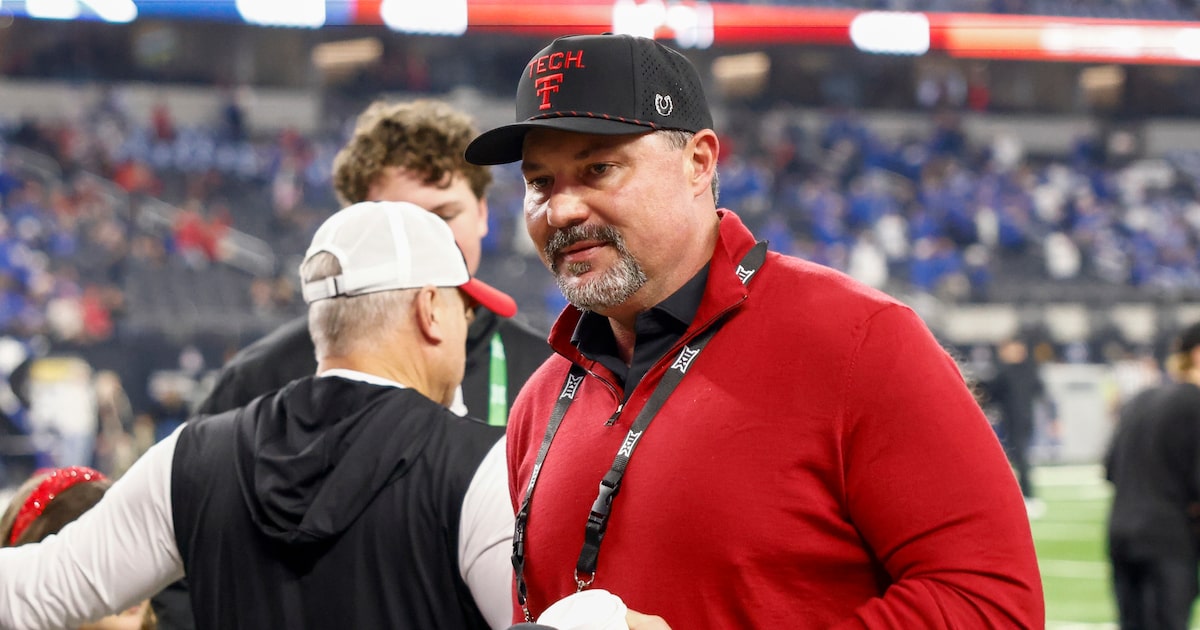
As Texas Tech prepares for its College Football Playoff close-up, the man who’s become the face of the sport’s new economic model, billionaire oilman Cody Campbell, surveys the ever-changing landscape and knows the price to compete at the highest level is already going up.
The Red Raiders’ $25 million roster helped deliver them the Big 12 Conference title, a first-ever berth in the 12-team CFP and oodles of national attention. But the chairman of Texas Tech’s Board of Regents knows this: Next year will require a $30 million roster to field a playoff-caliber team.
In an age when deep-pocketed boosters are a program’s lifeblood, Tech has zero doubt it can match any college football team’s payroll nationwide after its athletic fundraising clubs raised one-year totals of $49 million and $25.4 million for all sports. This team, Campbell stressed, is not a one-hit wonder.
“The financial part is not even going to be a challenge for us,” Campbell told The Dallas Morning News in a lengthy interview. “As far as coming up with the money, we can come up with all the money you could possibly ever spend. Our fundraising capacity is very, very high.”
Business Briefing
Texas Tech’s circumstances illuminate the new world order. With the facilities arms race a relic, the team payroll arms race is taking hold, exacerbating a disparate landscape of haves and have-nots. Either you possess the cadre of boosters with deep pockets and championship dreams, or you must find alternative revenue streams — perhaps private equity — to put enough dollars into athletes’ pockets to remain viable at the sport’s highest level.
Boosters have always been woven into the fabric of college sports, but now they play a hands-on role in paying athletes above-board. Now, when one talks about team payrolls, it’s not taboo like it was four decades ago when then-Texas Gov. Bill Clements famously decided Southern Methodist University had a payroll to meet.
And now there is proof of concept: Ohio State’s $20 million roster last season delivered a national title. Texas Tech’s high-priced team will meet another well-heeled program, Phil Knight-funded Oregon, in Thursday’s Orange Bowl. And SMU‘s wealthy donors quickly ponied up nine figures to hasten the school’s entrance into the ACC, from which the Mustangs reached last season’s College Football Playoff in their first season in the power league.
“This is going to continue to escalate,” David Ridpath, a professor of sports business at Ohio University who has appeared before numerous Congressional committees regarding college athletics, told The News. “And I think some schools are going to fall by the wayside — maybe a Virginia Tech can’t keep up with a Texas Tech. The Ohio States, Texas Techs, Floridas, LSUs, they can go as long as they want to go — the money will always be there.”
Model ‘sustainable’ with donors
When athletes began monetizing their brands at the dawn of NIL era in July 2021, schools began to ramp up, with some creating the most ambitious, aggressive third-party, donor-funded collectives. Then came a patchwork of state NIL laws, courts increasingly looking askance at the NCAA’s so-called amateur model, and the association’s years-long attempt to secure an antitrust exemption from Congress.
Beginning last July, when the settlement in the landmark House v. NCAA case enabled schools for the first time to share up to $20.5 million with athletes, schools with the wealthiest donor bases secured an immediate advantage.
For schools that share the full amount with athletes, 75% of the $20.5 million typically flow to football players, with some schools sharing as much as 85%, Mit Winter, a Kansas City-based college sports attorney whose practice focuses on representing athletes, agents, universities, NIL donor-funded collectives and businesses in the NIL space, told The News.
In addition to those revenue-sharing dollars, athletes can also receive additional compensation from third-party entities like donor-funded collectives or corporate brands as long as the NIL deals are for a valid business purpose and represent fair market value. Enforcement of such deals has, to date, proven virtually nonexistent.
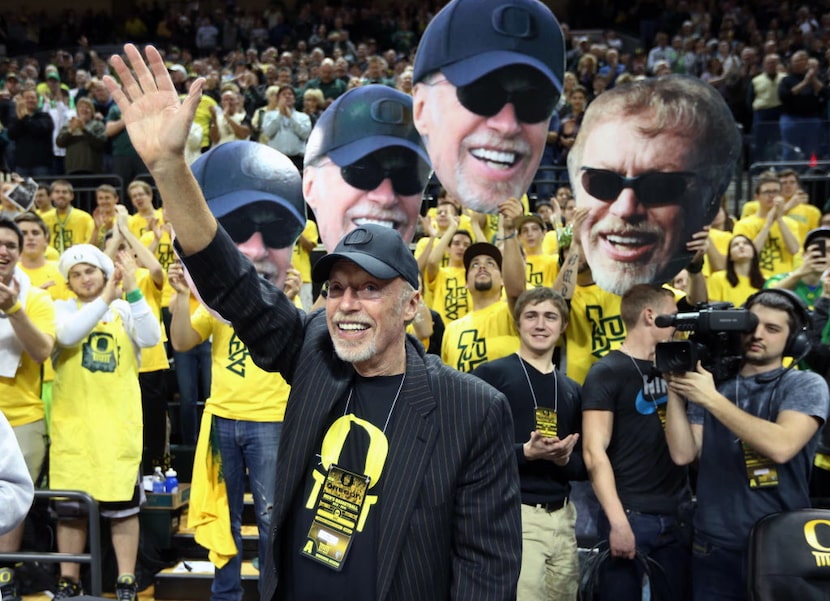
FILE- In this Feb. 1, 2014, file photo, Nike’s Phil Knight acknowledges the crowd on Uncle Phil Appreciation Night at Matthew Knight Arena during Oregon’s NCAA college basketball game against Southern California in Eugene, Ore. Nike said Thursday, June 30, 2016, that its’ co-founder and chairman has retired from its board. (AP Photo/Chris Pietsch, File)
Chris Pietsch / AP
And putting together the most lucrative compensation packages for athletes is critical to attract and retain top-tier talent.
“If you are one of these schools that has these donors laying around, it’s very sustainable,” said Parker Graham, CEO and founder of Vestible — a technology platform helping college athletics raise equity capital. “The problem is, what does everybody else do? What we’re seeing is the limitation of the donor model being the answer to fund college athletics. You have the haves and the have-nots, and if you’re a have-not, you have to figure out a way to fill that gap.
“You could run an athletic department at a $10 million deficit five years ago, and there were no issues. But when NIL opened that door, and rev-share opened that door, that’s a brand new line item. If you want to compete at the highest level, it’s a non-negotiable to have, at least, $15 million in your pocket.”
Or more.
Winter said $30 million payrolls will be the prerequisite for teams harboring College Football Playoff aspirations in 2026.
“We’ll see payrolls continue to rise each year,” said Winter, who was named one of the 80 most influential figures in the NIL space by Silver Waves Media.
Regardless of tradition or campus location, a robust donor base gives a school at least a chance at CFP dreams. Without it, you’ll be like Arizona State Coach Kenny Dillingham, who in recent days issued a plea to boosters: “We need to find one of these really rich people in this city to step up and stroke a check … We live in Phoenix, Ariz. You’re telling me there’s not one person who could stroke a $20 million check right now?”
A ‘great return’ on investment
For years, Campbell had a 10-year plan for the NIL era, rather than visions of merely crafting one shining moment.
He was thrilled nearly three years ago when he told me the then-independent Matador Club, an NIL collective for Texas Tech athletes, raised $8 million from 4,000 donors. It’s come a long way: In its final year before moving under the university’s umbrella, the Matador Club raised $49 million from mid-2024 to mid-2025. Campbell said that is in addition to the $25.4 million also raised for all sports by the Texas Tech athletics fundraising arm Red Raider Club from donors in the last year (2024) on record.
“It is staggering, it’s incredible, but that’s the position Texas Tech is in …,” said Campbell, a fourth-generation Texas Tech graduate who played football there a quarter-century ago. “The stakes went up.”
Overall, Texas Tech in September announced the 2025 fiscal year was the largest fundraising year in university history: 37,845 donors contributed $236 million to support students, research and athletics.
“Athletics sits at the front porch of each institution,” Big 12 Commissioner Brett Yormark told The News. “It drives the entire ecosystem. It drives donor support.”
Texas Tech identified an opportunity right before the revenue-sharing model took hold last July. Like some forward-thinking schools, they front-loaded payments to athletes so those dollars wouldn’t count against the $20.5 million cap. Campbell said they front-loaded more than 80% of dollars, all except for some $4 million. Then they could use part of this year’s revenue cap for next year as well, he said.
“It was the window between the complete Wild West and the House settlement, which is going to become the Wild West before too much longer,” said Campbell, who lives in Fort Worth. “We could be aggressive and get really good players. And have good communications with athletes and boosters to understand what we are doing and why at that time.”
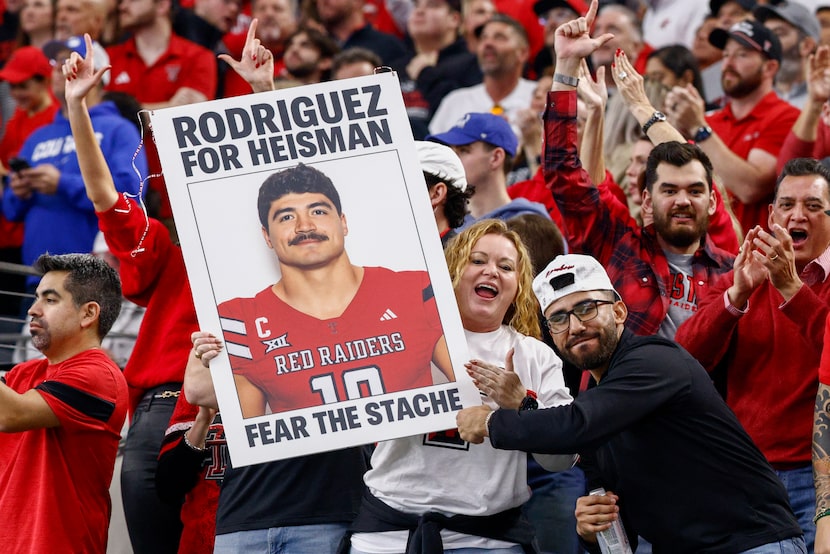
Texas Tech fans celebrate after a touchdown during the first half of the Big 12 Championship football game against BYU at AT&T Stadium, Saturday, Dec. 6, 2025, in Arlington.
Elías Valverde II / Staff Photographer
In the revenue-sharing age, Campbell said, some schools break promises and have “disingenuous” recruiting practices, where they’ve offered three different wide receiver transfers $500,000 apiece which is payable at the end of spring football practice. In the spring, he added, they then decide which receiver they want and tell the other two, “‘You can hang around if you want, but we’re not going to pay you that money.’ We have never done anything like that.”
Campbell said they’ve paid everything they’ve promised players when they said they would pay them. They’ve explained to donors the annual giving model rather than facility-focused fundraising. With some 250,000 alumni, they’ve gotten big donors to write seven-figure checks annually and others to contribute $50 per month — it adds up.
“Look at Texas Tech or BYU, when you invest, you want a good return, and both are seeing a great return,” Yormark said. “All of our schools are, for the most part, spending close to the [$20.5 million revenue-sharing] cap, if not at the cap — which is terrific.”
Campbell stressed Texas Tech’s formula isn’t merely about paying athletes the most money. It’s about proper business strategy, character evaluation, ethical practices and execution.
“The programs that succeed long term will not simply spend more,” Adam Breneman, co-founder of the College Sports Company — which has built athlete-driven media networks in partnership with collectives at several prominent schools. “They will spend better. You will see sharper prioritization by position, by retention versus acquisition, and by return on investment. We are still very early in this market. Early markets are inefficient and emotional. Over time, discipline replaces novelty. That is when things begin to stabilize.”
Money alone doesn’t guarantee on-field success. Graham said to consider schools like Texas, Notre Dame and Tennessee, all of which missed the CFP despite being awash in financial resources.
Money is table stakes. Business strategy then becomes the differentiator.
“Even if you have the money, it’s also not enough,” Graham said. “You also have to have the people on staff selecting the right players, putting players in the right positions, having the right coaching staffs involved.”
SMU will ‘play the game hard’
SMU’s David Miller is an oilman with deep pockets and a long memory — and he has led the charge in the Mustangs’ big-money pursuit to get a seat at the power conference table.
A member of SMU’s 1972 Southwest Conference championship basketball team, Miller, now chair of the university’s Board of Trustees, remembers how the 1987 death penalty — a punishment so harsh that the NCAA never levied it again — decimated the football program.
When he graduated SMU, Miller remembers thinking that, while he didn’t know how his life would play out, he hoped someday he’d be able to give back to the program because he was grateful for his athletic and academic collegiate experience. For 15 years or so, that amounted to little more than $100 per year to the Mustang Club, the official fundraising organization of SMU athletics.
SMU’s swath of millionaire and billionaire boosters — many of whom have been waiting decades for this new paradigm — are poised to super-charge the private school’s arrival in a power league. SMU is an ACC school with DNA fit for the SEC, whose schools historically have possessed a surplus of resources and an aggressive strategy. Four decades ago, the behavior of its well-heeled boosters made the school a pariah. In today’s landscape, similar behavior, now above board, can make SMU something else: A CFP contender.
“We are going to play the game hard,” Miller told me earlier this year during a lengthy interview at Moody Coliseum.

Harris Miller (left), 9, and his grandfather David Miller, Chairman of the Board of Trustees for SMU, find their seats as SMU hosted an advance screening of the new ESPN documentary, “Thunder On: Resurgence of the SMU Mustangs” at Moody Coliseum in Dallas on Friday, September 12, 2025.
Stewart F. House / Special Contributor
This is his vision. It’s why, in 2022, Miller and influential SMU donors created the Power Conference Task Force to court leaders from power leagues. It’s why Miller crisscrossed the country on his Challenger 300 private plane the last few years for meetings with key power brokers.
Power league membership has its privileges — and SMU donors were eager to dig deep in their pockets to make a nine-figure commitment and had no issues forgoing $200 million-plus in ACC TV revenue over nine years just to gain entry into the conference. In fact, in the first seven days after the ACC announcement in September 2023, SMU raised $100 million. And in the first three days, media coverage of the move generated more than $163 million in advertising value.
SMU athletic department leaders believe the narrative surrounding its athletic department’s success should extend beyond merely possessing wealthy boosters who write seven-figure checks. And its recent formation of Mustang Partners — an athletic department division focused on sponsorship, marketing and NIL — to enhance revenue and NIL deals for athletes is evidence of a forward-thinking overall business strategy.
In the 2025 fiscal year, SMU’s Mustang Club raised $65 million in cash gifts from 6,158 donors, the highest single-year cash total in school history.
“There is no question that we’re in this game to compete at the absolute highest level,” Miller said. “You’re talking about competing against the SEC, the Big Ten, as well as the ACC and Big 12. It’s going to take serious commitment from people. It’s going to take a serious level of investment — no doubt. Thankfully, we have an incredibly generous donor base. If you’re not competitive from an NIL standpoint, you’re just not going to attract that type of talent.”
‘You just need the money’
In early 2024, University of Indiana coach Curt Cignetti struck up a conversation with a 1981 Hoosiers alum at a private fundraising concert that John Mellencamp hosted to help raise funds for Indiana’s NIL efforts.
The coach and alum were separated by just three years, both had Pittsburgh roots and wound up forging a friendship.
In time, that alum, Mark Cuban, made a sizable donation to the athletic department.
In the past, Cuban gave Indiana a $5 million gift to create a sports media and technology center and contributed $6 million to the school’s club rugby team. But this donation was about big-time college sports.
“I gave some to sports this year for the first time ever,” Cuban told CBS Sports early this season, calling his donation “a big number.” “Typically, I was the exact opposite. I’m not a fan of anything that I believe raises tuition in the least bit. But after getting to talk to Cig and seeing what was going on, they kind of talked me into it.”
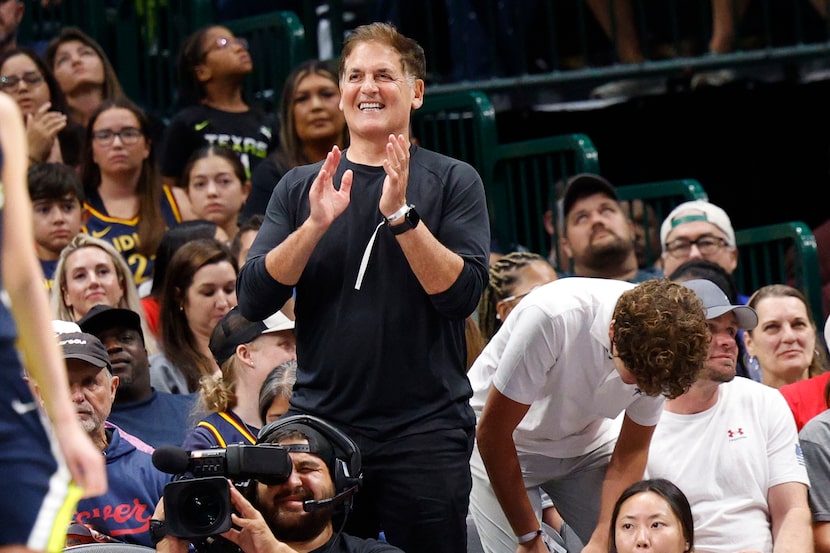
Mavericks minority owner Mark Cuban cheers during the second half of an WNBA basketball game between the Dallas Wings and the Indiana Fever at American Airlines Center, Friday, June 27, 2025, in Dallas.
Chitose Suzuki / Staff Photographer
With a strong donor base, Indiana, the CFP’s top seed, has been one of the programs to emerge from obscurity. Vanderbilt is another school that demonstrated the power of booster dollars trumping tradition.
“It gives programs who haven’t had consistent historical success the opportunity to be great with some investment — just look at Indiana, or even Texas Tech,” Sam Ehrlich, a Boise State sports law professor and one of Silver Waves Media’s top 80 most influential figures in the NIL space, told The News. “But that investment can be hard to find.”
Even at a tradition-rich program like Nebraska, “in a world of like $30, $40-million rosters, which isn’t going away, I’d like us to do the same thing,” Nebraska coach Matt Rhule said at an October news conference when his name was linked to the Penn State job that had just opened. “And there’s sort of like a ‘Hey, that’s not really the Nebraska way,’ and I’d like it to be. I’d like to invest. I’d like to be at the front of everything.”
At LSU, where donors are hungry for a return to glory under new coach Lane Kiffin, the Tigers are prepared to commit $25 to $30 million for roster building through revenue sharing and additional NIL funds, The Advocate reported. Their 2026 payroll is a substantial escalation from the $18 million roster that then-coach Brian Kelly said he had this season before being fired.
Rob Sine, CEO of NIL collective operator Blueprint Sports, told The News that team payrolls of $30 million will be the baseline next season to field a competitive team in one of the four major conferences. Sine said the going rate for a strong power four conference quarterback in the transfer portal will be upwards of $3.5 million for next season.
“It’s not just Alabama winning every year — you just need the money,” Graham added. “Show me the money.”
‘We know how to do it’
Aside from booster donations, revenues are expected rise at some schools even if much-discussed donor fatigue begins to take hold. Power conferences — the Big 12 and Big Ten initially — will begin to take their TV broadcast deals to the market at the beginning of the next decade.
“The market will stabilize — but not yet,” Sine said. “This is less about donors and ‘donor fatigue’ and more about upcoming TV deals over the next four to 10 years [Big Ten and SEC], the sponsorship sales and multimedia rights guarantees you’re seeing at schools like Texas A&M, USC and Washington, and the new apparel deals at schools such as Tennessee, Penn State and N.C. State. These revenue streams are raising the bar nationwide and offering new game plans for sports programs to consider.”
The cost to compete at the highest level will also escalate because the salary cap will increase, which will favor schools willing and able to annually increase revenue-sharing payments to athletes. The $20.5 million threshold equates to 22% of the average power conference school’s revenue. The cap number will rise roughly 4% each year and could reach $30 to $33 million per year in the next decade. Steve Berman, co-counsel for plaintiffs in the House V. NCAA case, told me after the settlement: “It goes up 4% each year, and then there is a look-back, where we will look at the actual numbers and match it up. The point is, we are going to capture any increases in revenue.”
In July, the College Sports Commission launched as the new enforcement arm to attempt to police the parameters of the cap and ensure the NIL deals athletes secure with a third party are for valid business purposes and not merely a recruiting incentive. But thus far, the CSC has been toothless.
“The House settlement was obviously designed to cut it off [escalating team payrolls beyond the $20.5 million cap], and maybe the College Sports Commission is eventually able to enforce it in a way where it can actually have that effect,” said Boise State’s Ehrlich, who runs the College Sports Litigation Tracker, an online database that monitors ongoing lawsuits in college sports.
“But it’s pretty clear that the CSC’s authority may end up being a house of cards. It only takes one booster or other third-party to file an antitrust lawsuit against their purported enforcement over third-party deals for it all to potentially come crashing down. That right there is going to be the real signal as to whether the escalation in payrolls is sustainable or not.”
At the same time, Winter noted, schools are seeking alternative or additional revenue streams, either from private equity or private capital, especially if they lack the high-octane donor base.
“There are people willing to provide cash to college athletics programs, and many programs are going to take that cash to keep up with spending by competitors,” he said.
The Big 12 Conference is negotiating a business partnership with investment firms Redbird Capital and Weatherford Capital to provide its 16 members the opportunity to opt in to receive a capital infusion of some $30 million per school. It is not a private equity deal.
And one Big 12 school, Utah, is finalizing an agreement with New York-based private equity firm Otro Capital to create a for-profit entity expected to generate some $500 million.
Texas Tech’s Campbell said the Red Raiders have zero interest in private equity, considering the strength of their donor base.
“They’re not very many that can [match Tech’s donor base] and so they’re scraping and clawing and grabbing and mortgaging their future, essentially just to get through the next couple of years,” Campbell said.
If Texas Tech wins the national championship, Vestible’s Graham said, it would be a boon for college football, demonstrating that anyone can win at any point in time — “you just need the money.”
And even more money the following year. To that point, Texas Tech plays in the Orange Bowl on Thursday. The transfer portal opens Friday.
Much like last winter, Campbell and Texas Tech officials expect to jump on video calls with major donors, watch videos of prospects and talk business strategy and dollars and sense.
“The inclusion of everybody that is involved is important because the team isn’t just the team anymore,” Campbell said. “That team extends out to all boosters and donors and folks that are passionate about the school.”
He paused.
“We will be aggressive. We know how to do it.”
 On Trump’s third term, was Miriam Adelson just trolling?
Mavs owner pledges to donate $250 million to another presidential campaign.
 ‘Relentless’ Big 12 boss on mission to make conference ‘most globally relevant’
With a 185% increase in sponsorship revenue and realignment, Big 12 leans on innovation in new revenue-sharing era.
 Sponsors line up for soccer action at Perot Museum as World Cup matches draw near
Ahead of the 2026 FIFA World Cup, the 10,000-square-foot interactive exhibit is set to open March 7.