

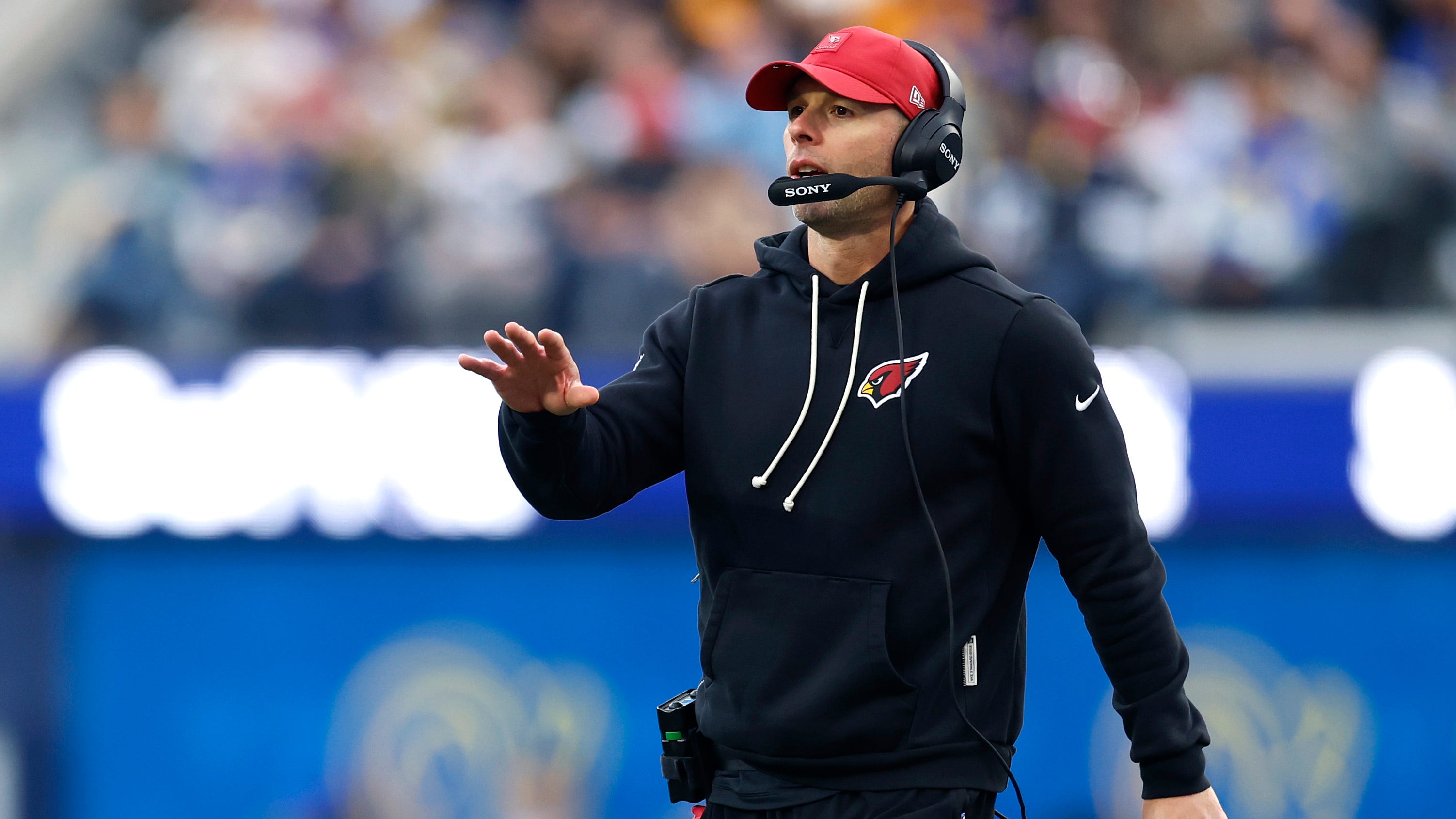

The Republic analyzes the Cardinals’ firing of Jonathan Gannon
The Republic’s Theo Mackie and Greg Moore discuss the firing of head coach Jonathan Gannon and where the Arizona Cardinals go from here.
There was one scene from State Farm Stadium this season that seemed to exemplify what has become of the Arizona Cardinals’ home-field advantage.
It came against the Tennessee Titans, back in Week 5. While the stadium was mostly full that day, one section was glaringly empty: the Casa Roja club, which sits at midfield, directly behind the opposing bench.
The club was added last offseason, with luxury dining options and extra-wide seats. A year earlier, the team added “Casitas” — field-level luxury boxes — behind one end zone.
In both areas, a single-game ticket goes for more than $1,000. And both removed sections previously filled with season-ticket holders who were forced to either relocate or pay significant price hikes.
On social media, these new additions have drawn criticism from long-time fans.
In his Jan. 5 press conference to announce the firing of head coach Jonathan Gannon, owner Michael Bidwill was asked about that frustration — and specifically the notion that the Cardinals are primarily catering to wealthy fans.
“I’m not sure I totally agree with that,” Bidwill said. “I think that we have done a lot of things to enhance the stadium.”
Bidwill then pointed to specific examples.
“Food selection at the stadium,” Bidwill said. “We’ve now got over a dozen different local brands inside the stadium. We have enhanced the Wi-Fi, which everybody has access to. The video boards, the gameday experience, the gameday entertainment. All the enhancements outside the stadium. The upgrades in the concessions, we just rebranded all the concessions.”
Bidwill concluded his thought with a defense of the recent stadium renovations.
“Every year, we make investments into State Farm Stadium,” Bidwill said. “We’re very proud of those investments. There are opportunities where we have made some substantial investments that I’m not sure we get complete credit for, in the terrace level and other areas that are accessible to all fans.”
Still, the product has grown increasingly unaffordable — at least for fans who purchase directly through the team. Shortly before the home finale, tickets were available on the secondary market for just $12, a reflection of the Cardinals’ poor performance in their 3-14 season. But season ticket holders have seen consistent price hikes in recent years, with increases often eclipsing 10%, depending on the location of their seats.
Bidwill defended those increases by noting that the Cardinals are “still, I believe, below the average of NFL pricing for game tickets.”
He was then asked whether the financial impact on fans is a concern.
“Well, we try to take that into consideration when we’re pricing,” Bidwill said. “So our team is looking at that every year. And so we try to make it as affordable as we can. But we also have to go out there and compete with the rest of the National Football League.”
With their next head coach hire, the Cardinals will aim to do that. The question is whether it will be enough to bring fans back to State Farm Stadium.