
Chicagoland is abuzz following the Bears’ fourth-quarter comeback last weekend. Players, coaches and the Soldier Field crowd are all being credited with roles in the exciting rivalry win over the Green Bay Packers.
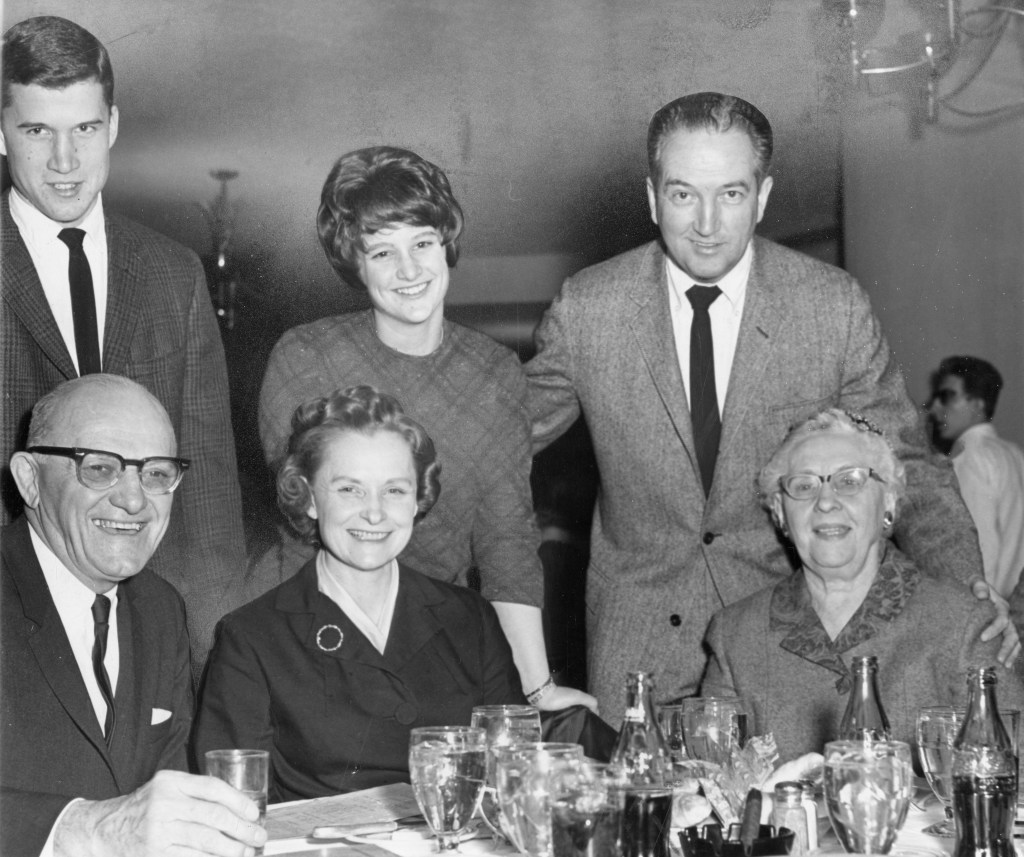
Overlooked in all the post-game hoopla and cheese-grating is the team’s management, members of the McCaskey clan, scions of legendary Bears founder George Halas, who died in 1979. For decades, they have had ties to Lake County, where many team executives and players reside.
It has been their enduring journey and long-term vision to bring another championship to Chicago. It’s surely been a season to remember, which includes the death of family matriarch Virginia Halas McCaskey at age 102 in February of 2025.
For years, sports columnists and callers to sports talk shows railed over the family’s stewardship of the Bears as teams faltered on the field. They pressed the McCaskeys to sell the franchise, worth an estimated $8 billion, to some nouveau riche entrepreneur who would open his or her pocketbook.
The McCaskeys were cheapskates, they said, unwilling to spend money on high draft stars or free agents. The family didn’t know how to steer one of the founding teams of the National Football League, they complained.
The worst canard spewed by the masses: The McCaskeys didn’t know football, despite having Halas genes. They couldn’t pick the right coach, the right general manager and they couldn’t choose the right quarterback.
The 2025-26 campaign and postseason — the Bears are two wins away from next month’s Super Bowl LX after winning the division and beating the Packers twice — so far has made their snarky detractors clam up. Apparently, team management can select key players and coaches after all.
Like football itself, fans are a fickle lot. At last check, there were nine head coaching openings in the NFL.
As the season ended, eight of those owners gave up on their once-highly thought-of selections to run their teams. They are seeking the right replacement to mimic winning franchises after missing out as playoff time came along.
As Mary McGrory, the Pulitzer Prize-winning columnist, said in the early 1970s as pro football began its all-consuming rise in America: “Baseball is what we were, and football is what we have become.” The sport is all-consuming among fans across the nation.
Europeans are getting a taste of American football, and they’re liking what they see when NFL teams travel across the Atlantic for games. Large stadiums usually reserved for soccer leagues in London, Dublin, Berlin, Frankfurt and Munich are filled with rabid fans at game time.
The league, whose founders included one George Halas, has its own cable TV network. It also doles out games to streamers, leaving some diehards hard-pressed to find a free-TV outlet, having to subscribe to a service or head to a friendly watering hole.
Besides being a sport, football is a cold-blooded, harsh and lucrative business. Which many fans forget about as they line up at stores for the latest in team apparel.
It takes a lot of cash to operate a football team, and the McCaskeys have spent their fair share, despite what backbiters may think. Not that we need to start up a GoFundMe page for them.
First, they built the initial Halas Hall on the grounds of Lake Forest College, off Sheridan Road, south of Deer Path, in 1977. The complex, which included offices and two practice fields, was eventually turned over to the college’s athletic department.
For a while in the early 1990s, they used the “Bears Bubble,” an indoor 60-by-80-yard practice facility between routes 41 and 43 in Waukegan, which from a distance appeared to be a prone Bibendum, aka, the Michelin Man. Management decided to stay in Lake Forest, building the new Halas Hall and training complex in the Conway Farm development, just east of the Tri-State Tollway, for an estimated $20 million.
The 38-acre complex opened in the spring of 1997 and was expanded in 2013; it doubled in size in 2019. The site is the headquarters for the team’s front office, along with state-of-the-art indoor and outdoor practice facilities.
It was a major investment in the team and in its Lake Forest operational roots. Management has also spent $197 million to purchase the old Arlington International Racetrack in Arlington Heights for a proposed mixed-use development, including a domed stadium.
The team could still end up at Soldier Field, but the lakefront stadium is the smallest in the NFL. The Bears’ lease at Soldier Field runs through 2033.
Also being eyed are two sites in northwest Indiana. Not being considered is the property that Waukegan officials offered for a new stadium on the city’s Lake Michigan shoreline.
Reports the other day said NFL Commissioner Roger Goodell toured the Arlington Heights site and Indiana locations with Bears Chairman George McCaskey and team President Kevin Warren. Those visits took place after the team emailed a survey to season ticket holders asking their thoughts on a stadium in Hoosierland.
All the palaver over a new stadium, though, can be shelved until the Bears’ season is officially over. They host the Los Angeles Rams at Soldier Field at 5:30 p.m. Sunday, with the game set to air on NBC.
One thing to remember: George Halas said he chose the team’s uniform colors because he liked the orange-and-blue worn by the football Illini of his alma mater, the University of Illinois.
Charles Selle is a former News-Sun reporter, political editor and editor.
sellenews@gmail.com
X @sellenews