
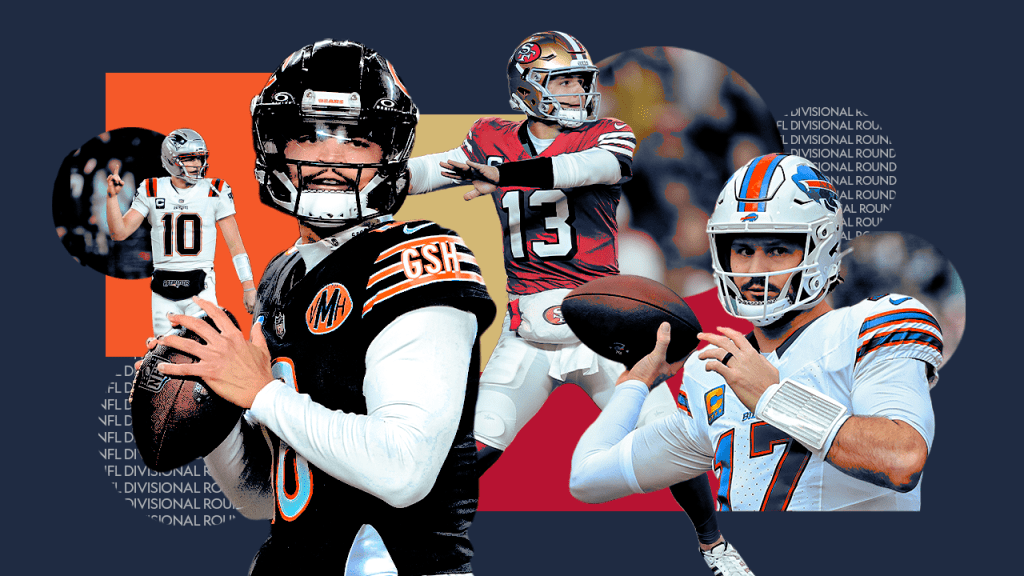
“When the Bears are good, it’s good for the NFL.” — John Madden
The quote has been kicking around for a quarter-century now, and while it’s racked up a lot of milage over the years, the integrity of the observation hasn’t dulled with age. En route to his Week 10 assignment in Tampa in 2001, Fox’s lead NFL analyst may have been preaching to the choir—the reporter who took down those words was with the Chicago Tribune—but the big fella seated at the front of the Madden Cruiser wasn’t just playing up the hype man role.
As the Bears go, so goes the NFL. And NBC’s about to make a killing off that correlation.
That John Madden should have had an affinity for the Monsters of the Midway is hardly shocking; the Bears, after all, are the embodiment of his BOOM! POW! broadcast persona. The color of the sort of deep bruising normally associated with OSHA violations, Chicago’s uniforms herald long periods of bed rest and a night table groaning from the weight of so many prescription painkillers. Listen closely and it almost sounds as if someone at the nurse’s station is humming one of Sam Spence’s old-school NFL Films compositions (“Posthumous Playoff Boogie”).
While it’s been roughly forever since the Bears last reached the divisional round—Caleb Williams was still rocking footy pajamas when Chicago beat Seattle in their 2011 playoff showdown—an audience tends to gather whenever the nation’s No. 3 media market is active in January. Chicago’s loss to the Eagles in 2019 notched the biggest TV turnout of the wild card round, averaging 35.9 million viewers on NBC; two years later, the Bears again helped put up the weekend’s biggest numbers (30.7 million) with their loss to the Saints.
If Chicago failed to draw the largest crowd last weekend, that’s not for lack of trying. Williams led his team to a 25-point fourth quarter against the hated Packers, and while Prime Video’s deliveries (31.6 million) were up a whopping 43% versus its year-ago Steelers-Ravens matchup, the Amazon audience came up well short of Fox’s weekend-topping 49ers-Eagles broadcast (40.97 million). Then again, TV-to-streaming comps are still very much of the apples-to-Fiona Apple variety; while digital exclusives are drawing higher ratings with every passing year, paywalled media still isn’t in the same league as free, over-the-air TV.
This year marks NBC’s first shot at hosting the late Sunday divisional round window, and a tight game should carve out an audience of 45 million viewers or better. The pairing of the Rams and Bears sets NBC up with an in-market population of 9.66 million TV households, which works out to 7.5% of the national base.
Bear in mind [sorry] that it’s been 40 years since these two teams last met in the playoffs, and while there’s no sense comparing anything that happened in 1986 with our present state of affairs (Nielsen at the time was still using paper diaries to determine its ratings estimates), the one-two punch of the markets in play and the plum Sunday night assignment sent NBC’s scatter prices soaring. Per media buyers, NBC’s sales team commanded north of $2 million for the last of its available 30-second units.
None of which is to suggest that the other broadcast windows are facing an uphill climb, although ESPN/ABC arguably were dealt the least favorable hand in Texans-Patriots. While Josh Allen and the Bills are proven ratings bait, and a close 49ers-Seahawks contest should go a long way toward making up for a relative dearth of scoring, Houston is a consistent postseason under-performer. Since 2016, the Texans have been slotted into the early Saturday wild card window no fewer than six times, and each appearance resulted in that year’s lowest TV delivery. Houston’s biggest wild card turnout came in 2020, when the team’s overtime defeat of the Bills averaged 26.3 million viewers; by way of comparison, NBC won the weekend with its Seahawks-Eagles broadcast (35.1 million).
As much as big markets tend to churn up big deliveries, No. 6 Houston and its 2.92 million TV homes is the exception that proves the rule. Even the Texans’ year-ago divisional round loss to the Chiefs ended up at the bottom of the weekend ratings heap, although another 800,000 viewers would have nudged the ESPN/ABC simulcast into third place.
The last time Houston and New England squared off during the postseason was in 2017, when Tom Brady was still under center for the Pats. En route to a 34-16 win, New England’s defense held the Texans to just three second-half points, and the CBS audience came up nearly 19 million viewers shy of the weekend’s biggest draw. (Gifted by a Packers-Cowboys duel in the early Sunday window, Fox didn’t break a sweat on its way toward averaging 48.5 million viewers.)
For all the Texans’ past playoff doldrums, there’s reason to believe that this year may see them finally snap out of their ratings funk. Not only is the NFL coming off a 10% boost in its regular-season deliveries, but with an average draw of 32 million viewers per game, the six wild card telecasts averaged a 10-year high. Per Nielsen, last weekend’s NFL deliveries were up 13% versus the 2025 numbers, and while some of that improvement may be chalked up to the recent upgrade in its ratings-gathering methodology, there’s no reason to believe the magic will suddenly wear off during the divisional round.
Given the wide-open nature of this year’s playoffs and the NFL’s ever-snowballing audience, the average turnout for the divisional round should clock in at around 42 million viewers per game. And all the story lines are coming together. Allen has what amounts to his clearest path to a Super Bowl—at the very least, the Chiefs aren’t around this year to spoil the party—and Drake Maye will ensure that nearly all of Boston’s 2.6 million TV homes will be gathered around a Disney-owned channel come Sunday. Even the prospect of another low-scoring Niners-Seahawks slugfest shouldn’t detract greatly from that NFC West rivalry, while the Rams-Bears capper has the potential to set the ratings dials on fire.
Like the man said, when the Bears are good, it’s good for the NFL. In that light, things are about to get even better than good for the league’s TV partners … and there’s still a lot of football left to be played.