
Peak newsletter 🧠 | This is The Athletic’s weekly newsletter covering the mental side of sports. Sign up here to receive the Peak newsletter directly in your inbox.
Welcome back to the Peak newsletter. We’re talking leadership today. Let’s go:
Pro Tips: A 28-second leadership lesson
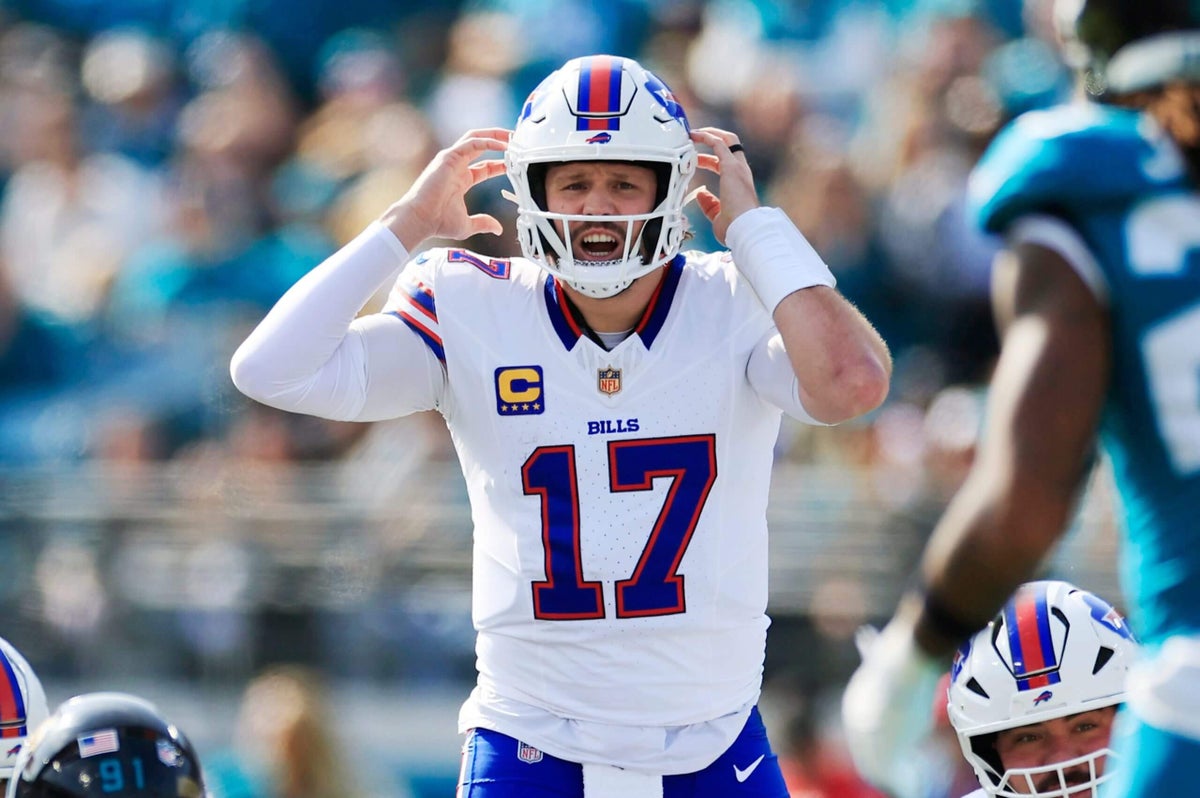
You probably saw Buffalo Bills quarterback Josh Allen and his team lost in heartbreaking fashion to the Denver Broncos last weekend. Allen had four turnovers in the game, a couple of which were pretty brutal.
What you might not have seen were these two interview clips (totaling 28 seconds) after the loss, in which a teary Allen says he feels like he “let his teammates down” and Buffalo left tackle Dion Dawkins chokes up when he hears what Allen said.
I was around NFL locker rooms for several years. You don’t see that emotion all that often. I was particularly struck by Dawkins’ response.
Somewhere in that back-and-forth seemed to be a small leadership lesson, or at least a leadership idea to chew on.
Around this time last year, before Peak officially existed, Elise Devlin, Rustin Dodd and I published a story about Allen’s playing days at Wyoming. There’s a bunch of fun stories in it (I enjoy the one about Allen, the ax and the tree, which sounds like a children’s book).
But what I really remember is the way Allen’s old teammates talked about him. I don’t mean just what they said. I mean literally the way they talked about him.
They didn’t sound like they were discussing the NFL MVP and Bills superstar quarterback. They sounded as if they were talking about a college buddy who used to chuck them beer cans.
I know that might sound obvious, but in my experience, when someone gets as famous as Allen, the people around them tend to become guarded and cautious.
Allen’s old teammates talked about him so … normally. Just old friends telling old stories.
Like I said, I thought about that over the weekend when I came across the clips of Allen and Dawkins. So I reached back out to Adam Pilapil, one of Allen’s college teammates we talked to for the story, and sent him the clip.
Here’s what he said about Allen’s leadership style:
“The thing that makes anybody a great leader is the way that you connect with people. When you connect with people, you’re willing to do anything for that person and vice versa. The way that Josh connects with people is on a very real level. We’re not buddies because we play football together or (are) doing business together. I think that’s special. To me, it’s the least shocking clip I’ve ever seen. It comes from a place of a real relationship.”
Pilapil isn’t just Allen’s old college teammate and friend. He’s also the linebackers coach at Wake Forest and, therefore, in a position of leadership himself. I wondered if he picked up anything from the 29-year-old Allen now that he’s a coach.
His answer:
“Plenty and in a lot of different ways, honestly. No. 1, how do you build relationships with people? Josh does a really good job of connecting with people and being intentional. That’s something I’ve definitely taken from him.”
I was curious what that intentionality looked like in practice. For a leader, charisma, I believe, is an innate trait. You have it or you don’t. But being intentional is a choice, something anyone can do.
“He would really get to know guys,” Pilapil said. “He would be personable about the questions he asked. He’d invite guys over to the house to shoot the s—. He makes those connections and he means it and he follows up on it. Anytime you have people follow up on what they say or follow up on questions or remember little things you may have talked about, I think that’s really important.”
I know there’s a difference between being teammates in college and in the NFL, but the larger point stands: Intentionality as a leader goes a long way.
On the topic of leaders, let’s turn to the guy who once ended the longest championship drought in North American pro sports history.
Joe Maddon’s 5 leadership rules
As manager of the Chicago Cubs, Joe Maddon delivered the franchise’s 2016 World Series win, its first in 108 years. So I asked Maddon to share his five rules for leaders and explain each one:
1. Do simple better.
“This started when I was a young scout in the 1980s. Another scout, Tim Kelly, always talked about simplification. I’d write reports, and he’d always ask me to simplify my reports. Simplify the way I taught young hitters. Simplify my daily schedules.
“If we made things less complicated, in a hot moment, we had a better chance of performing.”
2. Never permit the pressure to exceed the pleasure.
“The trap is to think you have to change or do things differently. I didn’t change anything. During the playoffs, we still had breakfast on the field during batting practice.
“Kris Bryant, our third baseman with the Cubs, used to love this. That phrase really resonated with him. Whenever I thought he was down a little bit, I would repeat it to him.
“You can’t tell someone to relax without teaching them how to relax in the moment.
“I coached J.T. Snow and Todd Greene, and when they went up to the plate to hit, I wanted them to squeeze the bat as hard as they possibly could. They’d get up there, look at the label on the bat, tap home plate, squeeze and take a deep breath to release all the tension.
“Focal points are big, too. When Evan Longoria and I were together with the Tampa Bay Rays, his focal point was the top of the left-field foul pole. You look at that spot and train yourself to know that when you look at that, that’s the deep-breath moment. The settle-in moment.”
3. The process is fearless.
“If you are process-oriented, fear never enters your mind. You just keep working on this moment, this moment, this moment, because anxiety lives in the future.”
4. If I tell you the truth, you may not like me for a week. If I lie to you, you’ll hate me forever.
“A great line is: ‘Honesty without compassion equals cruelty.’
“But when we sit down and it’s a tough moment, I’m not going to tell you, ‘We’re going in a different direction,’ and all that crap. No. Suck up the tough moment, be honest and eventually the scar will heal and you’ll be on the same page again.
“The one I remember most vividly was with the Rays and Ben Zobrist. He was good, but he wasn’t quite there yet. He came into the office and I said: ‘Your defense at shortstop isn’t where it needs to be. Offensively, you’re more of a line-drive hitter and we’d like to see more power.’ Zo looked at me and said: ‘Thanks guys, I really appreciate that. I’m going to go back and work on this, I promise.’
“Being absolutely honest with him, he took it the right way and he transformed it into a wonderful career.”
5. Embrace the target.
“Never run away from pressure and expectations as a leader. It’s really important to understand that these are good things, not bad things.”
Let’s Eat: Is a (healthy) NFL meal plan right for me?Peak Nuggets
Bite-sized ideas from around sports:
🏓 From Rustin: The scientific case for why everyone should play more ping pong.
💪 This one was fun: Check out our list of the 40 most-admired leaders in sports in 2025.
🏈 Indiana QB Fernando Mendoza just won the national championship. Here are three things anyone can learn from him (and he also explained three things of his own).
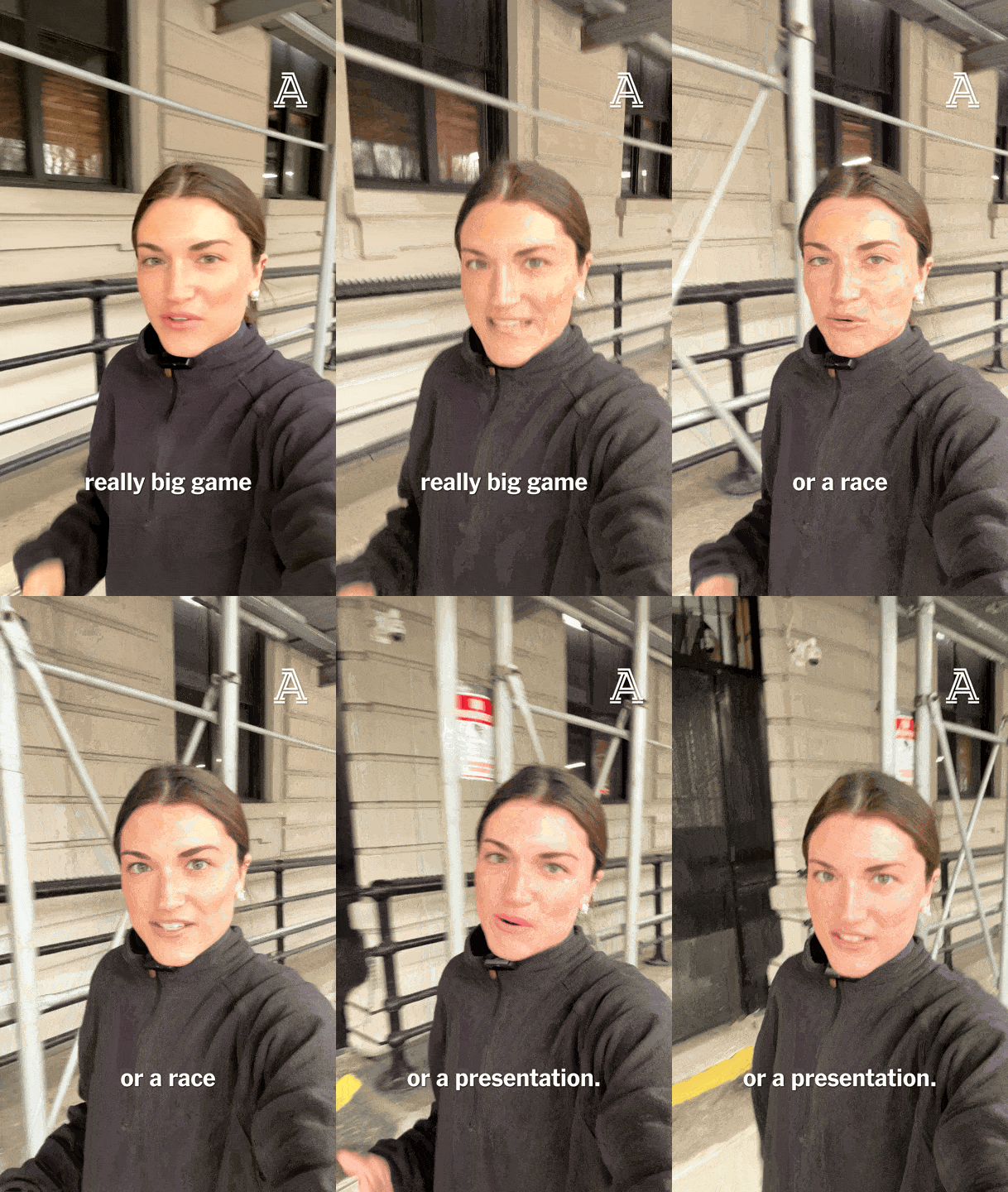
🎥 Walk and talk: This week’s topic from Elise? Surprising advice for how to handle big moments. Click the GIF below to hear it.
You Asked: And LGPA Tour pro Auston Kim answered
Favored O., an up-and-coming golfer, wanted to ask: “How do you keep your mind focused in competition regardless of the prior shot or event?”
So we reached out to Kim, a 25-year-old who finished second at the Women’s PGA Championship last season. Here’s what she said:
💬 “It starts with assessing the shot in front of you. Ask yourself, ‘What do I want to do here?’ Be specific by feeling the shot or visualizing the ball flight (like Toptracer on TV). Trust your skills and abilities to hit the shot you want in that situation. And once you hit the shot, walk to the next one and do the exact same thing again. And again until the last putt drops.
“Staying present will help relax your mental state, which leads to better golf. But remember, bad shots are a part of the game. Keep doing your best and try to make the next shot better than the one before.”
🗣️ Got a question about the mental side of sports that you want answered by a player, coach or expert? Email me at peak@theathletic.com. Every week, I’ll pick one question and try to get an answer.
📫 That’s all for today! Love Peak? Check out The Athletic’s other newsletters.