
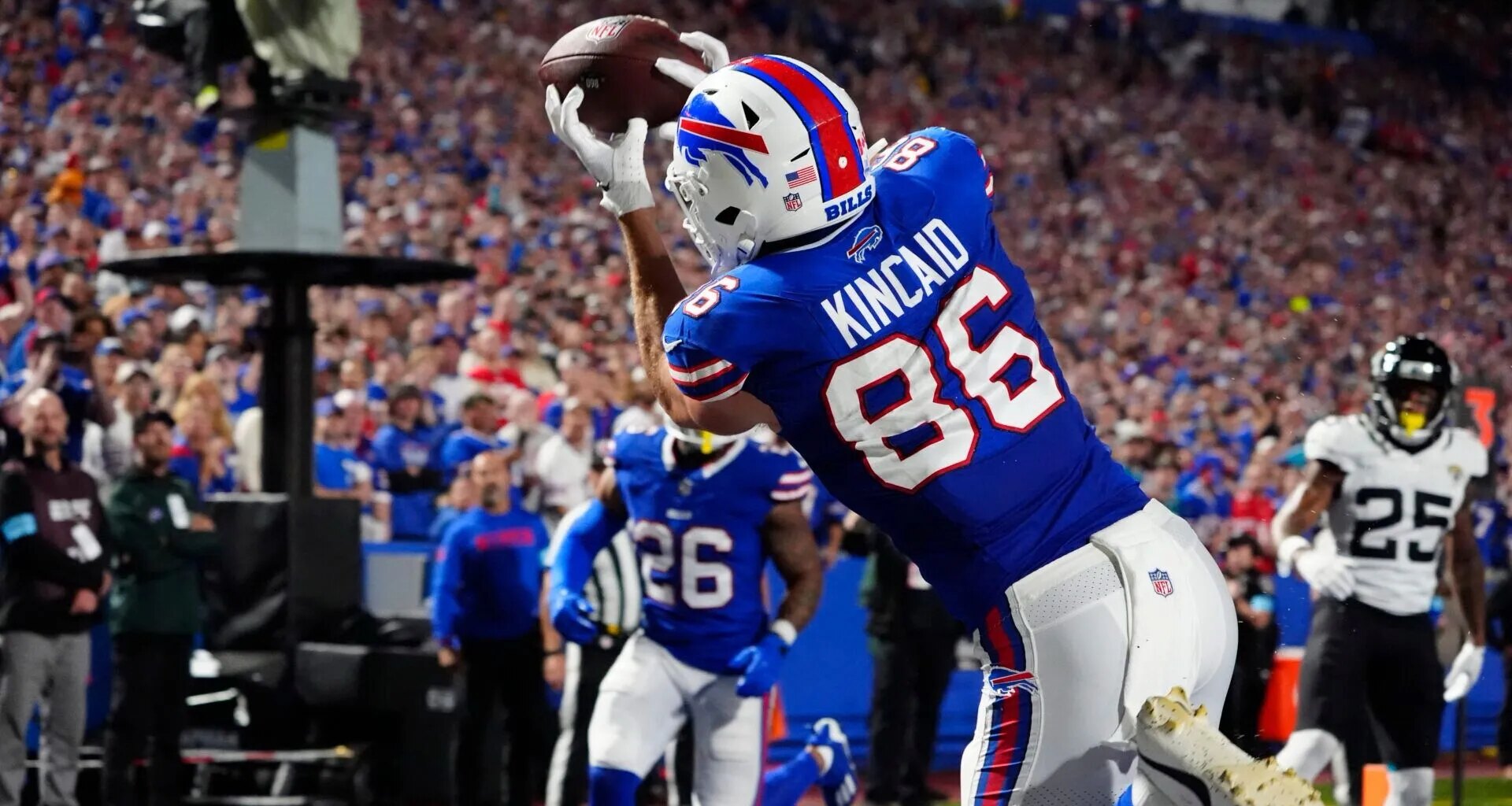
On the Monday Mornings with Mitch podcast on January 22nd, guest Dawson Knox revealed that Dalton Kincaid was playing with a torn PCL for a while. To listen to the clip, click below. Make sure to watch the entire episode.
https://youtube.com/clip/UgkxpIuuV_eGJiLthO81itwpGshqVIe3cfel?si=SaZ9q6FYWXJcKLH9
This is something that Kincaid has dealt with since originally suffering the injury in Week 10 of the 2024 season. This injury cost him valuable time last year and this year, injuring it further multiple times during the 2025 season. Considering how long it has lingered, Kincaid is looking at surgery to correct the issue.
This is an injury that has significantly limited his production and prevented him from turning into one of the NFL’s elite tight ends.
Read about the original injury, the reinjuries, surgery, timeline to return, and overall outlook.
The Original Injury
Kincaid injured his left knee trying to dive for a ball late in the first quarter of Week 10 of the 2024 season as seen below. There wasn’t anything noticeable about his injury once he came up from the ground and he even continued to play throughout the second quarter for one more play before going to the medical tent. He was initially questionable to return with a left knee brace on the sidelines, testing out the knee. He ultimately walked to the locker room with the training staff before halftime for further evaluation.
He returned in the third quarter for two more plays but immediately realized he did not have it and in his words, was unable to protect himself.
Looking at Dalton Kincaid plays after his L knee inj, looking more like a PCL sprain.
Can see in his 2 plays he’s hopping/having trouble decelerating.
1 w brace, 1 w/o brace.
Gabe Davis did the same thing in Wk 18 in 2023 as seen in 3rd clip.
Not looking good for Sun #Bills pic.twitter.com/7kOys4rpKF
— Banged Up Bills (@BangedUpBills) November 11, 2024
Dalton Kincaid on his knee injury sustained during win over the Colts: “Thought I could go then just didn’t feel good enough to run and be able to go out there and protect myself.” Says he doesn’t know the extent of the injury #Bills #BillsMafia pic.twitter.com/mMRQtn5G4t
— alex brasky (@alexbrasky) November 10, 2024
The hope was that Kincaid suffered an injury to his bursa causing bursitis, but considering his knee was catching as noted above, this leaned more towards the PCL sprain.
Some #Bills 📸 observations:
Rapp: L foot taped, had area worked last wk & taped up. Tape is more midfoot today.
Bernard: R ankle taped, no shoulder harness today.
Kincaid: on w knee, had L knee taped last wk. Possibly related, potential patellar tendinitis based on tape job. pic.twitter.com/UJlIVECCFi
— Banged Up Bills (@BangedUpBills) October 30, 2024
Kincaid played through the original injury after returning, missing three games. There was discussion about how he needed to bulk up in the offseason which he did. His knee appeared to be healthy enough with rehab and offseason training.
PCL Reinjury
Twice during the 2025 season, Kincaid reinjured the left knee, once during training camp during a collision with Milano and Benford and once during rehab from his right hamstring strain in Week 10. He appeared on the injury report for his knee ahead of Week 14. McDermott confirmed it during a routine press conference beginning at the 1:07 mark.
Here’s a look at Dalton Kincaid on a fast Friday out at Bills practice. Sean McDermott said that the knee popped back up this week as he was rehabbing the hamstring injury. He’ll be limited today in practice. pic.twitter.com/hoMw7Eq5yy
— Matt Parrino (@MattParrino) December 5, 2025
Kincaid was on the injury report for the remainder of the season starting in Week 14 for the left knee injury. Head coach Sean McDermott discussed how the Bills worked to manage Kincaid in mid-December to try and get him through the rest of the season.
To better understand the injury, understand the anatomy is a must.
The Anatomy
The PCL is the other ligament in the back of the knee that runs in the opposite direction of the ACL. This ligament helps stabilize the tibia from sliding too far backward to the femur. This ligament is thicker, has a better blood supply, and traditionally does not require surgery.
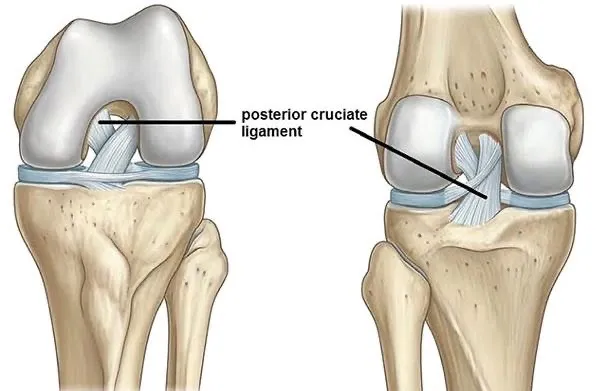 Consultant Orthopedics
The mechanism for injury for a PCL sprain is a direct blow to the anterior tibia. This is often seen in motor vehicle accidents when the knee collides with the dashboard. There are other mechanisms including how Kincaid fell with his foot plantar flexed and the knee driven straight into the ground.
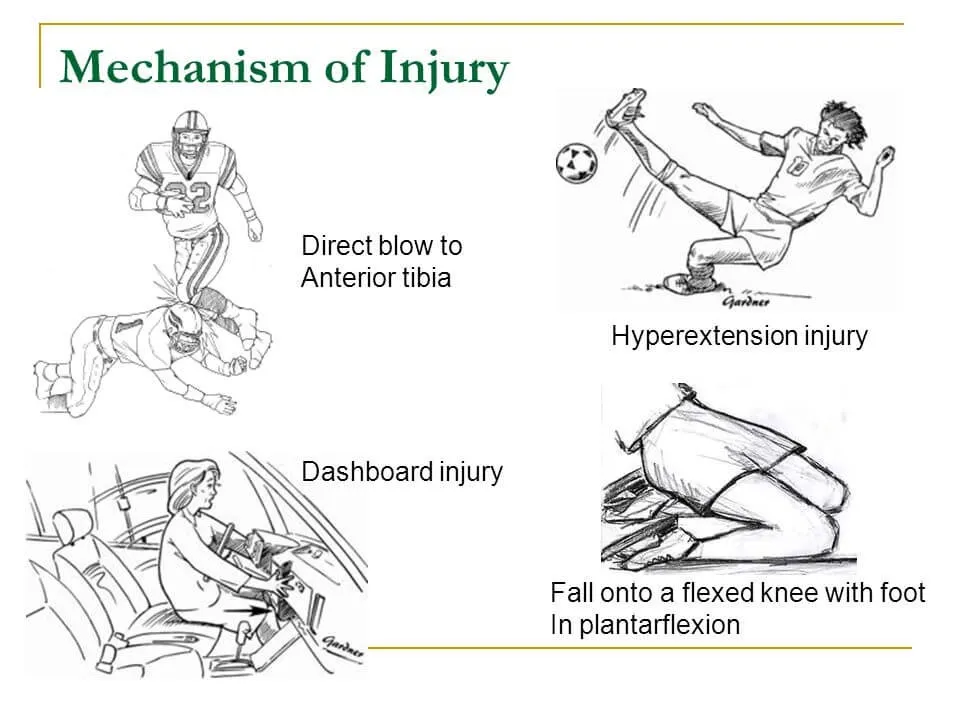 Masnad Health Clinic
This damage creates laxity when moving the tibia backward when performing the posterior drawer test as seen below. We often saw Kincaid play through this injury, he would exhibit pain and instability within the knee, having difficulty landing on the knee when jumping, and have difficulty pushing off the leg as the knee would be more likely to go into hyperextension. The knee wasn’t as stable to push off or land on which could have caused further instability. This may have also led to the re-injury during his hamstring rehab return to sport movements as he was nearing a return when his knee flared up. When he did return in 2024 and parts of 2025, he wore a hinged brace for protection.
Surgery & Rehab
Factoring in his PCL surgery, this will be a reconstruction. Considering how long the injury has been an issue, a reconstruction would be the most effective to rebuild the structural integrity of the ligaments demands.
However, most surgeons still elect not to fix the injury even when fully torn. As recently as 2016, only 33 percent of NFL physicians elect to fix the ligament which is likely why Kincaid likely didn’t get this fixed last offseason. The article does not state exclusively why surgeons don’t fix this, but the PCL does have a better blood supply, is thicker, and considering the PCL prevents the tibia from sliding backwards relative to the femur, there’s less movement available going backwards versus forward if the ACL is torn.
There is minimal research analyzing re-tear rates for PCL reconstruction or repair but it does exist. Failure rates for repairs are anywhere between 5.6 and 15.8 percent across all populations but if the surgery does need to be redone or fails, it was due to additional damage such as the posterolateral corner leading to instability or improper tunnel placement for the graft with the former not being an issue for Kincaid.
Fortunately, return to play and performance rates are often seen between 90 and 100 percent of players.
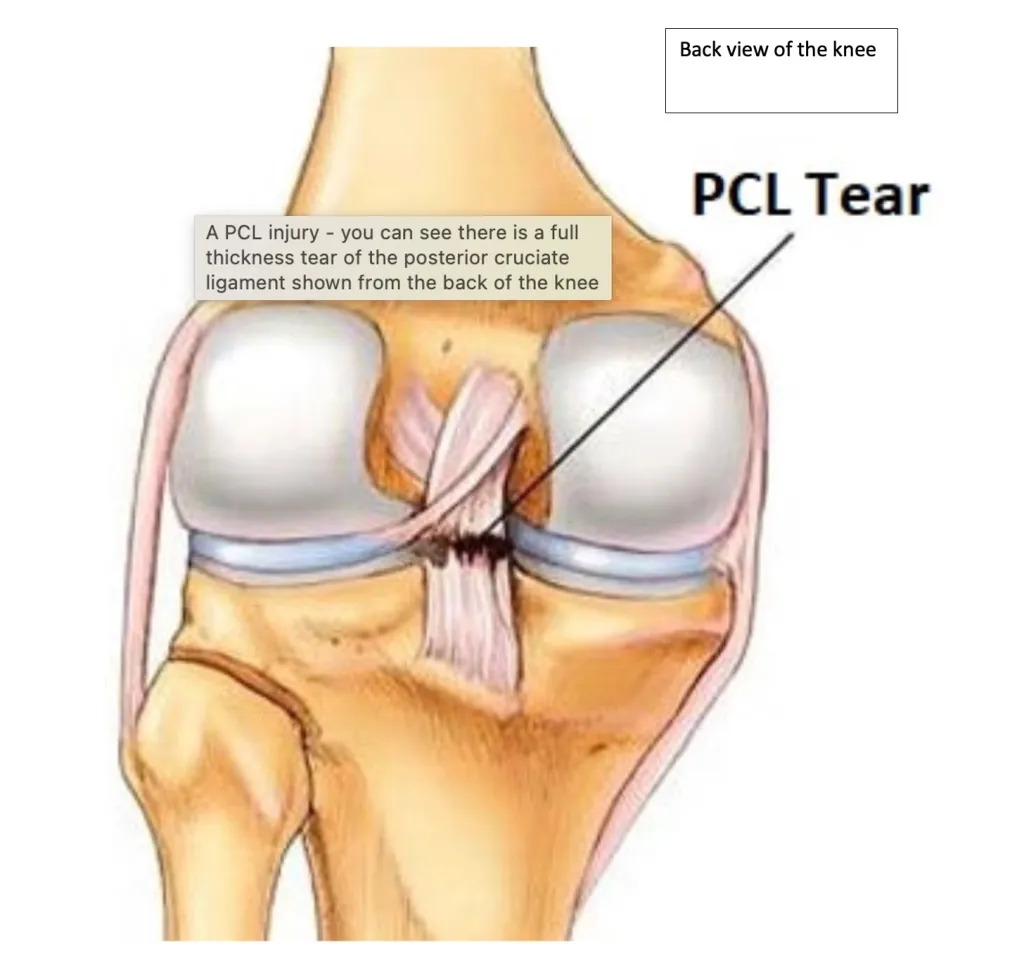
Considering how much of an issue that Kincaid has had with the knee, there’s a high likelihood that this is a Grade 3 PCL tear which means it’s fully torn. To have other damage in there such as meniscus fraying or tear, a Baker’s cyst, or even cartilage damage isn’t out of the question.
Kincaid is looking at a six-to-nine month recovery in order to return for 2026. This was a similar timeframe for Gabriel Davis who suffered his own PCL sprain at the end of 2023 and fully tore the ligament along with his meniscus in 2024 before undergoing surgery.
Considering the timing of the surgery, Kincaid will miss all of OTA’s including mandatory minicamp. There is also a possibility that he is a PUP candidate based on his recovery timeline and if he has any setbacks or additional damage we’re unaware of. Hopefully he is on the shorter end of this timeline and is ready for camp.
Career Outlook
This knee has cost him four games while other injuries have cost him six other games including a concussion, AC joint sprain, right hamstring, and oblique.
I know many fans have expressed their dissatisfaction about Kincaid, but this knee surgery should really alleviate any long term concerns for him moving forward. This injury may also influence how the Bills medical staff address PCL sprains in the future. Each injury should be a case-by-case basis, but past experiences do impact future results.
The only other PCL sprain the Bills are working through is DE Landon Jackson who was still wearing a hinged knee brace as of Week 18 after suffering his MCL/PCL sprain against the Miami Dolphins in Week 10, ending his season.
Considering what we saw in the research, they followed what was best practices, but had they had the foresight to look ahead, they fix it last season. I don’t believe anyone did anything wrong in managing the injury, they got him through the season playing at still a pretty high level. Kincaid may have decided not to have surgery last year too.
The Bills have until May 1, 2026 to figure out if they want to pick up Kincaid’s fifth-year option. Kincaid was a difference maker when he was on the field this year and it hurt the Bills when he wasn’t. The Bills have to at least seriously consider exercising the fifth-year option. Maybe rehab doesn’t go well, maybe they want to pivot away from working tight ends so much into the offense, maybe there’s more to it than we know that would prevent them from doing this.
An extension is way too premature right now considering the unknown variables and could cost the Bills money wise, but they’d be smart to not lock him up without some level of confidence that he will be healthy heading into 2026.
Barring unexpected setbacks, I expect Kincaid to be available for most, if not all, of the 2026 season as he rehabs his surgically repaired knee. I would like to wish Dalton Kincaid the best of luck during his rehab and looking forward to a healthy 2026 season.
Top Photo Credit: ProFootballNetwork.com
Discover more from Banged Up Bills
Subscribe to get the latest posts sent to your email.