
Jan. 25, 2026, 5:46 a.m. CT
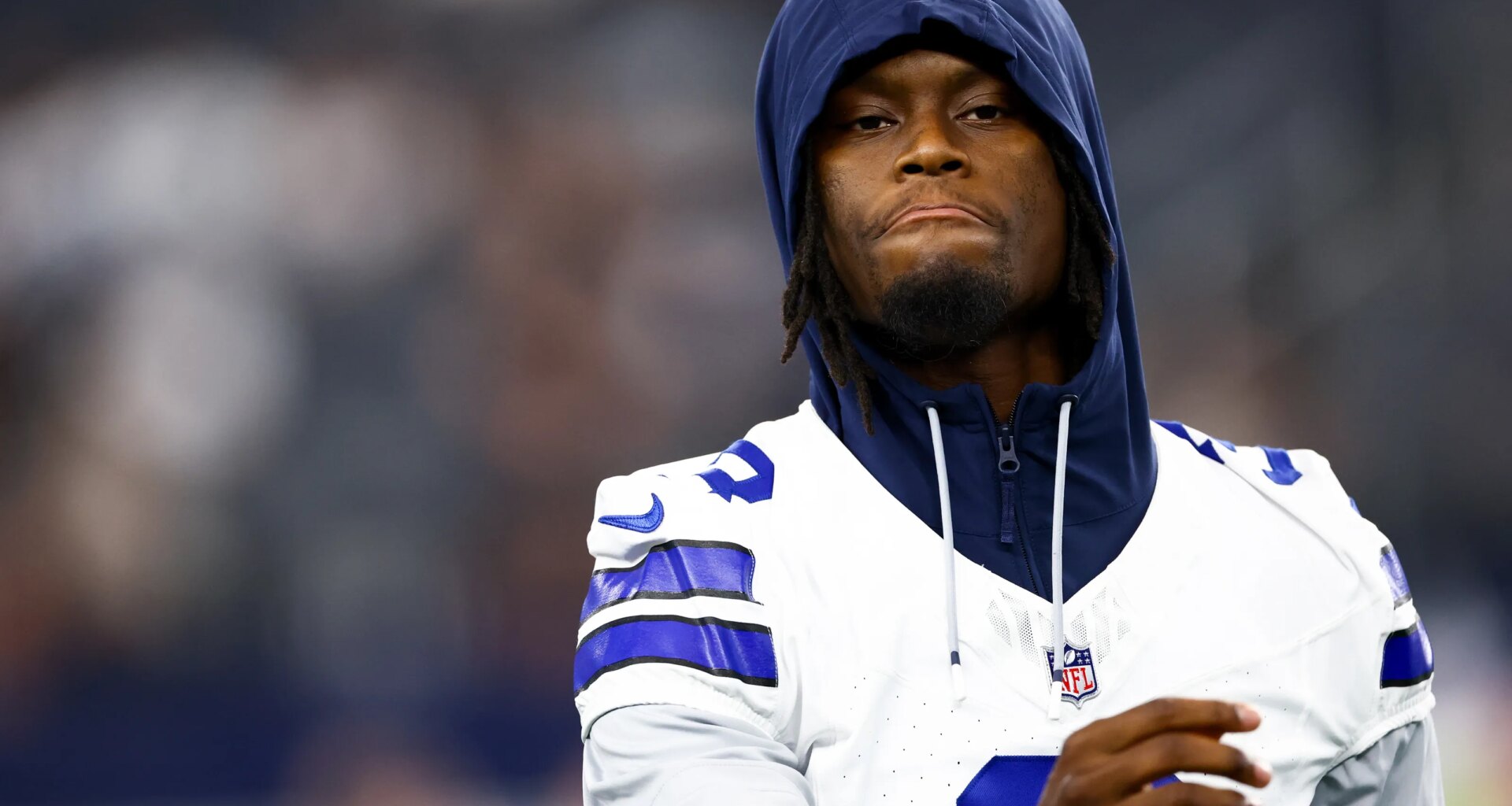
The Dallas Cowboys want to sign George Pickens, but do they want him at any cost? Does George Pickens want to return to the Cowboys, and if he does, how badly?
Those questions sit at the center of the Cowboys’s offseason agenda. Pickens had a breakout season in 2025, earning his first ever All-Pro nod as a Second-Teamer. But when Pickens was acquired via trade with the Pittsburgh Steelers for a third-round pick and a Day 3 pick swap, he had just the 2025 season left on his deal. Dallas now needs to figure out what to do with him, as he needs to figure out what he wants the most. After his first career season with a star quarterback in Dak Prescott, Pickens could want to maintain that relationship. Or, he could figure that other destinations with elite QBs are just as attractive; especially if the Cowboys aren’t willing to pay him what the open market would.
There are five options on the table. Agree to terms, exclusive franchise tag, non-exclusive franchise tag, walk away, tag-and-trade
Option 1: Agree to terms with Pickens in next 5 weeks
The new NFL league year begins on March 11, but the sides don’t have quite that long to reach an agreement before being forced to make a decision. The Cowboys are the only team that can negotiate with Pickens, for now. Once the legal tampering window opens 48 hours ahead of the league year, it becomes open season.
Expert NFL picks: Exclusive betting insights only at USA TODAY.
That is, unless the team has placed one of the tags on Pickens prior to the March 3 deadline. That means the Cowboys have five weeks to work out a deal before they are forced to declare their intentions. The window to tag a player opens on February 17.
There are two types of tags at play (three, really, but the transition tag isn’t really a thing anymore). With the Non-Exclusive Franchise tag, the Cowboys would still be the only team able to negotiated with Pickens until March 9. However once that date hits, agent David Mulugheta can shop his client to any of the other 31 teams.
If Pickens agrees to a contract with another club, the Cowboys would then have five days to match the offer. If not, the acquiring team would then send Dallas two first-round picks. Though he wasn’t tagged, this is the way the Micah Parsons fiasco concluded.
The non-exclusive tag for WRs in 2026 is a one-year guaranteed salary of $28 million. It’s based on the average of the top-five wideout salaries over the last five years. Because WR salaries have ballooned over the past three seasons, the tag amount is far below Pickens’ expected average salary.
That is what is going to make these negotiations sticky. Also of important note, unlike a long-term deal, the Cowboys can’t amortize any signing bonus across the length of a multi-year contract; they have to absorb all $28.6 million on this year’s cap once Pickens signs the tender. Signing the tender and tying up a chunk of cap space is Pickens’ leverage to try and force the Cowboys to negotiate, so they can free up space for other targets.
This is the most likely option, knowing how Cowboys’ owner Jerry Jones is a firm believer that deadlines make deals.
Option 3: Give Pickens the Exclusive Franchise Tag
The exclusive tag is technically calculated differently than the non-exclusive tag. It averages the top five salaries for that year, and there are currently 12 players who make above the $28 million non-exclusive tag number.
There are many scenarios where the exclusive tag costs the same amount as the non-exclusive tag, which means the team is on the hook for a specific number no matter what, but they don’t have to allow the player to seek a long-term deal elsewhere.
Teams have until July 15 to agree to a long-term deal with a tagged player, whether exclusive or non-exclusive. If Pickens is tagged and doesn’t sign by the deadline, he has the choice to either sit out the year and risk being tagged again the next season, or
Option 4: Tag Pickens and Trade Him
An option that absolutely shouldn’t be ruled out is that the Cowboys can trade Pickens. Once the club places the tag on Pickens and he signs the tender, he’s also eligible to be traded to another team. This has happened a handful of times across the league.
Here’s how tagging an NFL player and trading him works:
Team places non-exclusive tag on playerPlayer’s agent negotiates deal with another club, but doesn’t sign offer sheetOriginal team and acquiring team negotiate trade compensation for less than two first-round picksPlayer signs tenderDeal between teams consummatedPlayer signs contract with acquiring teamOption 5: Allow Pickens to enter free agency unobstructed
The final option is far-fetched. The club could simply allow Pickens to hit free agency. This can happen if they are unable to work out a long-term deal before the tag deadline. Also, until Pickens signs the tender, the Cowboys have the option to rescind the tag.
If Pickens were to hit free agency and sign with another club, he’d become part of their comp pick ledger for 2027. Comp picks are awarded to teams based on free agents signed and lost. Pickens would assuredly clock in at the value of a third-round pick, but Dallas would have to both 1) sign less qualifying free agents than they sign, and 2) sign less players at Pickens’ salary level.
In other words, if Pickens leaves, and the Cowboys sign a high-value free agent, they could see no compensation for losing the All-Pro receiver.