
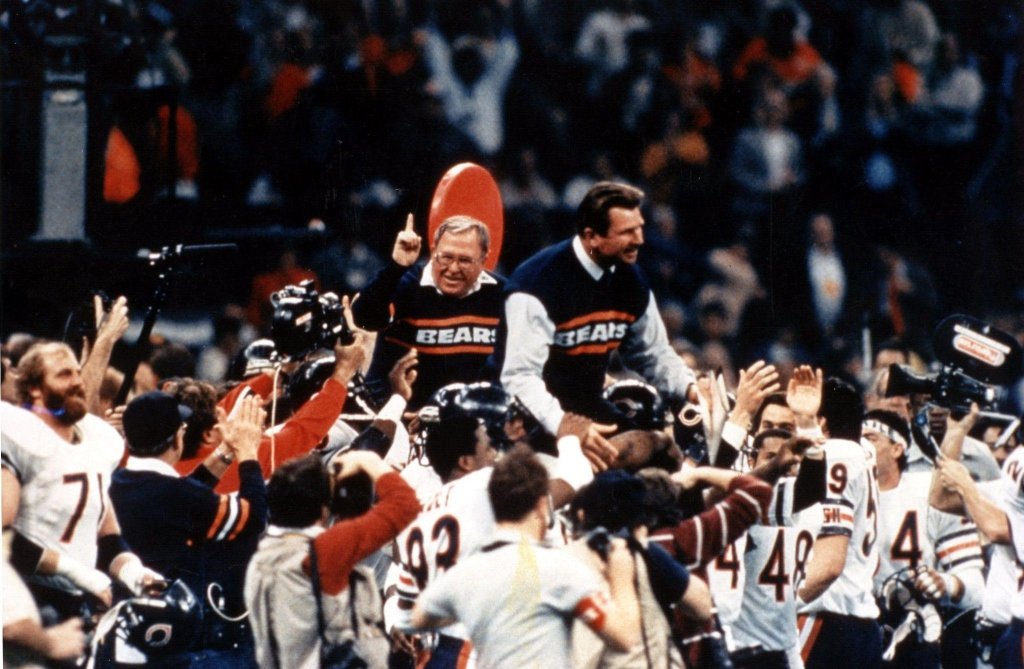
Here’s a look back at what happened in the Chicago area on Jan. 26, according to the Tribune’s archives.
Is an important event missing from this date? Email us.
Front page flashback: Jan. 27, 1967
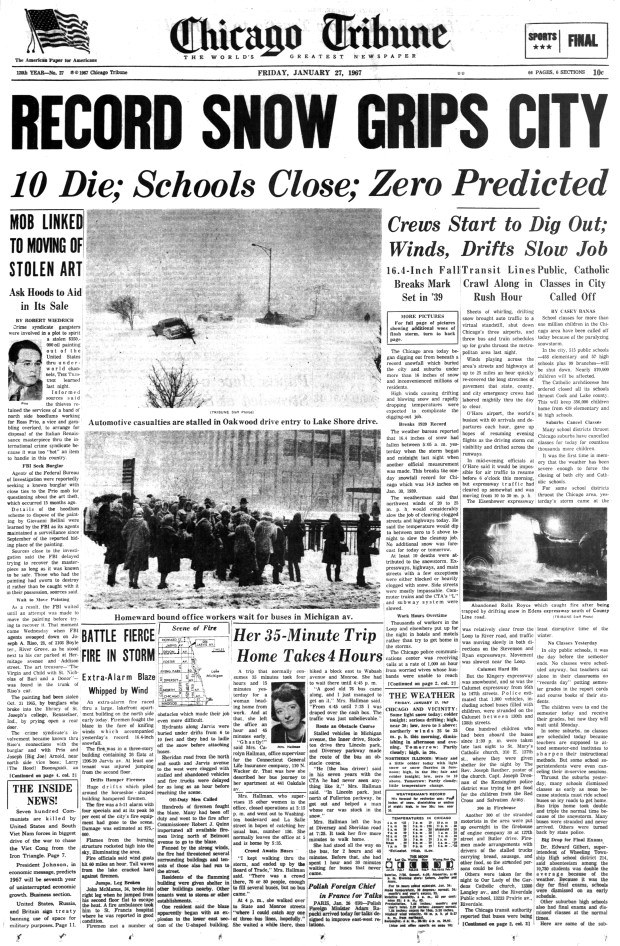 Snow began falling at 5:02 a.m. on Jan. 26, 1967, and didn’t stop until a record-breaking 23 inches had accumulated the next day, according to the National Weather Service, making it the worst snowstorm recorded in Chicago history. (Chicago Tribune)
1967: The “Blizzard of ‘67” dropped 23 inches of snow on Chicago — the largest amount on record for the city. Mountains of snow accumulated in drifts, whipped by winds of 50 mph or more.
Remarkably, the storm was preceded by unseasonable warmth — it was 65 degrees just two days before the snow appeared.
Weather records (from the National Weather Service, Chicago)
High temperature: 62 degrees (1944)
Low temperature: Minus 16 degrees (1897)
Precipitation: 1.66 inches (1967)
Snowfall: 16.4 inches (1967)
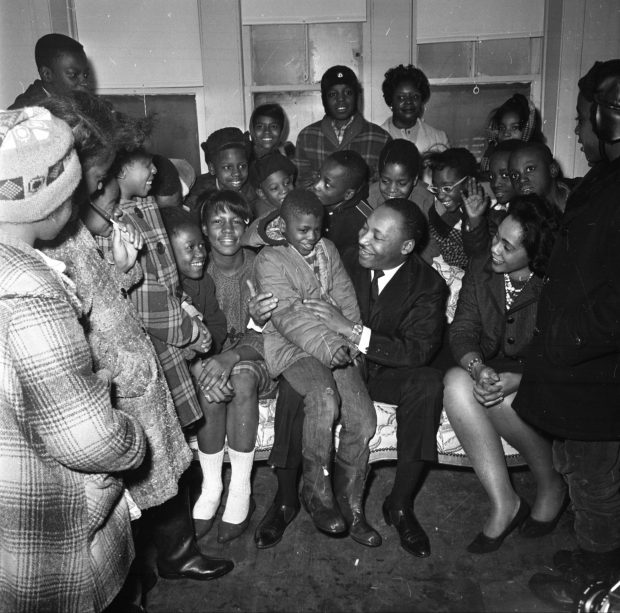 The Rev. Martin Luther King Jr. and his wife Coretta with neighborhood children in their new apartment at 1550 S. Hamlin Ave. in Chicago on Jan. 26, 1966. King and his family moved into the poor neighborhood to shed light on the living conditions of Blacks in Chicago in 1966. (Tom Kinahan/Chicago Tribune)
1966: Almost three weeks after announcing his intention to lead “the first significant freedom movement in the North,” the Rev. Martin Luther King Jr. and his family moved into a third-floor apartment in the North Lawndale neighborhood.
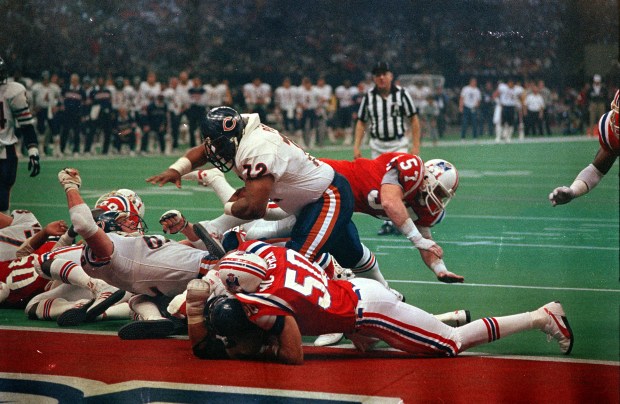 William Perry plows into the end zone on a 1-yard touchdown run during Super Bowl XX on Jan. 26, 1986, during the rout of the Patriots. (Ed Wagner Jr./Chicago Tribune)
1986: The Chicago Bears won Super Bowl XX in New Orleans with a 46-10 victory over the New England Patriots.
The Bears entered the game as the only team ever to record two straight playoff shutouts. With the circus invading New Orleans, there were more stories than the 26 Tribune reporters on site could wish for, Tribune reporter Don Pierson remembered.
The Bears had seven sacks and held the Patriots to seven yards rushing. But it was Bears quarterback Jim McMahon who plunged for two touchdowns and directed an offense to the 46 points that cemented Buddy Ryan’s “46” defense into football immortality. McMahon’s only regret was not defying Mike Ditka again and letting Walter Payton score the final touchdown instead of William Perry, a mistake also regretted by Ditka and lamented by Payton more than he let on at the time.
“Yes, I was surprised,” said Payton of not getting the ball in close. “Yes, I was disappointed.”
Also disappointed? The Honey Bears. The cheerleaders performed their last routine as part of the Bears organization at halftime of Super Bowl XX.
A touchdown would have helped ease the memory of Payton’s fumble on the second play of the game that set up a Patriots field goal and prompted Patriots fans to march through the New Orleans airport the next day chanting, “We scored first! We scored first!”
On the eve for the Super Bowl, Ryan had strongly hinted he would soon be named head coach of the Philadelphia Eagles, prompting Steve McMichael to throw a chair that stuck into the blackboard of their meeting room. The defense responded by terrorizing quarterback Tony Eason, who was replaced after completing none of his six passes.
The Bears had just completed what Pierson believes remains the most memorable season in NFL history. The game drew a television audience of 127 million, replacing the final episode of “M*A*S*H” as the largest in TV history. But the day after the freezing celebration parade in Chicago, the space shuttle Challenger exploded after takeoff in Florida, putting an abrupt end to national merriment.
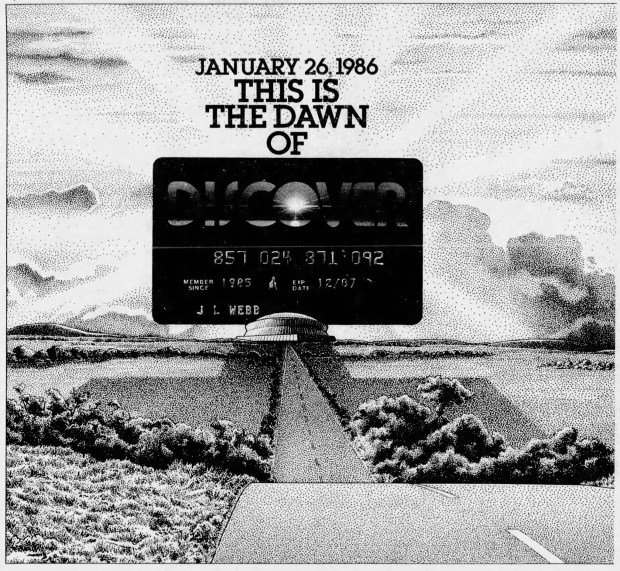 Sears published advertisements in the Tribune on Jan. 26, 1986, and bought time for “kick-off commercials” to run during Super Bowl XX to announce the launch of its Discover Card credit card. (Chicago Tribune)
Also in 1986: The Discover Card, created by Sears, debuted during the broadcast of Super Bowl XX. It became a challenger to MasterCard, Visa and American Express.
Want more vintage Chicago?
Subscribe to the free Vintage Chicago Tribune newsletter, join our Chicagoland history Facebook group, stay current with Today in Chicago History and follow us on Instagram for more from Chicago’s past.
Have an idea for Vintage Chicago Tribune? Share it with Kori Rumore and Marianne Mather at krumore@chicagotribune.com and mmather@chicagotribune.com