
Super Bowl LX should give the New Orleans Saints hope.
A year ago, the Patriots and Seahawks were each sitting at home after having missed the playoffs for a second consecutive season. A year later, they’ll battle for the Lombardi Trophy at Levi’s Stadium.
If it can happen for the Patriots and Seahawks, it can happen for the Saints. Team officials just need to stack another strong offseason like the one they had in 2025.
Here’s what the Saints can learn from the paths the Patriots and Seahawks took to reach Super Bowl LX:
Fortune favors the bold
The Patriots and Seahawks kick-started their 2025 offseasons with bold coaching moves.
In New England, owner Robert Kraft fired Jerod Mayo after just one season as head coach. Mayo was Kraft’s handpicked choice to succeed Bill Belichick. It wasn’t an easy decision. Mayo was a popular player and coach for 14 years in the organization. Nevertheless, Kraft pulled the plug after Mayo’s disastrous 4-13 season and replaced him with another Patriots legend, Mike Vrabel. The rest is history.
Likewise, Mike MacDonald canned offensive coordinator Ryan Grubb after one season, citing “philosophical differences” in the team’s offensive vision. MacDonald hired former Saints assistant Klint Kubiak to coordinate the offense, and he paid immediate dividends, boosting the Seahawks’ rushing attack from 28th to 10th in the league and improving the scoring offense from 21st (20.0) to third (28.4).
The lesson here: If something isn’t working, fix it — immediately. There’s something to be said for patience, but too often the Saints have resisted change or been too slow to act.
Have a vision for personnel
The Patriots and Seahawks had arguably the best player procurement offseasons of any two teams in the league. Both teams were aggressive and enjoyed extraordinarily high strike rates.
The Seahawks traded Geno Smith and D.K. Metcalf and signed Sam Darnold, Cooper Kupp and DeMarcus Lawrence in free agency. They selected Grey Zabel and Nick Emmanwori in the first two rounds of the draft. All five were impact additions.
The Patriots, meanwhile, spent more money in free agency than any team in football. The headline additions were defensive tackle Milton Williams, wide receiver Stefon Diggs, cornerback Carlton Davis, edge rusher Harold Landry, linebacker Robert Spillane and offensive tackle Morgan Moses and center Garrett Bradbury. All are starters.
They shored up the offense in the draft by selecting left tackle Will Campbell, running back TreVeyon Henderson, guard Jared Wilson and receiver Kyle Williams.
Credit to Patriots GM Eliot Wolf and Seahawks GM John Schneider. They didn’t just acquire talent. They had clear visions for each acquisition. Roster management doesn’t get much better than this.
Sacred cows don’t exist
In his first offseason, Vrabel released Jabrill Peppers and traded Keion White, Kyle Dugger, Ja’Lynn Polk and Joe Milton. All were starters and/or key draft picks from previous regimes.
The Seahawks did the same after MacDonald took over in 2024. In Year 1, they released starting safeties Jamal Adams and Quandre Diggs and allowed beloved star linebacker Bobby Wagner to leave via free agency. Last offseason, they overhauled the offense, cutting Tyler Lockett, a fan favorite, and trading Smith and Metcalf.
Some of these moves were related to scheme fits, others were financial decisions. Regardless, the point is neither team worried about optics or outside perception when making the calls.
Culture matters
Culture talk has become cliché in today’s NFL. Seemingly every team preaches about the positive vibes of its locker room and the healthy culture within it. But the talk in Seattle and New England is real.
Seattle and New England players universally praise the servant leadership style of MacDonald and Vrabel. The positive culture fostered by both men created buy-in, which, in turn, gave them the runway to instill the discipline and accountability needed to win. The latter doesn’t happen without the former.
Vrabel’s players respond positively to Vrabel’s unsparing film review sessions because he’s fair and egalitarian in his criticism. They also know he cares.
The Seahawks, meanwhile, have adopted a “M.O.B. Ties” mantra – an acronym for Mission Over B.S. Seattle players praise the inclusive leadership of MacDonald and Schneider. Everyone’s role is valued, even the office assistants.
The Saints are good here. The positive culture Kellen Moore has fostered helped the team survive its 1-8 start.
Special teams are an emphasis, not an afterthought
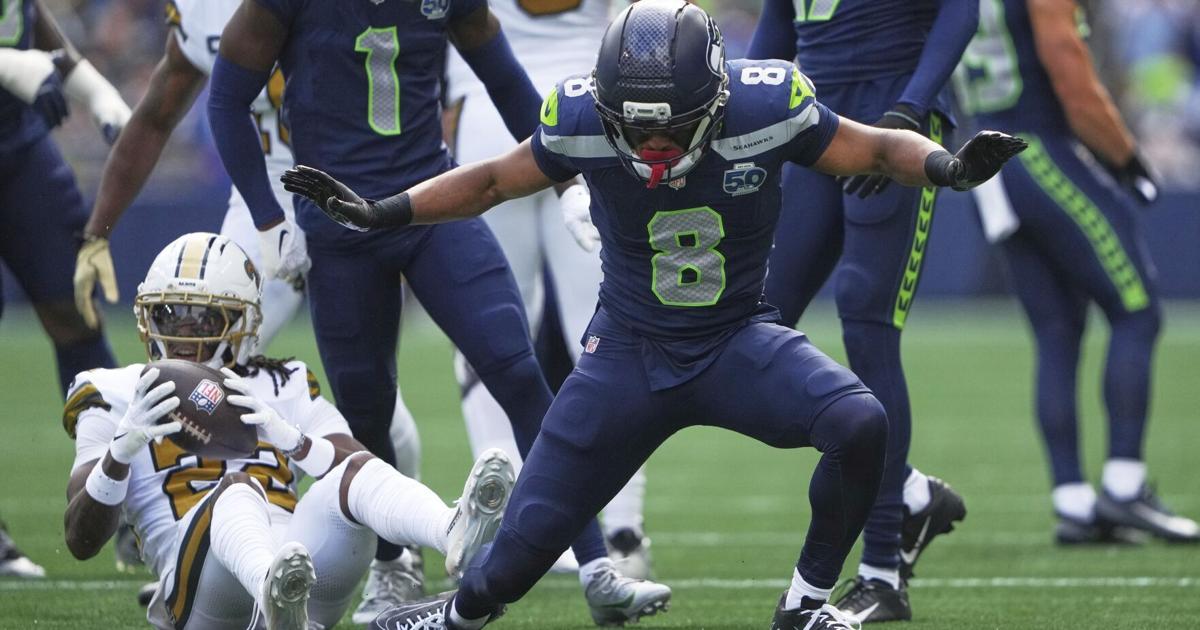
Seattle fielded the best special teams in the NFL this season. Their Week 3 rout of the Saints was fueled by a punt return touchdown by Tory Horton and a blocked punt which set up another score.
Seahawks place-kicker Jason Myers led the league in scoring. Punter Michael Dickson was a second-team All-Pro. And return specialist Rashid Shaheed, who Seattle acquired via a midseason trade with the Saints, returned two kicks for scores.
Improving special teams was one of Vrabel’s top priorities in Year 1. He used draft capital obtained from the Milton trade to select two top specialists: place-kicker Andy Borregales and long snapper Julian Ashby.
It’s no coincidence that the Patriots and Seahawks were two of three NFL teams to have three kick/punt returns for touchdowns this season.
The Saints ranked near the bottom of the league in nearly every special teams metric. Improving “teams” has to be a top offseason priority for Moore and staff.