
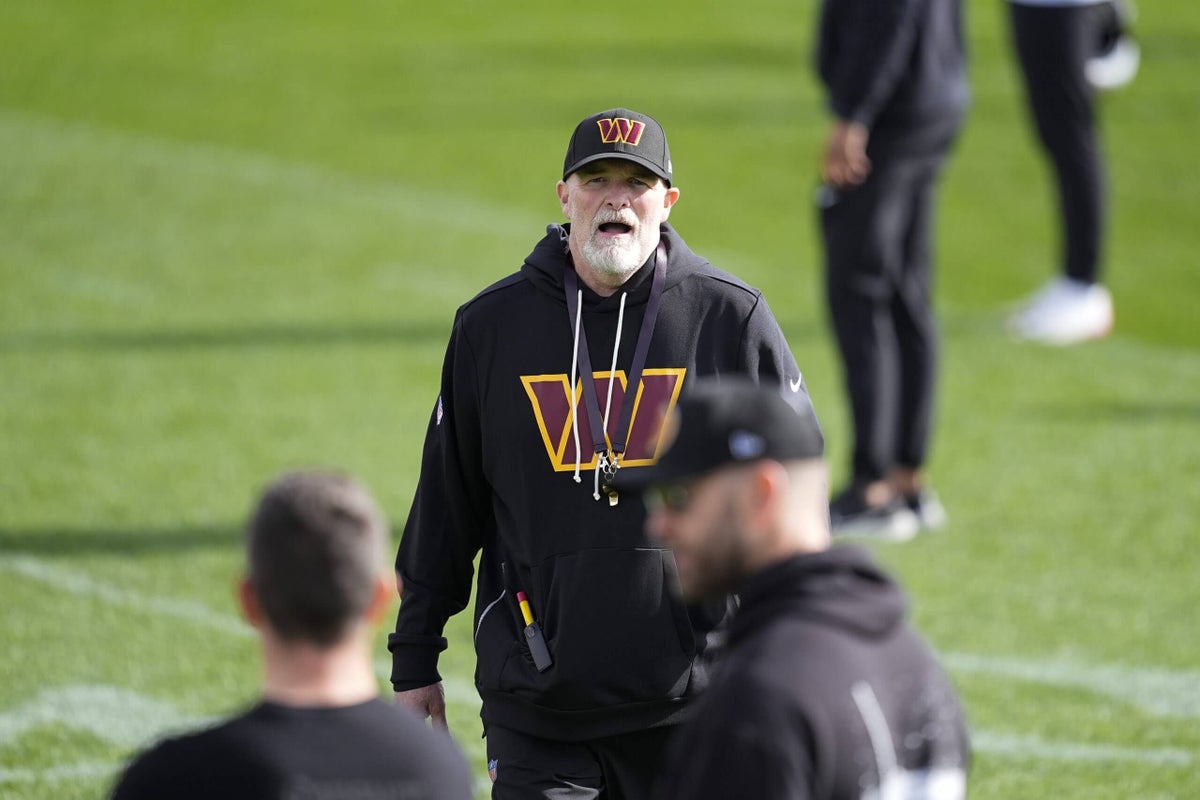
Who would’ve thought the Commanders, a team that went 12-5 and was a win away from making Super Bowl LIX, would be here a year later — facing a steep climb back to relevancy with a flawed roster and two first-time play callers in what could be a make-or-break season for their head coach.
Life comes at you fast.
The Commanders’ dismal second season under coach Dan Quinn all but guaranteed significant changes to both the roster and coaching staff this offseason. One of them became inevitable as early as Week 11, when defensive coordinator Joe Whitt Jr. was stripped of play-calling duties. He was fired at season’s end.
But the decisions thereafter may have surprised, to varying degrees, those watching from afar.
The most notable was the split with offensive coordinator Kliff Kingsbury and promotion of David Blough. Kingsbury — the play caller Quinn and general manager Adam Peters praised for his creativity and ability to adapt to personnel, the coordinator who helped transform the Commanders’ offense and build around quarterback Jayden Daniels in 2024 — was suddenly out and replaced by a coach who joined the sideline only two years ago. Blough built a strong rapport with Daniels and others on staff in his two seasons as the team’s assistant quarterbacks coach. But he’s never led a positional group, let alone a full offense, and he has no experience calling plays.
Then, after a three-week search to find Whitt’s replacement, the Commanders turned to Daronte Jones, the Minnesota Vikings’ defensive backs coach and pass game coordinator. Jones boasts a quarter-century of coaching experience, including a year of calling LSU’s defense and three more as Brian Flores’s right-hand man in Minnesota. But Jones was among the second wave of coordinator interviews for Washington and isn’t yet a household name. And, like Blough, he has no play-calling experience at the pro level.
So a team that seemed well on its way to becoming a contender for the first time in more than 30 years is instead a puddle of uncertainty. Again.
But a closer examination of Quinn’s two years in Washington, and especially the last few months, shows that this was a likely landing spot for the Commanders. There’s plenty to parse from the last month and even more to consider as Quinn and Peters continue to shape the staff and revamp the roster:
Jones checks a lot of Quinn’s boxes for a new coordinator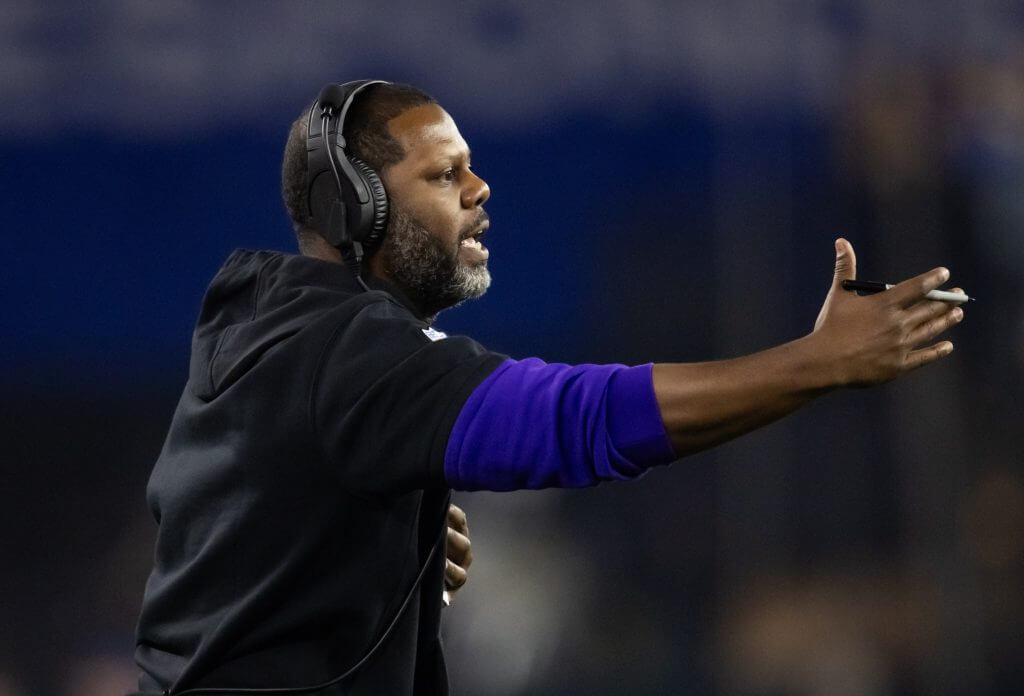
Former Vikings assistant coach Daronte Jones is accustomed to his defenses creating plenty of turnovers. (Mark J. Rebilas / Imagn Images)
Quinn laid out much of what he was looking for in a defensive coordinator over the final weeks of the season. Player development and collaboration has always been high on his list, and the former was clearly lacking last season. Young players such as cornerback Mike Sainristil and safety Quan Martin seemed to take a step back instead of continuing to develop.
But one thing Quinn has emphasized the most on defense since arriving in 2024 is creating takeaways. In his 13 seasons as a head coach or defensive coordinator, Quinn’s teams finished above .500 eight times. All but one of those eight teams (2017 Falcons) had a positive turnover margin.
The Vikings ranked fifth in forced turnovers over Jones’s four seasons there leading the defensive backs. He also helped develop younger players such as Byron Murphy, who was voted to the Pro Bowl in 2024 and drew praise from veterans, notably safety Harrison Smith.
Jones also has experience leading a full group, even if it wasn’t in the NFL. He was LSU’s defensive coordinator in 2021.
Then there’s this: One of the top names on Washington’s list was Flores, whose previous contract with Minnesota expired early this year. Washington was the only team that interviewed Flores for a defensive coordinator job. His other interviews were all for head-coaching opportunities. When he re-signed with Minnesota, he essentially just eliminated the Commanders, while keeping open his chances of becoming a head coach. It was then that Washington expanded its search and interviewed Jones.
More changes are coming
Alterations to the defensive staff are just beginning.
The Commanders are looking for a coach to oversee the front seven, with a focus on the pass rush, according to two sources with knowledge of the team’s thinking. That means the positions of all the assistants currently coaching the defensive line and linebackers are uncertain.
Two names to watch in particular: Darryl Tapp, who was the D-line coach the last two seasons, and Ryan Kerrigan, the team’s assistant linebackers coach. Either or both could end up with new roles on the staff, or end up elsewhere.
On the back end, defensive pass game coordinator Jason Simmons interviewed for the Pittsburgh Steelers’ defensive coordinator job and could still end up in Pittsburgh in another role.
Kingsbury’s exit shouldn’t have surprised anyone
And not just because The Athletic’s Dianna Russini provided advance notice. Quinn may not provide a lot in his weekly news conferences, but what he doesn’t say usually provides plenty of answers.
When asked during his end-of-season session about Kingsbury’s play calling, Quinn deflected and simply said that all three coordinators would be evaluated. He didn’t say anything about the offense or Kingsbury specifically. Red flag.
“That’s really what we’re digging into to find what’s best, how we do it, where do we find spaces to improve,” he said. “And you know, for Kliff, for Joe, for (special teams coordinator) Larry (Izzo), for all of us — that’s our main focus so we’re never in this space again.”
Three days earlier, when asked a similar question about Kingsbury and how he managed the offense with so many injuries, Quinn had also deflected, quickly mentioning receivers coach Bobby Engram and offensive assistant Andre Coleman. You know who Quinn didn’t mention? Kingsbury.
Blough was the obvious replacement for Kingsbury
Ignore the experience, or lack thereof. Look for the clues. Quinn dropped many over the last year or so about his belief in Blough, none more significant than last offseason, when he blocked Blough from interviewing for bigger roles with three other teams. Quinn was intent on keeping Blough in-house because he believed he had the potential for a larger, longer-term role with the team. When former quarterbacks coach Tavita Pritchard left late last season to become Stanford’s head coach, it seemed as though Blough could be next in line, pending a formal search in the offseason (the quarterbacks coach is subject to the Rooney Rule).
But then the Detroit Lions, with whom Blough spent four of his five seasons as a player and with whom he learned behind coordinators such as Darrell Bevell and Ben Johnson, applied pressure by requesting to interview him for their offensive coordinator position. So, if Washington waited to interview, say, Mike McDaniel, it also risked losing Blough. And if it waited and was ultimately turned down by other candidates, it could have ended up with a coordinator who wasn’t its first or second or maybe even its third choice.
So, at least two teams believe Blough has the skill set and leadership to be a successful coordinator and play caller. And coaches and players alike have praised Blough for years for his innate ability to coach.
“Shoot probably, everybody that’s played quarterback at some level probably thinks that they could at some point call plays,” current Bears coach Ben Johnson said in 2022, his first season as the Lions’ offensive coordinator and play caller. “I honestly — I talked to (then-Lions QB) Tim Boyle right now and I think whenever he decides to hang the cleats up, he’s going to become a coach. David Blough (a Vikings practice-squad QB at the time) was the same way when he was here. Those guys — you can already see that they want to be potential play callers down the road.”
Another change on offense
Bobby Johnson was fired as the Commanders’ offensive line coach and promptly replaced by his assistant, Darnell Stapleton. Like Blough, Stapleton is a former player whom Quinn has praised repeatedly since his arrival. When asked about Johnson and the offensive line last season, Quinn brought up Stapleton and offensive quality control coach Shane Toub — twice. It’s hardly shocking that Stapleton will now lead the O-line and Toub will assist him.
All sides are taking significant risks
Quinn is entering Year 3 as the Commanders’ coach, and if this year’s hiring cycle reinforced anything, it’s that the NFL operates with more urgency than ever. Producing a winning team two years ago matters little, if at all. Producing a contender year after year matters little if it doesn’t produce a championship. Just look at the Buffalo Bills. They moved on from Sean McDermott, who took the team to the playoffs in eight of his nine seasons after the Bills hadn’t made the postseason at all since 1999. Or look at John Harbaugh, who had 13 winning seasons in his 18 years with the Baltimore Ravens before they fired him earlier this month.
Needless to say, another down year from the Commanders could lead to Quinn’s exit. The gamble in turning to two first-year play callers is significant. But on the flip side, every good play caller was a first-timer at one point.
For Blough and Jones — especially Jones — the risk is just as great. If Quinn is out after the season, they could be too.