
Unlike the NBA, free agency in the NFL comes before the draft. This means teams must face the complex dilemma of doling out tens of millions of dollars to veteran free agents before they know exactly which players will comprise their newest haul of young talent.
The New York Jets are prepared to make two of the first 16 selections in the 2026 NFL draft. Before that, though, they will enter free agency as one of the league’s five richest teams in terms of cap space.
Here are three ways in which the team’s draft plans could alter the way they approach free agency.
1. No need to spend big on an edge rusher
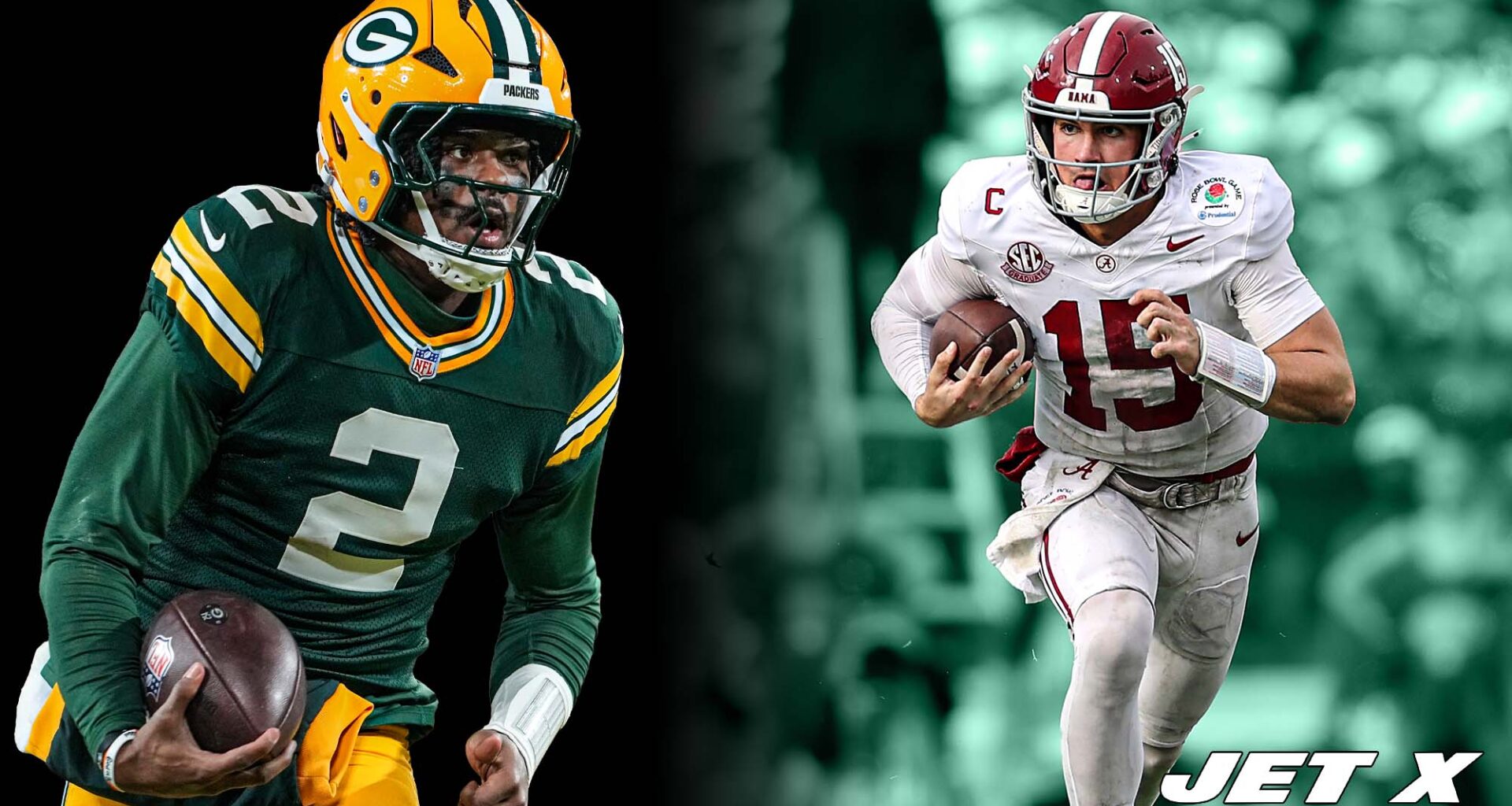
Indiana quarterback Fernando Mendoza is believed to be a shoo-in to be taken first overall by the Las Vegas Raiders. After Mendoza, there is no quarterback prospect viewed as worthy of being taken with the second overall pick (unless the Jets are extremely high on Ty Simpson).
In all likelihood, the Jets can expect to come on the clock at No. 2 with the luxury of choosing their top-ranked non-quarterback in the entire class.
Most likely, this means New York will end up selecting an edge rusher second overall. Ohio State’s Arvell Reese is the consensus favorite to be taken No. 2, while Miami’s Rueben Bain and Texas Tech’s David Bailey are squarely in the conversation. Ohio State wideout Carnell Tate is a dark horse, but in all likelihood, the Jets’ decision seems to be between the top three edge rushers: Reese, Bain, and Bailey.
Assuming this is how the Jets’ board is shaping up by early March, it means they can safely avoid pursuing one of the top edge rushers in free agency.
The 2026 free agent class features a handful of big-name edge rushers who are expected to command top dollar, including Trey Hendrickson, Jaelan Phillips, and Odafe Oweh. If the Jets are already certain they plan to select a blue-chip edge rusher with the second overall pick, they can avoid committing a massive chunk of their cap space to one of these players, instead allocating that money toward filling multiple other positions of need.
New York already has two former first-round edge rushers under contract for the 2026 season: Will McDonald and Jermaine Johnson. Both players were underwhelming in 2025, but with a modified scheme, a new play-caller, and more talent around them, they could rebound in 2026. As long as the Jets take an edge rusher second overall, they can afford to walk into 2026 with the rookie, McDonald, and Johnson as their primary edge trio, without also allocating a lucrative contract to the position.
With holes to fill at pretty much every position except offensive tackle, the Jets have to be economical with how they disperse their resources this offseason. Over $90 million in cap space and four top-45 picks sound like a lot, but those assets will dry up fast as the Jets slowly realize just how many players they must add to fill out a competent depth chart.
After finishing with zero interceptions (32nd) and 26 sacks (31st) in 2025, it sounds like a tantalizing idea for the Jets to add both a big-money free agent and a No. 2 pick to their edge unit, but it would be smarter for the overall health of the roster to settle for just the No. 2 pick while betting on McDonald and Johnson to bounce back.
2. Grab a center in free agency
The Jets need an upgrade at the center position.
Josh Myers started all 17 games at center in 2025, filling in for Joe Tippmann, who slid to right guard in place of the injured Alijah Vera-Tucker. While Myers was respectable enough to earn a two-year extension, he performed at the exact level he was expected to: like a high-level backup.
Myers finished the season with a 52.9 overall grade at Pro Football Focus, ranking 33rd out of 34 qualified centers. If the Jets want to build the best offensive line as possible, they need an upgrade.
And they know it, at least based on the details of Myers’ contract. It includes just $6.2 million in guarantees across two years, which isn’t the type of money that a team would give to a penciled-in starter. The Jets certainly like Myers as a backup and placeholder starter, but they seem prepared to give him competition for the starting role.
Based on how the draft class is shaping up, the Jets’ best bet to find an upgrade over Myers is in free agency.
On the consensus big board at NFL Mock Draft Database, the top-ranked center is Auburn’s Connor Lew, all the way down at No. 67 overall. He is followed by Florida’s Jake Slaughter, ranked No. 88, and Alabama’s Parker Brailsford, ranked No. 99.
If the Jets have the center class rated similarly, it is unlikely that New York will come away with a prospect that they view as a potential starter.
Even if they love one of the three top-100-rated prospects, they are not in an ideal position to land them. The Jets have two second-round picks, slotted at Nos. 33 and 44, but a center would be a reach at either slot. It could make sense to use a third-round pick on Lew, but the Jets don’t have a third-rounder due to the Davante Adams trade.
After No. 44, they will have to wait 59 slots until they pick again at No. 103 (fourth round). Each of the top three centers could be gone by then.
With a bleak outlook in the draft, the Jets should focus on securing a competitor for Myers in free agency. They will have plenty of options, including Connor McGovern (PFF’s 13th-ranked center out of 34 qualifiers in 2025), Luke Fortner (15th), and Ethan Pocic (17th).
3. A starter-worthy stopgap at QB is necessary
Unless the Jets are smitten with Ty Simpson and plan to take him second overall, they must enter free agency with the idea that their 2026 starting quarterback will not be found in the draft.
Whether they expect to draft Simpson at No. 2 or not, the Jets must add somebody to their quarterback room, as the only quarterback under contract besides Justin Fields (who is expected to be released) is Brady Cook. However, their aggressiveness for a veteran quarterback should be determined by their first-round plans at the position.
If the Jets love Simpson enough to take him second overall, they are probably comfortable with him starting in Week 1 or at some point during his rookie year, which means they don’t need to go overboard with their veteran quarterback pursuit. A cheap, experienced stopgap would suffice.
But if the Jets are planning to exit the first round without selecting a quarterback, they must up the ante with their veteran quarterback pursuit if they plan on being a competitive team in 2026. That means they should probably be more aggressive toward finding a quarterback who could provide starter-level play for 17 games.
Does that mean trading for Mac Jones or Kyler Murray? Perhaps it means ponying up to sign Malik Willis? Maybe it means as little as spending a few million extra dollars to secure a veteran like Marcus Mariota, who has put up quality numbers in recent years (30 TD, 17 INT, 90.3 passer rating over last 21 starts), rather than a bottom-of-the-barrel vet who inspires no hope?
There are a number of ways the Jets could go. The bottom line is that if they know they do not like the quarterback class enough to take one in the first round, they need to find a veteran quarterback who they believe can help them push for at least six or seven wins in 2026.
If Aaron Glenn wants to save his job, he can’t settle at quarterback, even if the Jets don’t have an obvious franchise-saving solution available to them this offseason.