
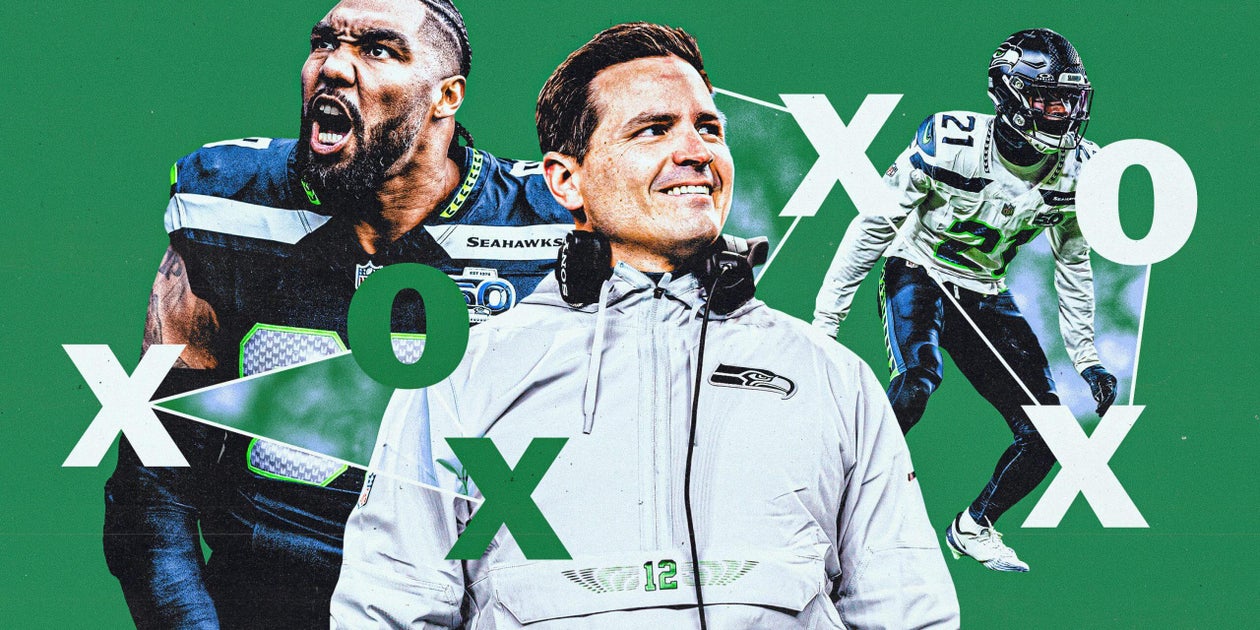
It’s only taken two years for Mike Macdonald to get his Seattle Seahawks to a Super Bowl since becoming head coach before the 2024 season, and he’s done it by refining what got him the job.
Macdonald got the Seahawks job thanks to his Baltimore Ravens defense, which blended Vic Fangio’s two-high scheme and Wink Martindale’s pressure schemes. The X’s and O’s were top-notch, but the real secret to Macdonald’s scheme was how he weaponized each one of his players and organized and taught fronts, packages, coverages and pressure patterns. His unique way of teaching concepts as a whole, making players interchangeable pieces on the chessboard, made it hell for offenses to identify and block pressures.
In Baltimore, he was able to scheme up pressures despite not having an elite pass rusher. The Ravens ranked fourth in 2023 in sack rate and eighth in pressure rate, while only blitzing 13.2 percent of the time. They did this by manipulating protection schemes and using simulated pressures (four-man rush with one of the rushers being a second- or third-level player). On early downs, the Ravens used two-deep shells to prevent explosive plays, but on passing downs, they manufactured a pass rush through scheme.
“What the (2023) Ravens have done so well is they pressure in so many ways that you can’t get a bead on them,” former NFL center A.Q. Shipley told The Athletic. “The other thing that’s great about them is you might watch them one week against Pittsburgh, and it looks completely different against Cleveland, so it’s tough, too, because you’ve got to make so many in-game adjustments.”
Macdonald has transitioned his Seattle scheme into a less aggressive and simpler one. This season, Macdonald has the best defensive line he’s ever had as a play caller and good-to-elite players at every level of the defense. So, instead of trying to be flashy with his scheme, Macdonald has dialed down the pressure and has become more Fangio-centric than ever. That’s not to say the scheme is simple, but the complexity is in the nuances of the scheme rather than trying to run a bunch of pressure schemes 10 different ways.
Of course, there are still creative pressures in his Seattle playbook, but generally, offenses know what the Seahawks are doing schematically; they just can’t do anything about it. The defense is designed to stop explosive pass plays by keeping sub personnel on the field (five or more defensive backs) and staying in two-deep shells. They have an abundance of skilled defensive backs who can cover and tackle, and move around to different positions.
They will, of course, rotate into different coverages from their two-high shells, but their disguising isn’t on par with some of the trickier schemes in the league, like the Minnesota Vikings or even the Buffalo Bills, who rely more on deception.
The coverage structures are extremely similar to what Fangio does as defensive coordinator of the Philadelphia Eagles, but up front, they’ve transitioned into more of a shape-shifting 4-3 scheme, whereas Fangio has always used an odd front. The key to making Seattle’s defense work is rookie nickel Nick Emmanwori, who became an elite run defender toward the end of the season.
“We’re really kind of turning into like a 4-3 base team with a crazy athletic sam (linebacker), is what we are,” Macdonald told reporters earlier in the week. “When we go to dime (six defensive backs), we’re really a nickel 4-3 team. I think the cool thing that our front allows us to do, what Nick (Emmanwori) allows us to do, is we get some front variety that normally you wouldn’t get out of a true four-down team, and I think that’s been pretty cool what we’ve been able to create.”
Everything starts with the Seahawks’ ability to stop the run from their sub personnel. Despite leading the league in sub personnel usage, the Seahawks rank third in defensive rushing success rate.
Week 16, 10:04 remaining in the third quarter, third-and-2
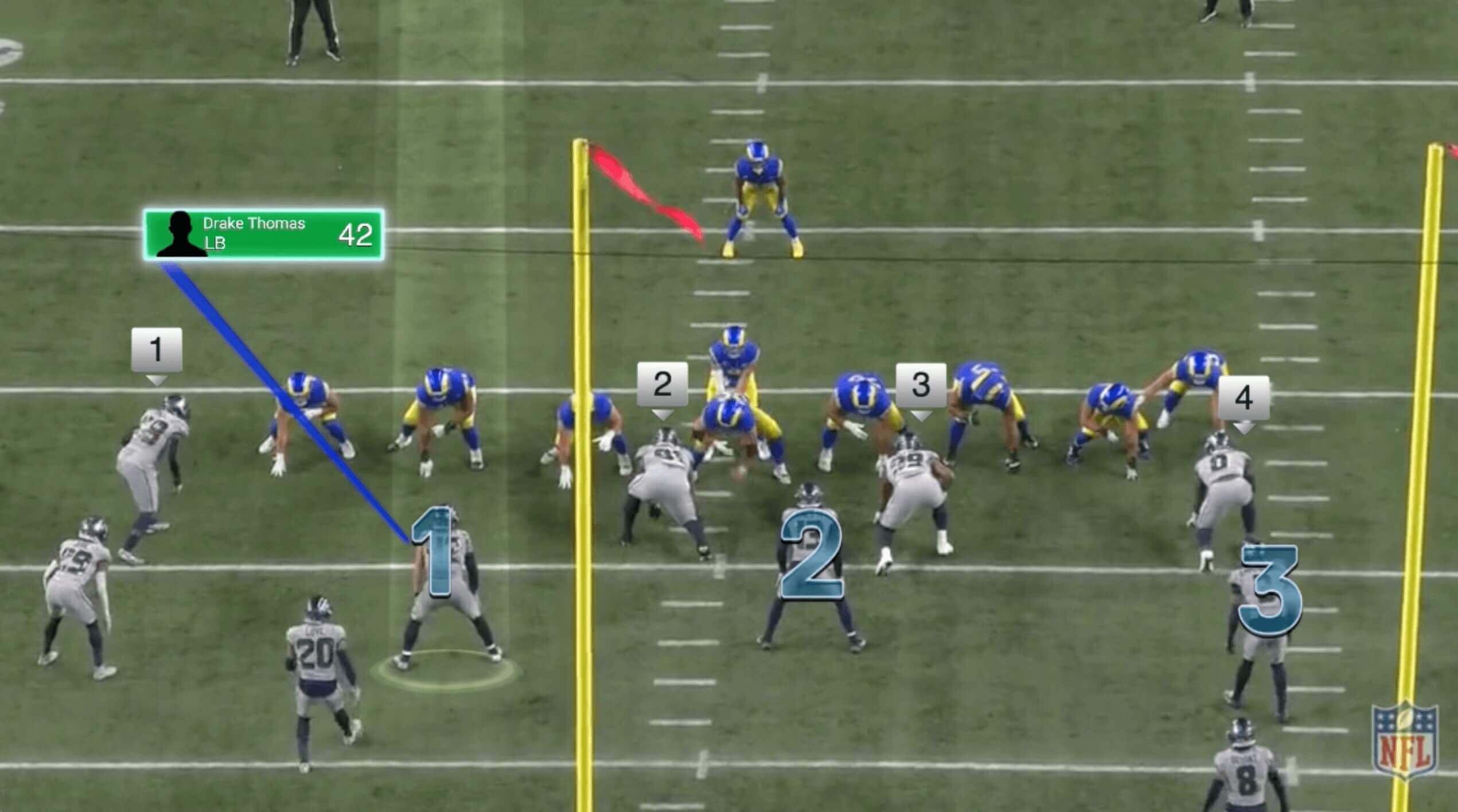
On this play, the Seahawks initially lined up in their modified 4-3 with four defensive linemen, two linebackers, and Emmanwori playing strongside linebacker. Weakside linebacker Drake Thomas is undersized (228 pounds), but Macdonald will use him on run blitzes to take advantage of his ability to penetrate rather than have him sit back and allow blockers to get to him. Dan Casey wrote a fantastic article about how Macdonald uses Thomas to blow up gaps, specifically the B-gap, a lot of the time.
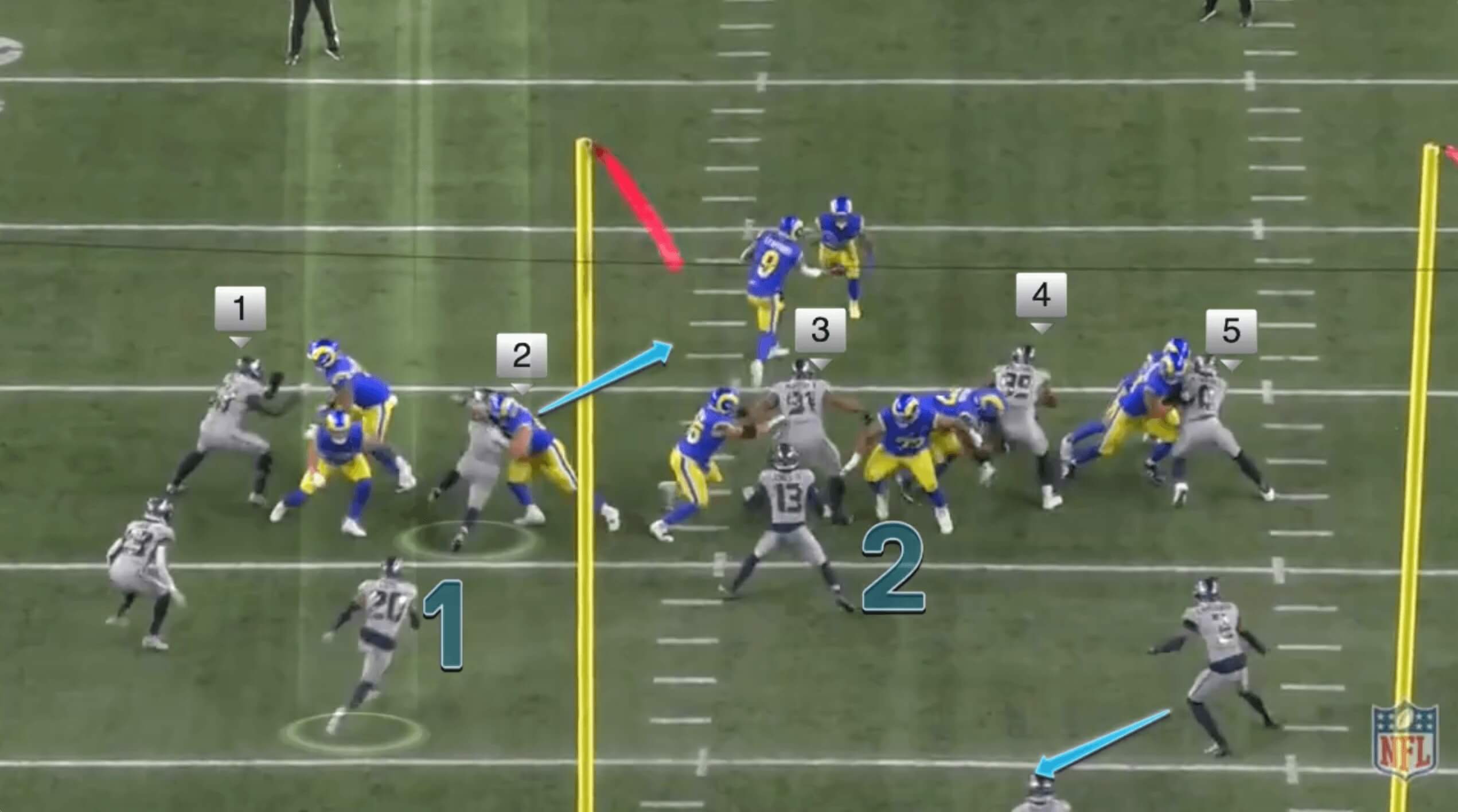
After the snap, Thomas blitzed into the B-gap, which essentially created a five-man surface up front, and safety Julian Love (No. 20) rotated to the second level, which created a modified 3-4 front at the snap. The movement up front confused the Rams’ blocking scheme and multiple defenders, including Thomas, penetrated past the offensive line.
NFC Championship Game, 14:03 remaining in the second quarter, first-and-10
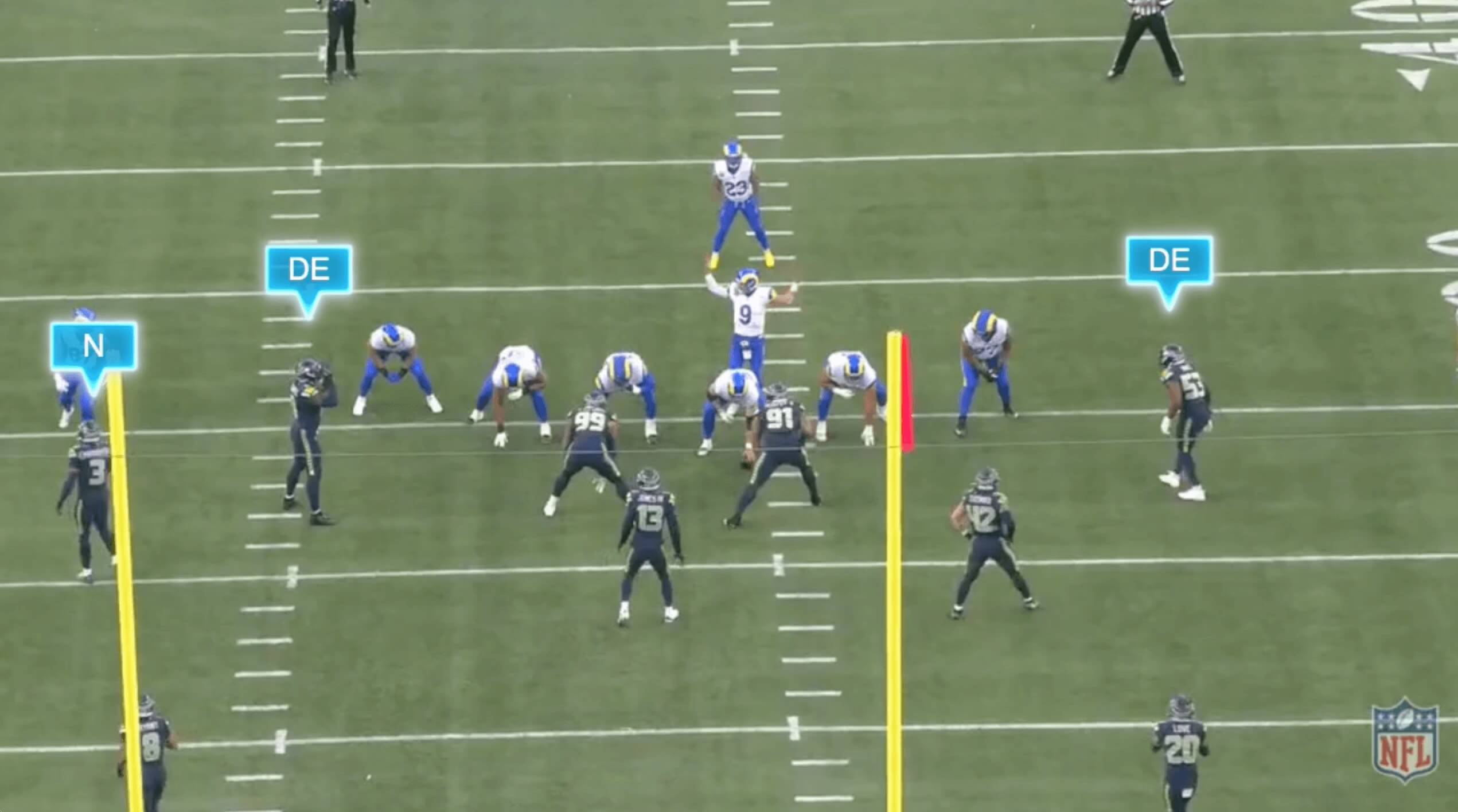
On this play, the Rams were in 13 personnel (one back, three tight ends, one receiver) but lined up in a spread formation initially. The Seahawks were in nickel with a 4-2 front.
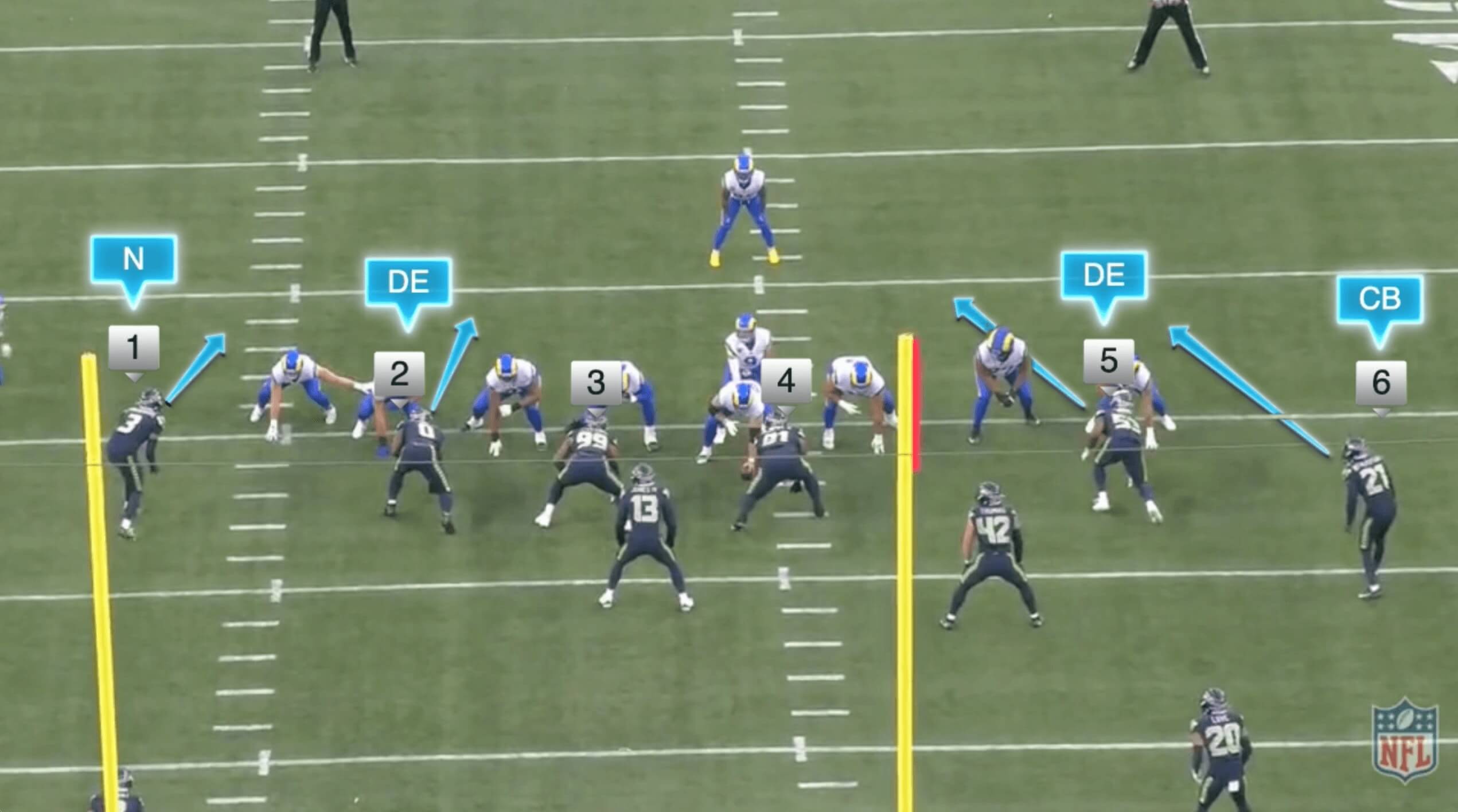
As the Rams shifted into a condensed formation with a two-tight surface to offensive right (left of the image), the Seahawks adjusted by reducing their defensive ends inside and lining up Emmanwori at edge linebacker to the two-tight end side. On the other side, Devon Witherspoon, who is one of the most physical corners in the league, was responsible for the left edge. Essentially, they built a 6-2 front with their nickel personnel.
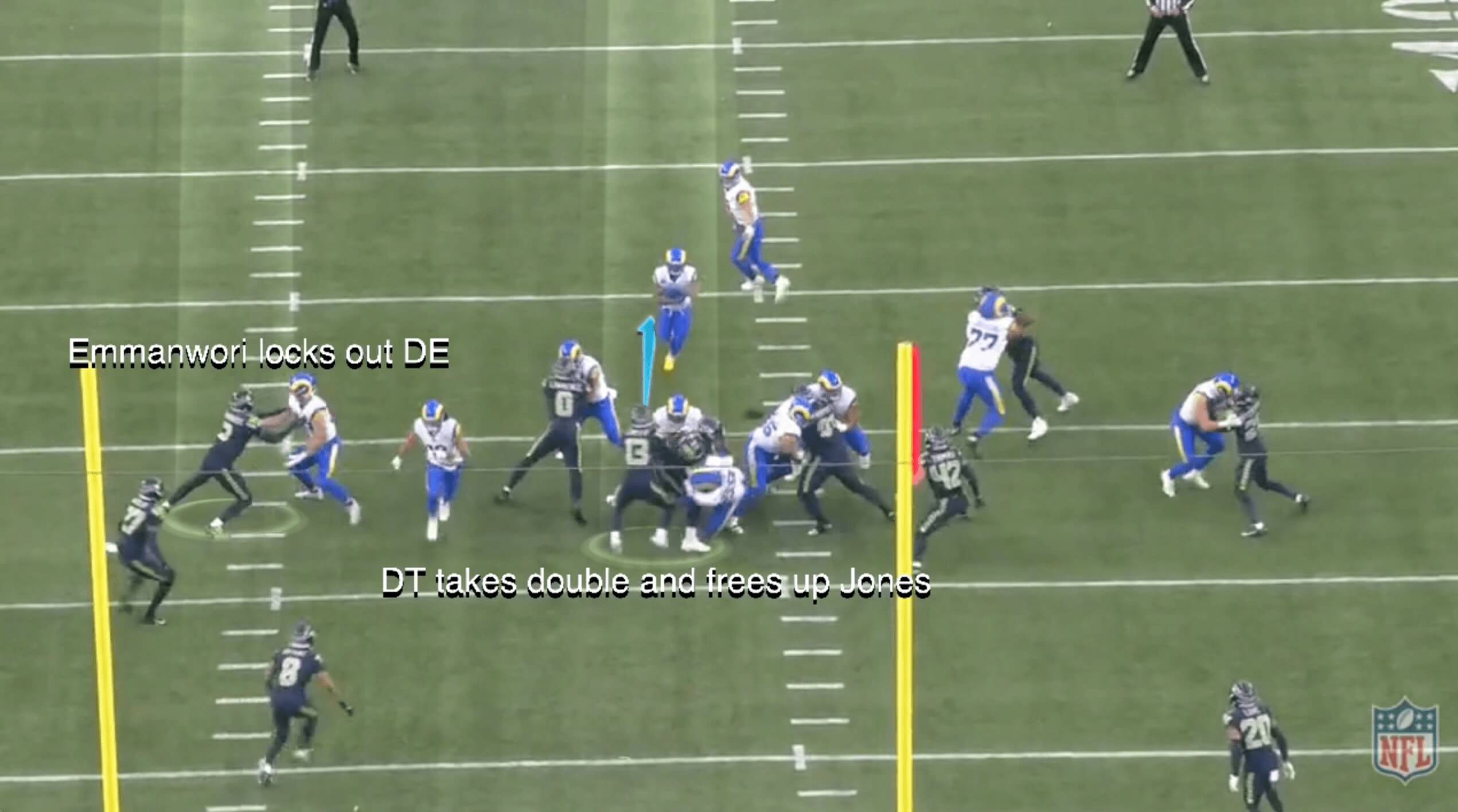
Defensive tackle Leonard Williams ate up a double-team, which freed up linebacker Ernest Jones. Emmanwori locked out the tight end like a physical outside linebacker would.
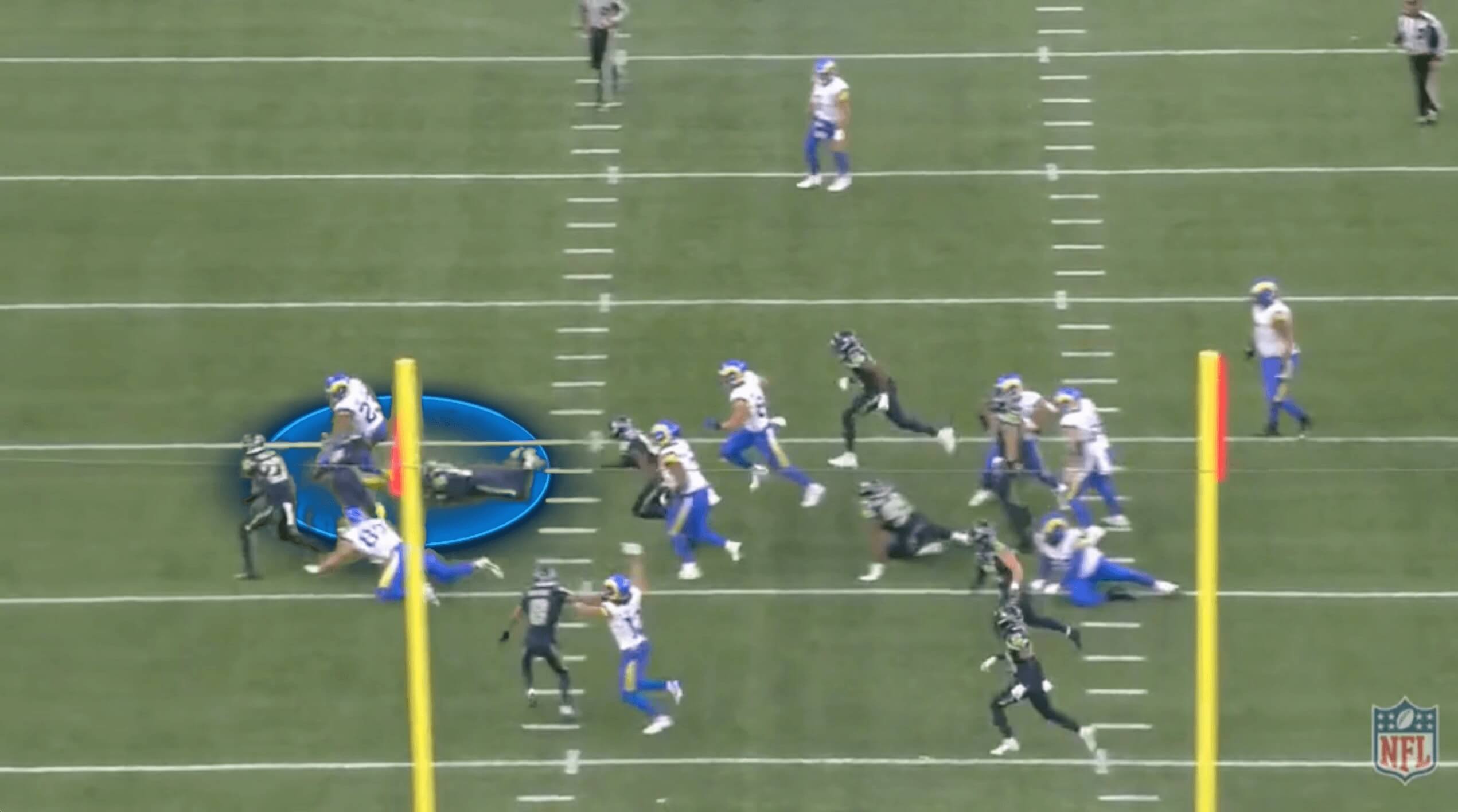
Jones forced the runner outside, and Emmanwori finished with a tackle at the line of scrimmage.
Fangio-style defenses typically don’t rank high in run stuffs (runs of 0 yards) and tackle for losses because, up front, the defensive line will play with gap-and-half technique, which means defensive linemen are responsible for a primary gap and secondary gap. This technique is essential for them to live in light boxes because there are times when they won’t have enough defenders in the box to account for every gap created by the offense.
Macdonald’s defenses follow the same pattern. In his first three seasons as play caller, his defenses never surpassed 25 percent in tackle for loss and run stuff rates. This season, the Seahawks rank second in the league in that category (30.1 percent), which is higher than the Houston Texans, whose entire identity is built on aggressively getting upfield in a single-gap defense. As seen in the example above, one of the reasons is schemed-up movement upfront. Another reason is that the Seahawks have one of the best defensive tackle duos in the league with Williams and Byron Murphy. DeMarcus Lawrence, who is easily one of the best free-agent signings this year, leads the team in this category with 14.
Teams that play this style of defense usually prioritize run defense second, but the Seahawks are unique because they have one of the best run defenses in the league without pushing their on-field resources to stopping the run.
The defensive line penetrates more on runs than a team that typically plays as many two-high structures as the Seahawks do, and they can be more aggressive because they have excellent tacklers on the second and third levels of the defense.
The defense’s weakness could be its outside corners (Tariq Woolen and Josh Jobe). They aren’t true weaknesses, but they aren’t players you want to leave on an island too often against elite receivers, which is why it’s essential that the Seahawks are able to stay in sub personnel and play two-high. They’ve been elite at stopping the run with their sub personnel, so they can stay in it and remain flexible with their coverages.
NFC Championship Game, 12:56 remaining in the second quarter, third-and-10
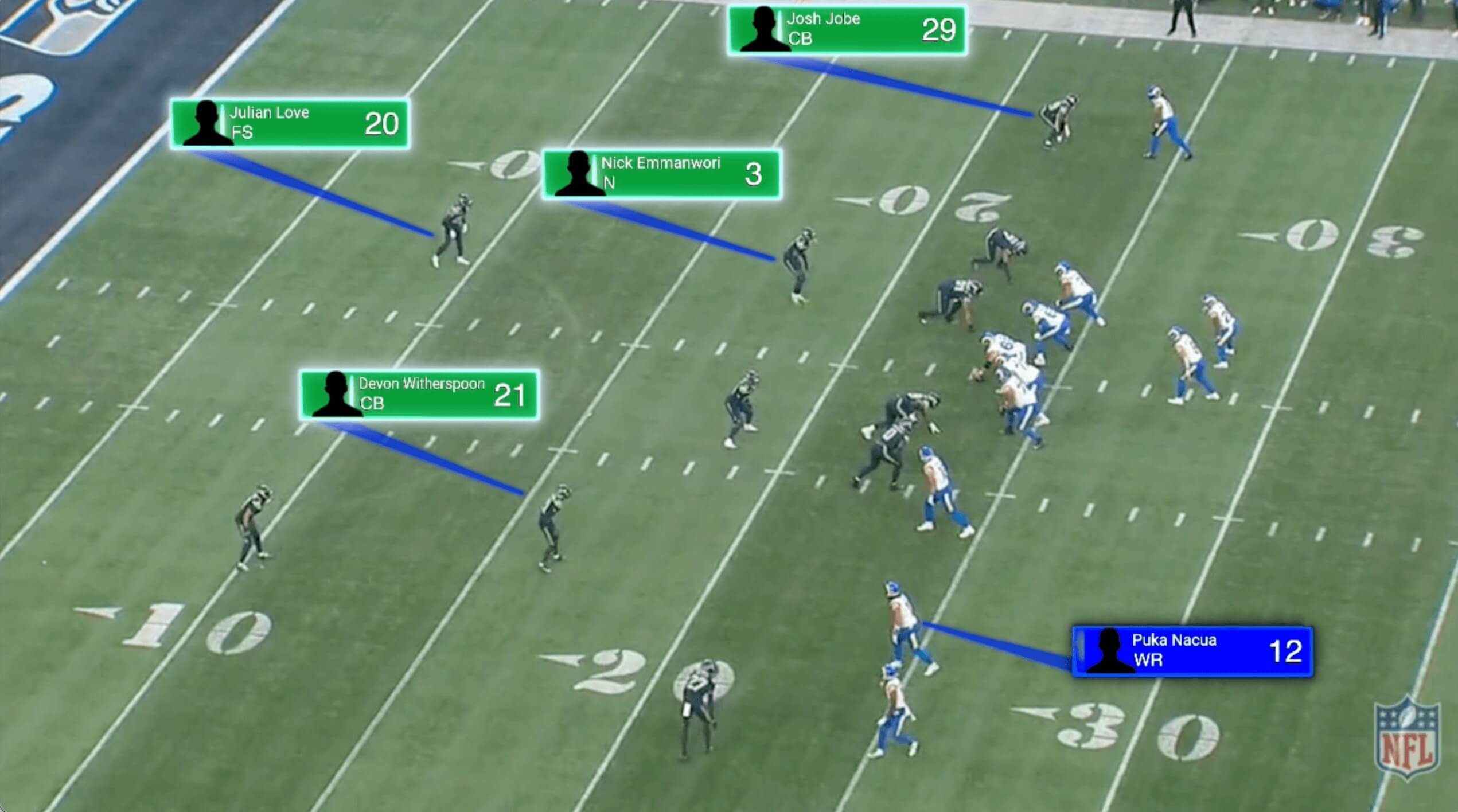
Like Fangio, Macdonald likes to play cloud coverage over another team’s No. 1 receiver to surround him with bodies. Here, receiver Puka Nacua lined up in the slot to the offensive left, so the defense played Cover 2 to his side. The defense was in dime, so Witherspoon kicked inside on the opposite side of Emmanwori.
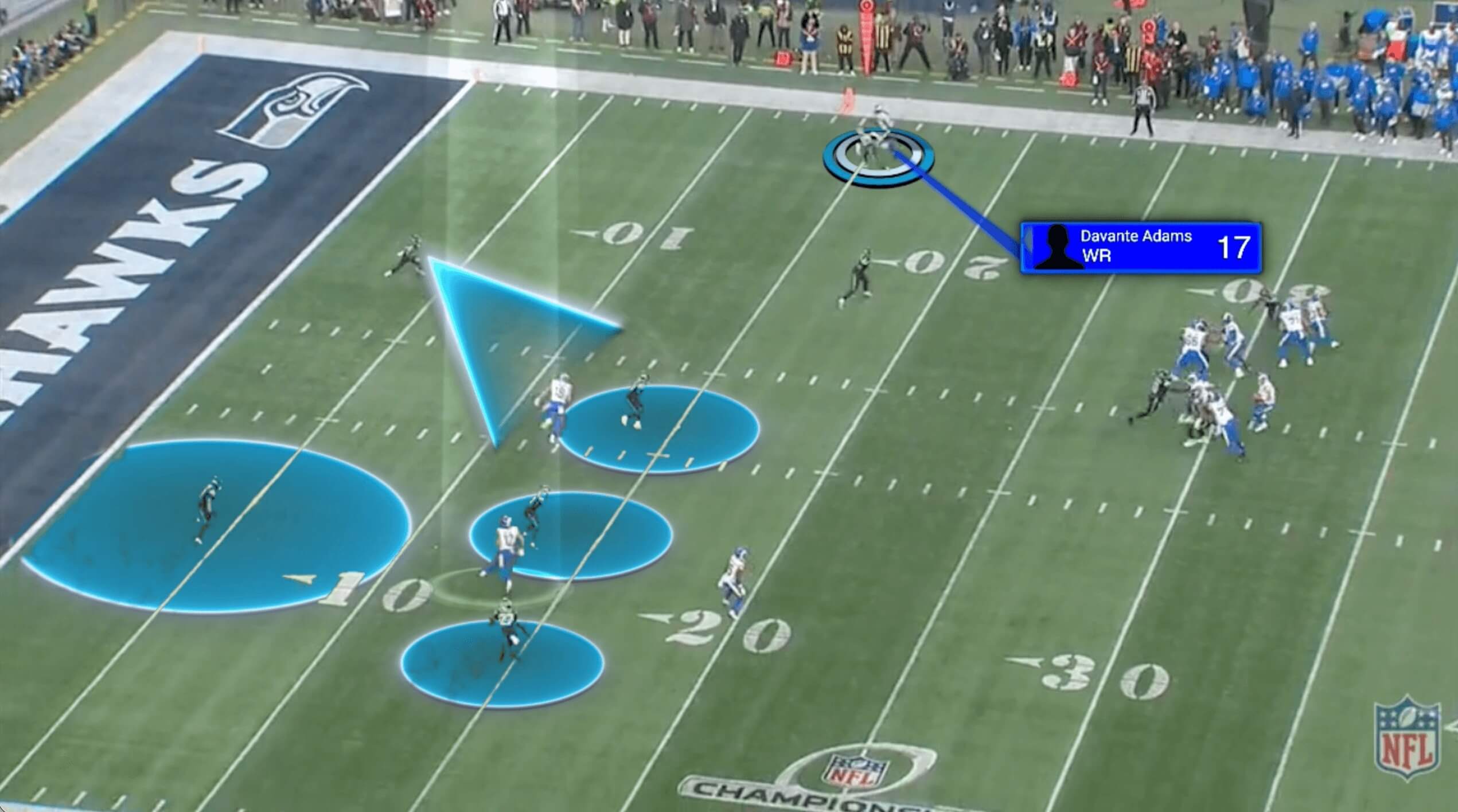
The Seahawks were in a split-field coverage, meaning they were playing two different coverages on both sides. They had a Cover 2 zone to Nacua’s side and Cover 4 to the opposite side, but with the weakside safety looking to help on the three-receiver side. This meant that Davante Adams was one-on-one with Jobe on the other side of the field. The safety on that side should have hidden his intentions a little longer and dropped straight back instead of opening up toward the three-receiver side right away. Later in the game, Matthew Stafford took advantage of the Seahawks playing Adams one-on-one.
The Rams offense gives Seattle issues because they have two elite receivers in Nacua and Adams, and one of the league’s best downfield throwers in Stafford. They can lean on Seattle’s slight outside corner weakness. The Rams also have a historically efficient running game. No other team in the league has that combination of threats on offense.
If you can’t run the ball on the Seahawks, you have to be absolutely elite to pass the ball efficiently against their versatile group of defensive backs, who tackle as well as any secondary.
NFC Divisional Round, 0:50 remaining in the first quarter, second-and-9
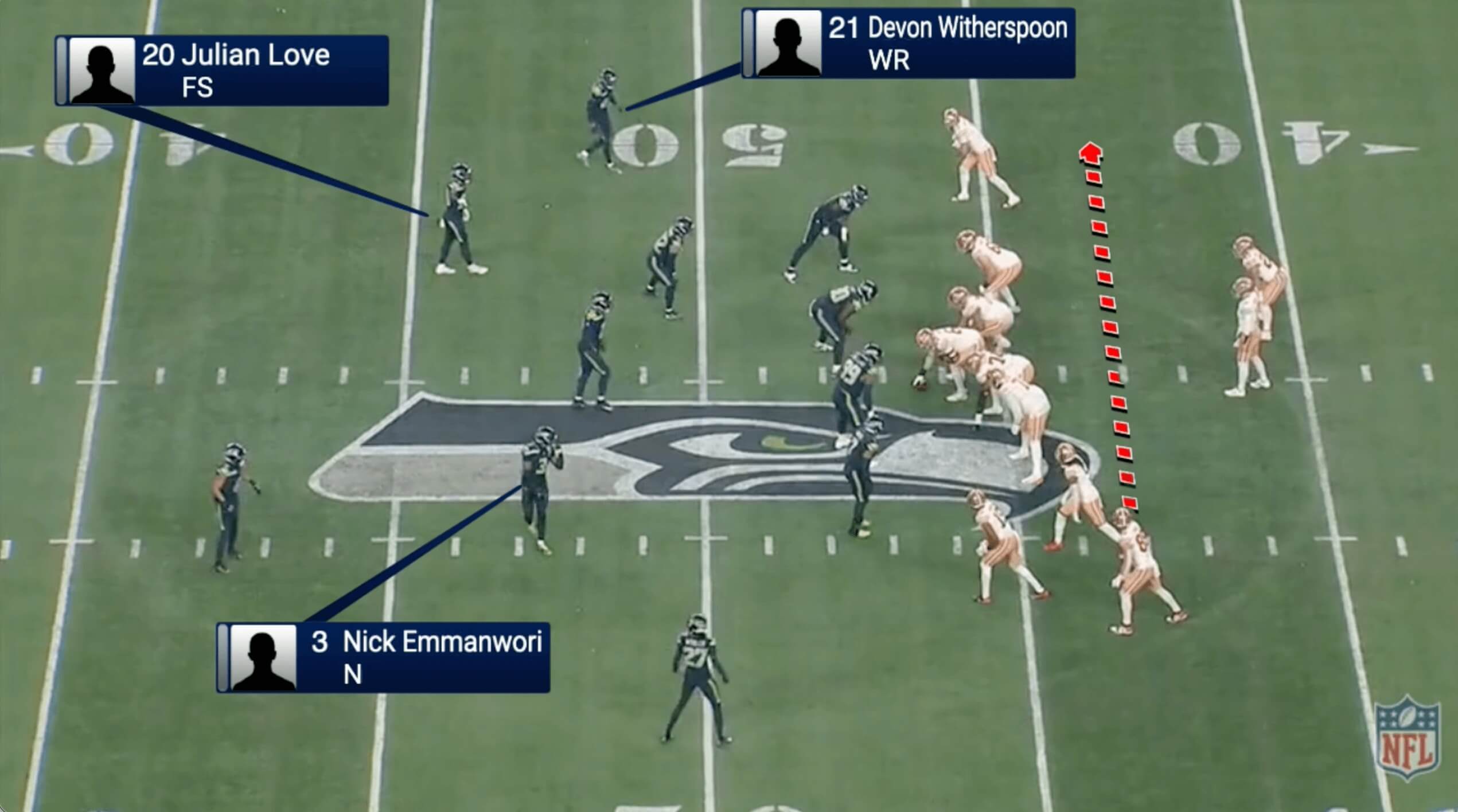
On this play, Emmanwori was lined up in the slot over the San Francisco 49ers’ bunch initially. However, the defense would have to adjust after the tight end motioned across the formation.
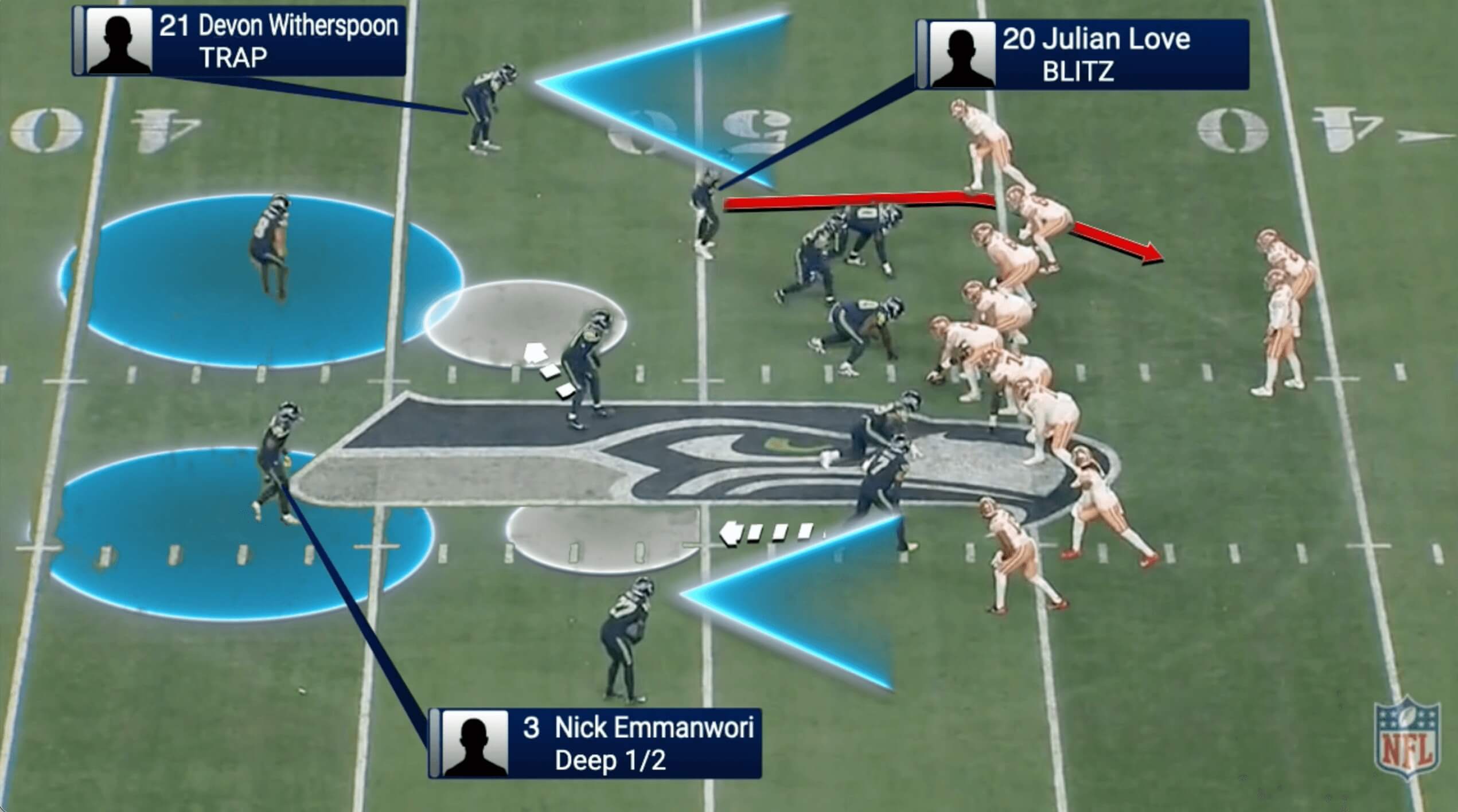
Macdonald had a slot blitz called. After the motion, Emmanwori dropped to play a deep half, and Love moved up toward the line and blitzed. Both corners played trap technique, meaning they would drive on any routes to the flats.
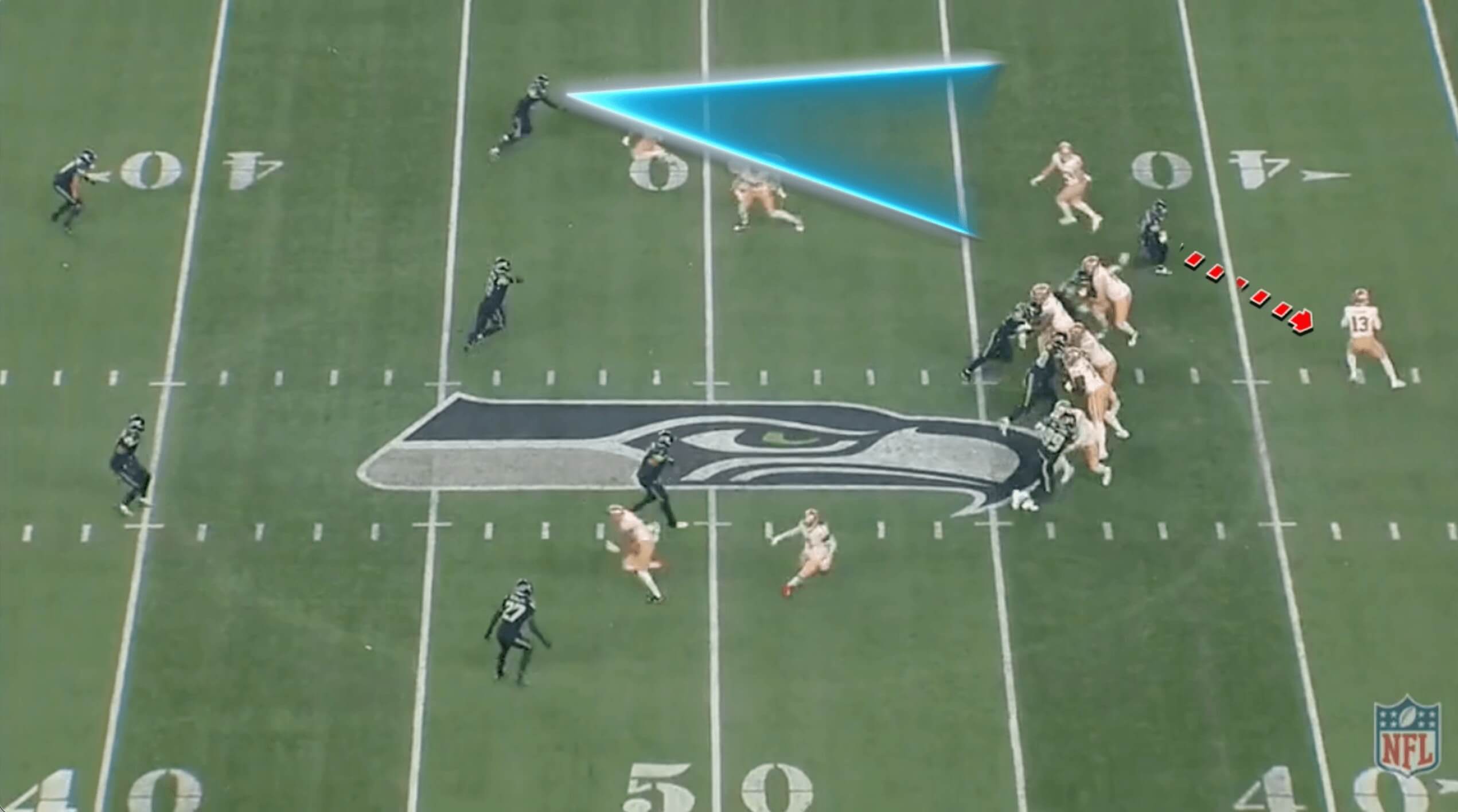
The Seahawks brought more rushers than the 49ers could block, so Love was free. Quarterback Brock Purdy had to throw hot to running back Christian McCaffrey to avoid the sack, but Witherspoon had his eyes on McCaffrey.
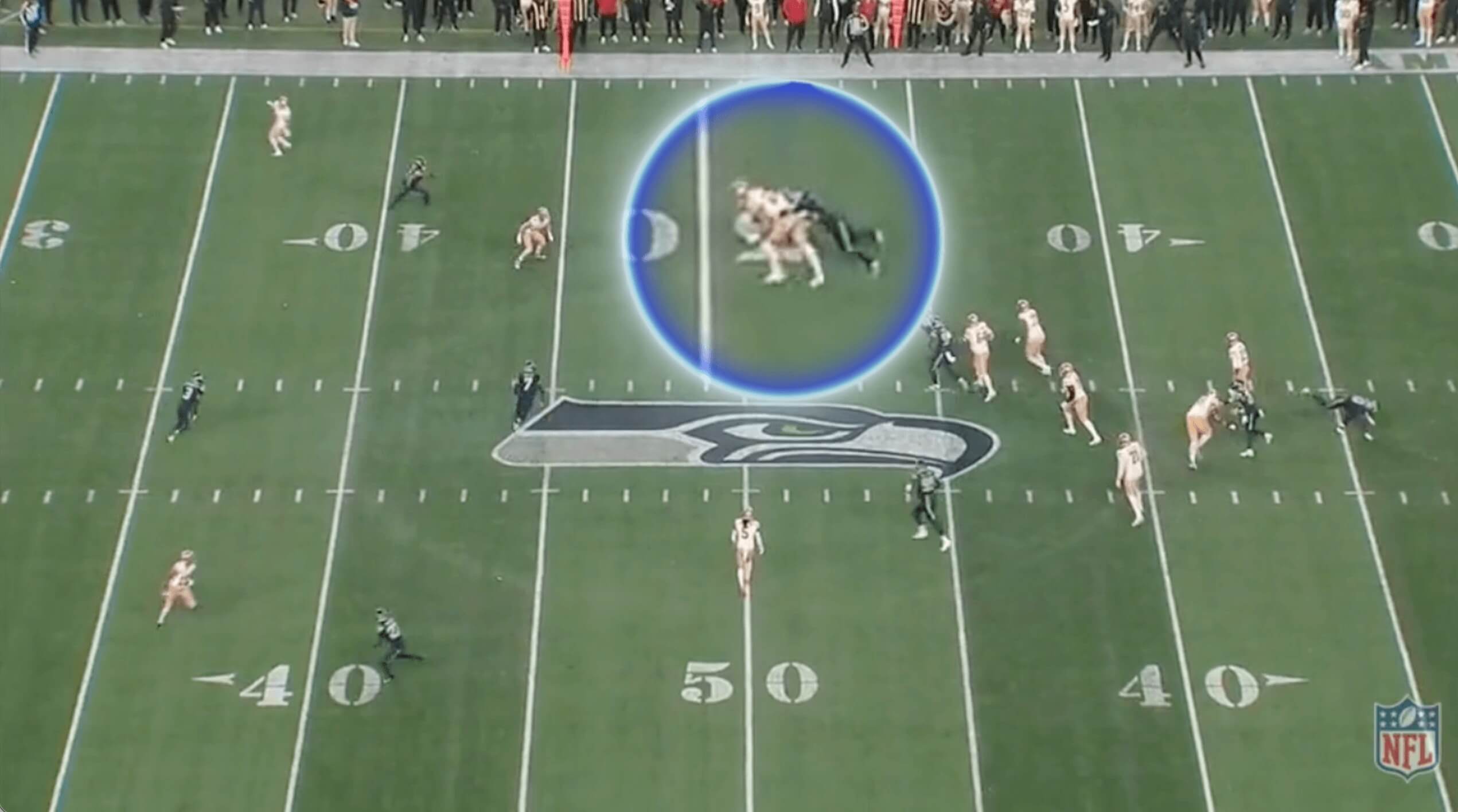
Purdy made the right decision, but Witherspoon was right there for the tackle and stopped McCaffrey for a 4-yard gain. The Seahawks’ excellent tackling is essential with how much soft zone they play. It’s hard to create explosives after the catch against them.
The Seahawks defense has four blue-chip players in Williams, Murphy, Emmanwori and Witherspoon. The rest of the defensive roster is full of good-to-quality players. Macdonald does a great job of putting them in positions where their strengths are highlighted and their weaknesses minimized. Not only that, the scheme allows all of their skill sets to complement each other, and right now, they are executing at the highest level.
Macdonald’s scheme has never been about the plays; it’s a system that fosters flexibility and ensures he can move players around the defense seamlessly. In Baltimore, player movement was used more to create pressure. In Seattle, he’s finding ways to stop the run out of sub personnel and staying sound against the pass while creating pressure with his front four. The latest version of his defense has the Seahawks on the doorstep of the franchise’s second Super Bowl title.