
Hello, hello, and welcome to our post-signing day recruiting mailbag.
With most of the nation’s top prospects having already signed in December, Wednesday was a relatively quiet day on the recruiting front.
As expected, USC finished with the top class in the 247Sports Composite, followed by Alabama, Oregon, Ohio State and Notre Dame. Oregon finished with the highest average player rating, at 93.16, beating out second-place finisher LSU by nearly a point.
Now, it’s on to the Class of 2027. There’s no time to sleep in recruiting.
As always, thank you for your questions. Let’s dive in.
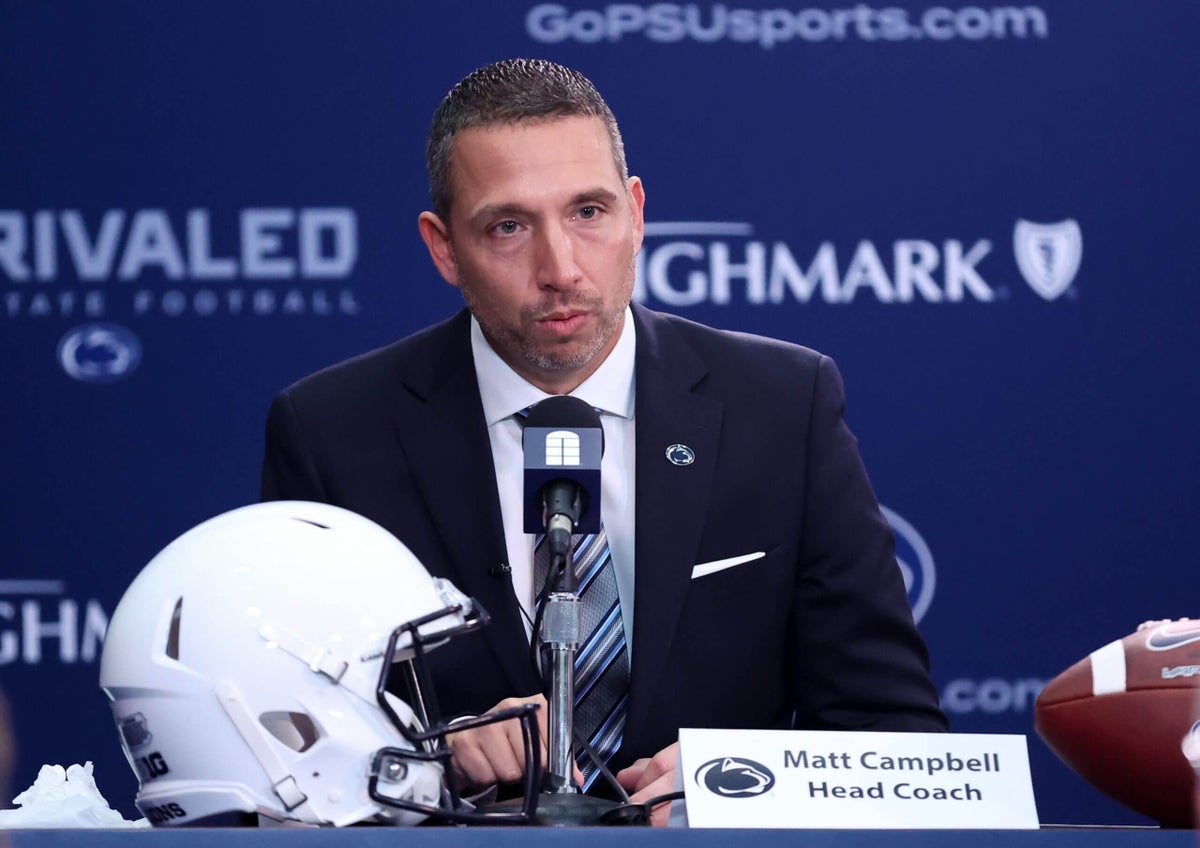
How do you see Matt Campbell doing at Penn State? At Iowa State, it was more two-star, three-star guys and developing them. No offense to the Cyclones, but Penn State is a bigger draw. Does he have the salesmanship needed to get the five-star guys? — Brad Y.
I thought Penn State backdoored into arguably the best hire of the offseason, and I think Campbell will do really well there. The reason? Exactly what you just said. If Campbell can win with two- and three-star recruits, imagine what he can do with blue-chippers. Iowa State wasn’t a recruiting destination like Penn State is, and he still finished with eight winning seasons in 10 years, including an 11-win season in 2024. He’s got the hard part down: evaluating, developing and trusting his gut, even if his methods are different from those of his peers. Penn State is one of the blue-blood schools that can sell itself, and what recruit — including the five-star prospect — doesn’t want to be developed by one of the best in the game?
It might take some adjusting to the Big Ten, and Campbell doesn’t have East Coast ties, so he’ll need to make inroads with high school players and coaches as soon as possible. But if you look at his staff continuity over the years, you’ll see that he’s someone people trust and like being around. And I trust that the Nittany Lions are in strong hands.
Alabama has a star-studded 2026 recruiting class, but faltered a bit in the transfer portal. Do you think the Tide can win the SEC again with so few highly regarded transfers coming into the program? — Kirk M.
You’re right that Alabama dominated on the recruiting trail. The Crimson Tide signed four five-stars, six top-50 prospects and 14 blue-chippers as part of the nation’s No. 2 class. They also gave Georgia head coach Kirby Smart a run for his money in his own backyard, signing two of the top three players in the Peach State, and managed to keep five-star running back and Alabama native Ezavier Crowell home.
But you’re right that coach Kalen DeBoer was relatively quiet in the transfer portal. He did sign 17 players, but very few arrive in Tuscaloosa with proven production at the Power 4 level.
As my colleague Seth Emerson laid out earlier this week, there are concerns for Alabama, which will again be a young team in 2026. I’m not convinced the Crimson Tide will win the SEC in 2026. But if quarterback Keelon Russell lights it up this year and the Crimson Tide use 2026 to get those young players more experience? Count me in as an Alabama enthusiast for 2027.
What can schools in G5/G6 conferences — especially those in the MAC and CUSA — do to compete for players? Is their only real option to sift through the kids who are leaving the bigger schools? And is the percentage of players moving up through the portal the same as the number of kids coming down? — Charles C.
Group of 6 conference teams can build their rosters in one of two ways.
Option 1: Scour the portal for Power 4 players who are leveling down, which means taking a chance on players who might have been highly ranked at the high school level but struggled for whatever reason in college. This can be tempting — who doesn’t want an Alabama or Georgia reserve? — but it’s risky. If we’ve learned one thing in college football in the transfer portal era, it’s that coaches are looking for established track records. We see so much more success with Group of 6 players who level up than we do with Power 4 players who level down, even if the percentage of both types of players is relatively even in the portal.
Which brings us to Option 2, which I’d argue is the more effective option: out-evaluate your competition. Then out-develop and out-coach everyone else to become a top Group of 6 destination. Even if you lose those players a year later to bigger programs, establishing yourself as the go-to spot for Group of 6 talent is only going to lead to better recruiting and more wins, which translates to more resources.
This is difficult to accomplish, but this is often how great coaches make their names and move up the food chain. Curt Cignetti took this path at JMU and out-scouted all of his competitors — to the extent that he won a national championship with the help of a crew of two- and three-stars he brought with him to Indiana. Jon Sumrall enjoyed great success in his short stint at Tulane by using the portal to complement the homegrown talent he and his staff developed. The Green Wave made the College Football Playoff, and Sumrall is now at Florida.
There’s no doubt it’s tough to be one of the little guys in college football these days, but if Indiana taught us anything this season, it’s that sometimes it’s about having the right fit versus the flashy talent.
Have any colleges chosen to allocate all their $21 million in revenue sharing to football? — G M M .
Every dollar of the $21 million? Almost certainly not, as men’s and women’s basketball, as well as baseball and Olympic sports, are also important to most Power 4 schools. Title IX questions would also come up if all of the revenue-share dollars went entirely to football.
Schools like to claim that their exact breakdown of allocated funds is proprietary info (lame — we all know what’s happening here), so getting a dollar-by-dollar analysis is tricky. But is the vast majority of the money going to football teams? Yes. Football rules the roost, and everyone in college athletics knows it.