
By Ross Jackson
The Bay Area of California is undoubtedly beautiful and worthy of praise. But as a Super Bowl host destination, many believe it paled in comparison to the attention to detail, convenience and atmosphere of last year’s game-week, which called New Orleans its host city.
Walk just about anywhere during Super Bowl week: Radio Row in downtown San Francisco, the media party in Redwood City, New England Patriots availability in Santa Clara, the San Jose McEnery Convention Center or the 20 to 90-minute shuttle rides in between and it won’t take long before hearing someone compare the event to New Orleans’ outstanding effort in 2025.
Here in San Francisco for Super Bowl coverage and have overhead several NFL media members during availability today say things along the lines of “They should just have the Super Bowl in New Orleans every year.”
— Ross Jackson (@RossJacksonNOLA) February 4, 2026
New Orleans offered convenience that limited travel time and maximized the traversability of the city. It includes several closely located hotels and hundreds of restaurants new and old, quick or experience-driven. Whether looking for a cup of coffee, a bowl of gumbo or a fine-dining, locally sourced prix fixe menu, a $10 ride share or quick walk is all that was required.
At most, beat writers coming from out of town to cover their teams in the Crescent City were subject to a 5 to 10-minute shuttle ride from the Ernest N. Morial Convention Center located in downtown New Orleans to a centrally located team hotel located less than a mile away.
In the Bay Area, media members were shuttled for over an hour each way to cover their home teams, had no media work area and weren’t offered much access to Bay Area culture and flavor.
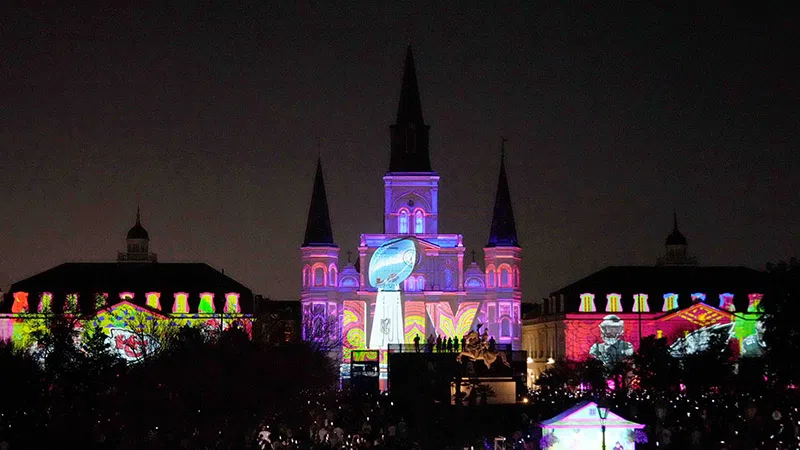
The local flair of New Orleans couldn’t be missed with light shows at the famed St. Louis Cathedral to Mardi Gras-theme accoutrement abundant easily outpaced branding and highlighted an event not dependent upon corporate eyesores.
The Bay Area brought its inherent beauty and picturesque scenes, but lacked a feel of uniqueness and culture. Plant the week-long media marathon in Phoenix, Ariz, Los Angeles, Ca. or another sizable West Coast metroplex and without the airport code on the plane ticket it might be hard to tell the difference.
New Orleans did in 2025 what it took more than four cities to accomplish in 2026. At most, teams practiced upwards of 20 to 25 minutes away in local football facilities including the New Orleans Saints’ headquarters in Metairie, La.
It’s a city built for, and on, big events.
The Big Easy is under consideration to host another championship game in 2031 and the NFL would be wise to grant the city another opportunity to prove why Super Bowl hosting should be a regular occurrence for New Orleans.
A rotation of impressive host cities like New Orleans, Las Vegas, Nev. and Indianapolis, Ind. should be considered with a fourth or fifth rotating scene as opposed to the consistent moving targets year after year.
The 12-year gap between the 2012 and 2025 games is inexcusable and should not happen again. New Orleans can’t host the Super Bowl every year, what with the Mardi Gras calendar shifting, conferences and other big events, but it should be a consistent destination for the biggest game in sports.
It was a valiant effort, San Francisco and neighboring towns, but the attending population is speaking. New Orleans reigns as the supreme host city. Most everywhere else is just buying time until the next trip to the Crescent City.