
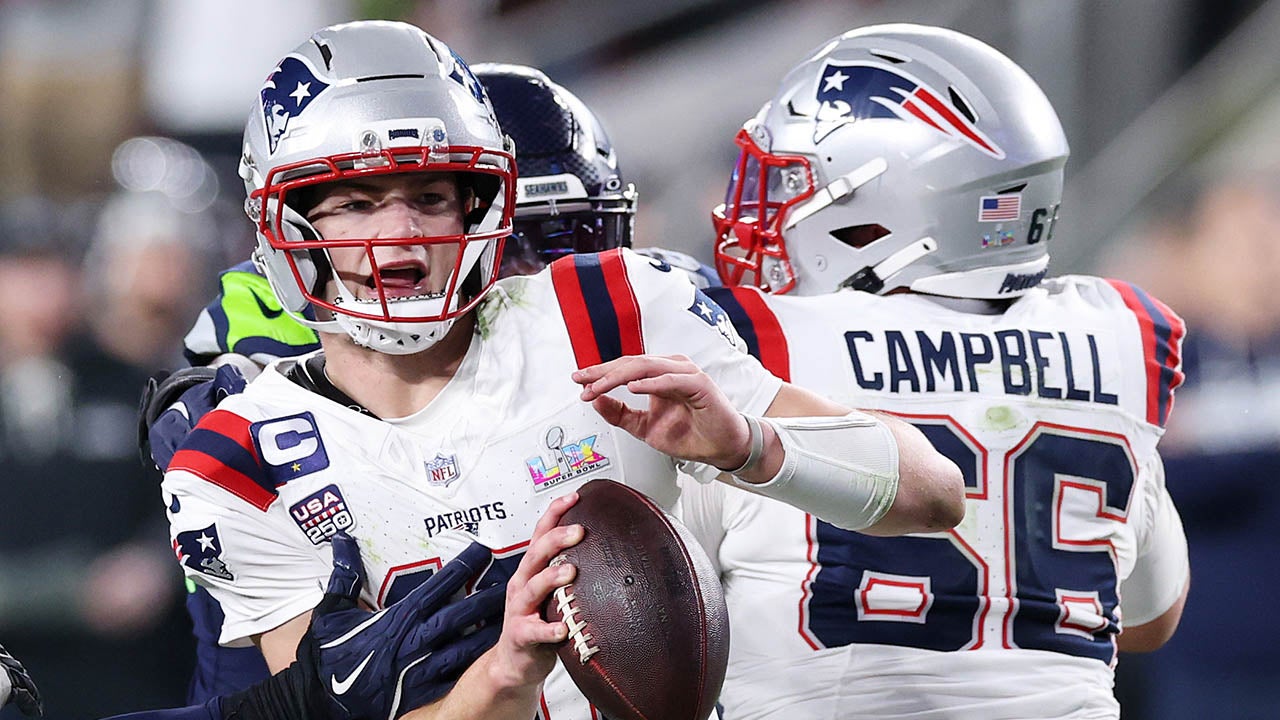
The Patriots kept Super Bowl LX close for nearly three full quarters. But the Seahawks dictated the game from start to finish, and there are multiple reasons for that.
One of the big ones is coaching and preparation, or lack thereof. While the Seahawks overall didn’t exactly light it up offensively either, they came out ready to go on their first drive and managed to come away with points. The Patriots’ first drive stalled out due to pressure off the left side, and that was the start of an unrelenting nightmare for Will Campbell, Jared Wilson, and the Patriots’ offensive blockers as a whole.
The Patriots weren’t without their bright spots. Their strong overall defensive performance and lockdown special teams coverage kept the game close on the scoreboard. But it wasn’t nearly enough to overcome what was unfolding for the offense, and the proverbial dam finally broke by the fourth quarter.
With those general thoughts in mind, let’s go over the biggest things that went wrong for the Patriots in a disappointing Super Bowl loss…
No answer for Seahawks defensive front
The Seahawks front-seven isn’t just good on paper. Their pressure packages are on a different level than every other NFL team in terms of diversity and unpredictability. They can be a lot to handle for the most experienced offensive linemen, so you can imagine how much Will Campbell and Jared Wilson’s heads were spinning by the end of the night. Four different Seahawks generated at least one sack, and seven different players hit Maye in the game.
Seattle also controlled the run game defensively. The Patriots’ running backs averaged just 3.2 yards per carry, while the Seahawks hit the ballcarrier behind the line of scrimmage on 53.8% of run plays, their second-highest rate of the season, per Next Gen Stats.
The aggravating part is that everyone already knew the left side of the Patriots offensive line was young and struggling in the playoffs. Where’s the help? Where were the adjustments? Offensive coordinator Josh McDaniels basically left Campbell on an island to start the game, and didn’t seem to load up on extra blockers on that side until the third quarter. Unfortunately, the damage had already been done to Maye, and he played even worse in the second half than in the first, despite seemingly having more time to throw.
Additionally, it turns out that having one of the league’s most experienced offensive line coaches in Doug Marrone didn’t help much. But this problem starts with the talent, and the Patriots don’t have enough of it up front on offense. They need to upgrade one spot on the O-line, at a minimum, and also invest in a legit blocking tight end. McDaniels will probably want a fullback, too. Offensive blocking is the No. 1 thing to improve in the off-season, and the Super Bowl was a reality check for that.
Couldn’t stop the run
Despite the Patriots defending the run better than expected over the course of the season, their strength was up the middle with their defensive tackles and middle linebacker Robert Spillane. They were always much more susceptible to runs to the outside, due to aggressive edge rushers and blitz packages that struggled to keep contain.
It took until the Super Bowl for a team to really exploit that, but the Seahawks certainly did, and it ultimately earned running back Kenneth Walker III the Super Bowl MVP award. Per Next Gen Stats, Walker gained 114 of his 135 yards outside the tackles. He forced four missed tackles and gained 79 yards after missed tackles on the night, after the Patriots had not allowed more than 35 yards in that department on the season. Walker deserves credit for making guys miss, but the Seahawks also blocked it up well, especially their outside zone runs.
So, while the Patriots may be in the market for a higher-end pass-rusher to improve their chances of generating pressure without blitzing, they also need to set the edge better. Adding a coverage safety and playing Craig Woodson closer to the line of scrimmage should help, too. But containing the edge was a sneaky problem for the Patriots defense for most of the season, and the Seahawks took advantage.
Darnold outplays Maye
Despite the overwhelming pressure from the Seahawks, Drake Maye at least avoided turning the ball over—for about three quarters. But it was clear by the third quarter, when it appeared that the line had adjusted and finally settled down a bit, that Maye was off. He missed open receivers on third down on consecutive drives, despite having enough time to stand in the pocket and deliver the ball. Then the fumble happened, and the offense really unraveled from there.
Sam Darnold, on the other hand, became a Super Bowl champion by playing more winning football than Maye. He escaped pressure better, he got off more security blanket throws under duress, and avoided turning it over. The cherry on top was that he sprinkled in just enough plays to grind out points.
He was especially strong on the Seahawks’ first drives of the first and third quarters, and cashed in on Maye’s fumble with a touchdown pass to tight end A.J. Barner. One of the best plays he made all night was with his legs, avoiding a near-sack and turning it into an 11-yard scramble to help set up a field goal that made it a two-touchdown game.
Darnold faced a lot pressure, too, but he handled it vastly better than Maye. PFF had Darnold down for a 77.7 passer rating when pressured, compared to an abysmal 17.4 for Maye. The Patriots were never going to have a chance to win this game if Darnold outplayed Maye. It’s clear now that all Seattle needed was for Darnold to protect the ball and make a few throws. That alone was ultimately good enough to vastly outperform Maye, and was critical to the result.
Situationally imperfect
It didn’t turn out to matter much, but the Patriots may face some scrutiny for deciding to kick the extra point after their first touchdown instead of going for two. An 11-point deficit would’ve necessitated only a touchdown (with a two-point conversion) and a field goal, while the 12-point deficit guaranteed that they needed two touchdowns to stay alive.
Soon after that decision, punt returner Marcus Jones chose not to receive the Seahawks’ next punt, which allowed the Seahawks to chase down the ball and pin the Patriots back at their 4-yard line. The ensuing drive resulted in Maye’s worst throw of the night, an ill-advised deep ball on second-and-3 that went right to the Seahawks’ Julian Love for an easy interception.
Why do we bring up these disparate moments? They add up to a disappointing night for the Patriots from a situational football standpoint, which was an area of strength for most of the season. Much like they needed Maye to play at a much higher level in order to pull off a win, they needed to be on point with their game management. The Seahawks were already more talented on paper. Add better coaching and quarterback play than the Patriots, and you get a result like this.
We’re only scratching the surface of the state of the Patriots, as the off-season is only getting started. The Patriots learned the hard way in this game how much they really need to improve if they want to get back here, and especially to emerge victorious.