
“Mental health has a stigma in and of itself. And then when you tie in the other factor — that our people work in careers where sometimes and in some departments, agencies and units it’s not accepted well — and they really need a safe space to go,” Hanes explained. “It’s not a one-and-done: ‘Here’s a couple bucks; here’s a gift card. Thanks for your service. See you later.’ It really becomes a family, and the family continues to grow and continues to support each other.
“We really focus on providing that safe, healthy, positive atmosphere where people can be themselves, learn from each other, help each other and just foster that growth in a way you can’t without a physical space or presence,” Hanes added.
Invisible Wounds Project’s message is “You are not alone,” reminding those who see and face crises daily that support is available and healing is possible.
In 2025, Hanes and his staff and volunteers served 2,000 people and conducted 125 suicide interventions.
Beyond directly supporting individuals who come to Invisible Wounds Project struggling with their mental health at any level, the nonprofit additionally hosts suicide intervention training sessions.
“It’s absolutely amazing to have these people here fulfilling the need,” said Richter, who played college football at the U.S. Air Force Academy and has a heart for U.S. military servicemembers and veterans. “They explained to us how they provide this sense of community along with the necessary resources … and that community piece [is really unique].”
Richter enjoyed touring the facility, as well as meeting and thanking therapists and volunteers, such as Paul, a retired deputy of 32 years, and Dan, a retired Navy vet of 26 years, who volunteer numerous hours each week in the woodshop.
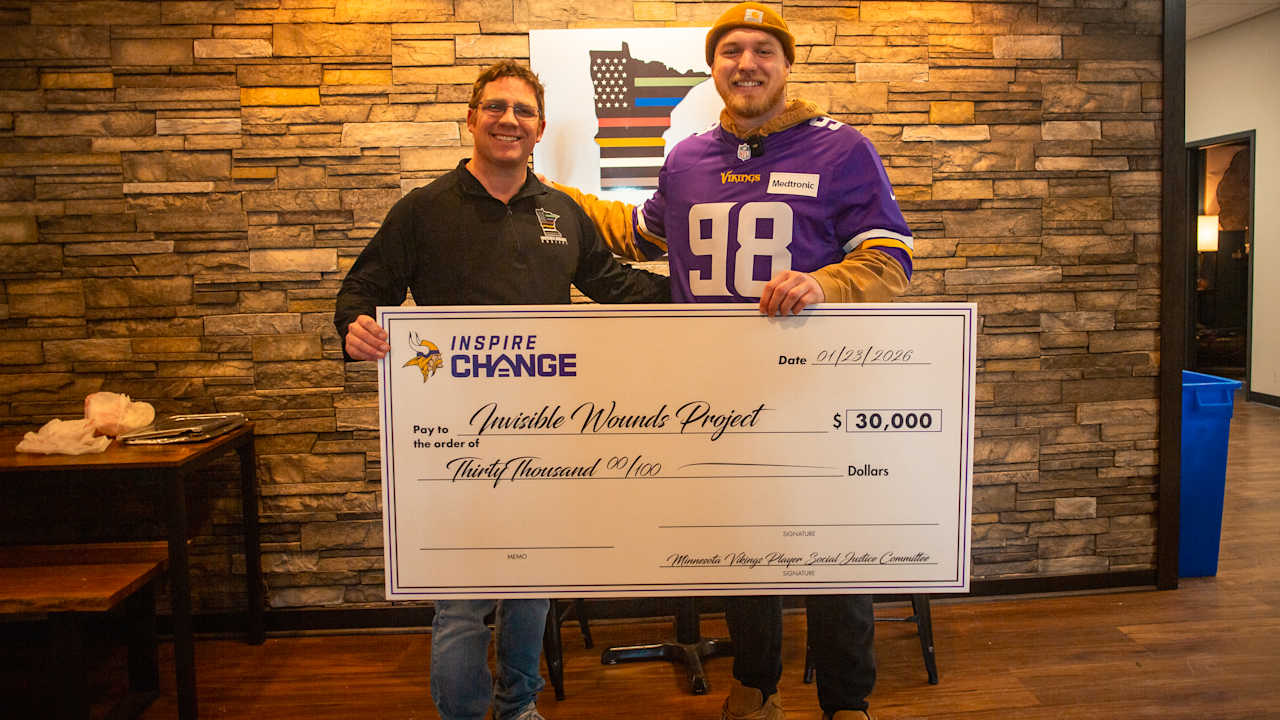
After his tour, Richter surprised Hanes and his staff with a larger-than-life-sized check.