
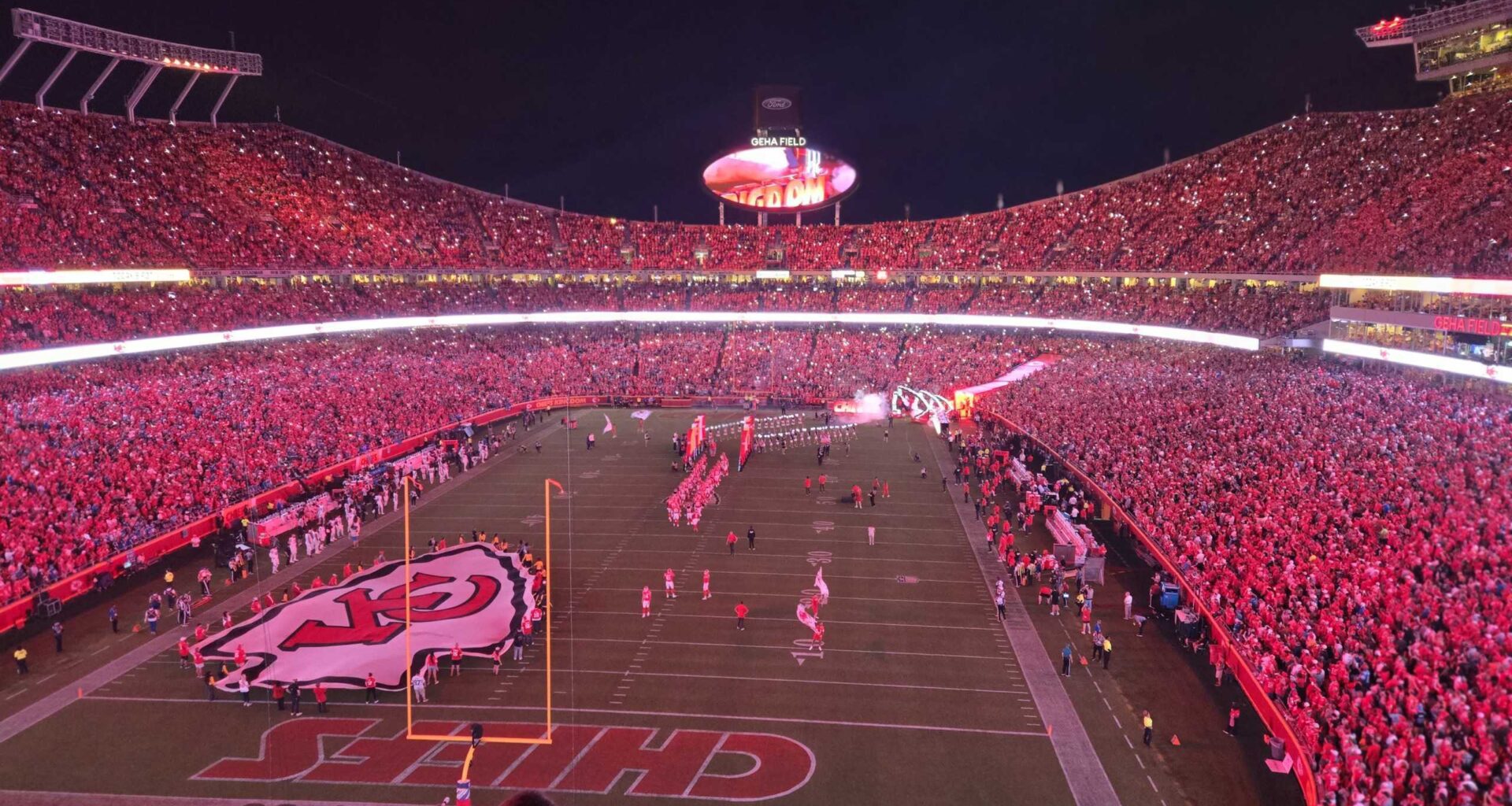
Board of Commissioners: Unified Government of Wyandotte County and Kansas City, Kansas (Feb. 5, 2026)
By Carolyn Tragasz, Kansas City Documenter
These notes were produced through Kansas City Documenters, which trains and pays community members to take fact-checked notes at public meetings, strengthening transparency and accountability in local government.
Summary
Notes
Meeting Attendance
Christal Watson, Mayor/CEO
Commissioner Melissa Bynum, District 1 At-Large
Commissioner Andrew Kump, District 2 At-Large
Commissioner Jermaine Howard, District 1
Commissioner William Burns Jr., District 2
Commissioner Christian Ramirez, District 3
Commissioner Evelyn Hill, District 4
Commissioner Carlos Pacheco III, District 5
Commissioner Philip Lopez, District 6
Commissioner Chuck Stites, District 7
Commissioner Andrew Davis, District 8
Meeting Opening: The meeting opened with a roll call, an opening invocation by the Chaplain Lamar Martin Jr. from Fellowship Christian Church and the Pledge of Allegiance.
Revisions to the agenda were announced: The ordinance for election of participation in the STAR bond project for the new Chiefs Stadium was added to the administrators’ agenda, and items 9.2 (resolution for change in short-term rental policy) and 9.3 (ordinance regarding the short-term rental policy) were moved to be included with consent agenda items for this evening.
The first item of business was an announcement that the fire department has revised a previous budget request. The department is going to be purchasing two pumpers rather than one aerial truck.
The consent agenda was voted on and approved. Kump abstained from the vote on consent agenda item 6.2.
Next, there was a presentation about the Hollywood Casino grant project given by Lesley Strohschein, deputy CFO. This grant distributes $500,000 to eligible 501c3 nonprofits in Wyandotte County. An administrative fee is taken out and paid to the Greater KC Community Foundation, which helps manage the grant, and then each commissioner has funds of $43,000 available to award to the entity of their choice.
Davis had a question on the timeline on when they might see an increase in grant allocations. It’s been delayed because of construction delays on the Hollywood Casino hotel near the Kansas Speedway. The grant amount is slated to increase from $500,000 to $850,000 in 2027.
Ordinance for election of participation in STAR bond project for sports stadium: A public hearing on this issue was previously held on Feb. 3. County Administrator David Johnston introduced economic development attorney Todd LaSala from Stinson LLP, who provided a presentation.
The Sales Tax and Revenue (STAR) bond district has not yet been formally established. While the state’s proposed STAR bond district could encompass all of Kansas City, Kansas, and Wyandotte County, the UG’s local pledge is limited to approximately 235 acres.
Only Kansas City, Kansas/Wyandotte County and Olathe are making local tax pledges. The state of Kansas is pledging state sales tax revenue as part of the project’s financing. The site currently generates little to no sales tax revenue.
The UG’s pledge consists of city sales tax, the city’s portion of county sales tax, and up to 8% of the transient guest tax, with the remaining portion retained by the UG.
LaSala said the STAR bond process is unusual because the stadium project is structured primarily as an agreement between the state and the developer, rather than the county.
He said the Kansas Development Finance Authority would likely issue the bonds. The UG has 60 days starting Dec. 22, 2025, to decide if it is going to make the pledge, even though final district boundaries, contracts and feasibility analyses have not yet been completed.
If Wyandotte County votes to approve the pledge, LaSala said the ordinance would have several conditions. These conditions limit the county’s STAR bond pledge to a defined area, require final agreements that give the UG a say in decisions that affect Kansas City, Kansas, and allow the county to pull out of the pledge if those requirements are not met.
They asked for an issuance date of bonds no later than Dec. 31, 2030, so the pledge doesn’t remain open indefinitely. They believe that Edwardsville and Bonner Springs would likely participate through the state’s portion of the project.
Financial Projections
LaSala reviewed early financial estimates from the state of Kansas, a local cost-benefit analysis by Canyon Research Southwest and Municipal Consulting LLC and additional internal research. He stressed that the numbers are estimates, and not guarantees, citing how difficult it is to predict long-term outcomes.
Using a 25-year timeframe, LaSala said the UG’s pledge could total between $350 million and $450 million. The analysis estimated about $445 million in tax benefits over that period. Those estimates include revenue from unpledged sales taxes, hotel taxes, property taxes from surrounding development, a Board of Public Utilities payment in lieu of taxes and other government revenues. The stadium is property tax exempt, if it ends up being owned by a state agency as expected. Ancillary development would be property tax eligible, assuming that the UG keeps that revenue.
LaSala said the project would require significant infrastructure investment, estimated at $275 million upfront and $55 million in ongoing maintenance and repairs. Some infrastructure costs may be paid for with STAR bonds, though details are still being worked out. He said the Chiefs would be responsible for stadium safety, with estimated public safety costs of $57 million and $9 million for additional services.
In total, projected costs were estimated at $396 million, resulting in a projected net surplus of about $92 million over 25 years.
Bridges
The state of Kansas is also offering contributions to bridge repair as part of this project, including Central Avenue Bridge, Kansas Avenue Bridge, Union Pacific Bridge and contributions for busing improvements. This generates an additional $139.7 million, bringing in a predicted $231.7 million net benefit to Wyandotte County, according to LaSala.
LaSala responded to citizens’ questions from the Feb. 3 hearing.
Q: How do we get local businesses involved?
A: LaSala said the UG is not the owner or builder of the stadium. The UG purchasing department can share information with local businesses on how to bid on this type of project.
Q: What about development in eastern or northwest Wyandotte County?
A: LaSala said money is not going to be diverted from that part of the county to pay for the stadium.
Q: How would community improvements be handled?
A: He said state rules require at least half of the community improvement fund to be spent outside the Kansas City area. Changes to the ordinance would also give the UG at least one seat on the committee that oversees those funds.
Q: What about stadium demolition costs at the end of the contract term? Who pays for it?
A: LaSala said that question has not been answered yet because final contracts have not been negotiated.
Q: What about impacts to the Piper Unified School District?
A: He said there could be property tax benefits from development around the stadium, but details are still unclear.
Q: What about BPU impact?
A: LaSala said utility infrastructure tied to the stadium is expected to be paid for through STAR bonds. It’s not yet known whether existing infrastructure is enough, but the assumption is that BPU would not be responsible for additional costs.
Q: What about public safety and public works?
A: He said the Chiefs are responsible for stadium safety.
Q: What about the impact on existing entertainment districts?
A: LaSala said those impacts would be considered during negotiations. The ordinance gives the UG a role in reviewing final agreements when they affect Kansas City, Kansas, and local planning and zoning rules would still apply.
Q: Why is Olathe pledging less transient guest tax than the UG?
A: He said Olathe is pledging 7% of its 9% hotel tax, while Wyandotte County is pledging up to 8% of its 10%, with both keeping 2%.
Q: What are the specific long-term benefits to Wyandotte County?
A: LaSala said no specific long-term benefits have been committed yet.
Q: Why isn’t this being put up to a public vote?
A: LaSala said state law does not require a public vote and only allows a 60-day window for the county to decide, which does not leave time to hold one.
Questions from Commissioners for LaSala
Lopez asked what would happen if revenue projections are not met. LaSala said bondholders would be responsible for that risk. The UG is not the bond issuer and would not be responsible for making up any revenue shortfall. He said this would not affect the UG’s credit rating, though it could affect the state entity issuing the bonds.
Kump asked about infrastructure costs and whether they would be covered by STAR bonds. LaSala said some, but not necessarily all, infrastructure could be eligible for STAR bond funding. He said funds would come from the broader STAR bond district and could be used for road and infrastructure improvements required for the stadium. Kump also asked whether hotels within the district would be included in the transient guest tax pledge.
Hill asked for clarification about the requirement that 50% of the community improvement fund be spent outside the Kansas City area. LaSala said this requirement is set by the state. Hill also asked again about impacts to the Piper School District. LaSala said that while some agricultural property tax revenue would be lost if the land is developed, development in the area could generate new property taxes.
Lopez asked for clarification about Olathe’s contribution. LaSala said the project would be funded through local pledges from Olathe, Kansas City, Kansas, and state participation, and that the project could not be funded by a single district alone. Lopez also asked about ongoing stadium maintenance, such as snow removal and groundskeeping. LaSala said those details have not yet been worked out and would be addressed in future agreements.
Davis said that this issue is difficult for them because the process is very fast. LaSala reiterated that some infrastructure costs may be covered by STAR bonds, but many details remain unresolved. There was discussion about the UG’s approval rights over definitive documents and whether contributions could change if new revenue sources are identified after the February deadline. LaSala said contributions could not be changed after that point, raising questions about how the county might offset its pledge.
Bynum said she had received 527 emails about the project, most of them supportive. She said she was also hearing concerns from residents about whether Wyandotte County would bear costs related to the project. Bynum asked how community benefits could be ensured and how much infrastructure would ultimately be covered by STAR bonds. LaSala said negotiations would continue and that some infrastructure costs would likely be covered, but it is difficult to predict outcomes given the project structure.
Bynum said the county wanted more than excitement about the Chiefs and hoped to see tangible financial benefits. LaSala compared the project to Jackson County’s original decision to build the Truman Sports Complex, noting that such projects involve uncertainty and long-term forecasting. He said the proposed Chiefs stadium could be a catalytic development, though the surrounding area is already more developed than the area around the Truman complex was at the time.
Pacheco said many valid questions remained, but he framed the decision as whether to pass an ordinance that includes conditions intended to protect Wyandotte County. He asked what would happen if the commission voted no on a project that could move forward anyway. LaSala said a no vote could send a dismissive signal to the Chiefs and could result in the county losing leverage, including potential state-funded bridge improvements and a seat at the table in negotiating definitive documents. He described the ordinance as a strategic move that gives the county a voice and leverage. Although they don’t get full control, he called it a once-in-a-generation opportunity.
Lopez later asked about potential impacts on housing appraisals near the stadium. LaSala referred that question to the county appraiser.
Johnston, the county administrator, said that increased development could generate additional revenue to support services beyond the project site. During this exchange, Watson reminded attendees to refrain from audible side comments.
Burns asked whether the commission was ready to entertain a motion. Watson said a motion could proceed if there were no further comments.
Howard questioned how the state determined which bridge projects would be funded and noted that some bridges had been closed for years while northeastern Wyandotte County has faced long-standing disinvestment. He asked whether there had been broader conversations about investment priorities in the 1st District. Watson said there had been discussions about housing and development and referenced upcoming highway work. Howard said residents in his district felt left out and asked whether there could be specific investments in the 1st District, even if they were not directly tied to the stadium site. LaSala responded that while no formal commitments were discussed, the Chiefs have engaged in philanthropic work in other counties, suggesting there could be opportunities for broader community benefit.
Vote
The ordinance passed 7-3. Lopez, Stites and Davis voted no on the ordinance. Watson closed the meeting with remarks emphasizing the importance of the county’s residents and asking the public to trust the commission as it works through the process.
Standing Committees’ Agenda
The fireworks ordinance amendment passed on a 10-1 vote.
The meeting was adjourned.
Observations & Follow-Up Questions
What happened at the state level prior to this meeting to put Wyandotte County in the situation of being asked to vote on an ordinance in such a short timeframe when so much information about what the final agreement was not available?
How much sales tax revenue does Wyandotte County currently generate, and what amount of money are we actually paying as our pledge? How do STAR bonds and sales tax pledges work together in this case?
What is Wyandotte County going to do with the revenue generated from the stadium? Can it be tied to specific things for the public good?
Would residents of Olathe and Kansas City, Kansas, be contributing to the project both through local pledges and state taxes?
Why were the short-term rental items moved to the consent agenda without further discussion? How will questions about post-World Cup short-term rentals, such as what happens if multiple operators on the same block want to continue beyond the event period, be resolved?
Read more about this meeting and see all Kansas City Documenters notes here.
Related
Type of Story: News
Based on facts, either observed and verified firsthand by the reporter, or reported and verified from knowledgeable sources.