
The Seattle Seahawks are proof that NFL teams don’t have to tear it all down to reach the mountaintop. They’re also an example that you must nail the draft — if you go that route from a team-building perspective.
One of the primary reasons the Minnesota Vikings parted ways with general manager Kwesi Adofo-Mensah is the team’s struggles in the draft. Only 14 of Adofo-Mensah’s 28 picks were still on Minnesota’s roster in 2025. Less than half of those were starters. Much of the team’s success over the last four seasons is the result of hits in free agency.
That must change if the Vikings hope to win a playoff game for the first time since the 2019 season. Fortunately, they’re loaded with draft picks in 2026.
Factoring in the compensatory process, Minnesota could be adding nine young players this spring. Who makes the most sense and why? Here is our first offseason crack at a seven-round mock draft.
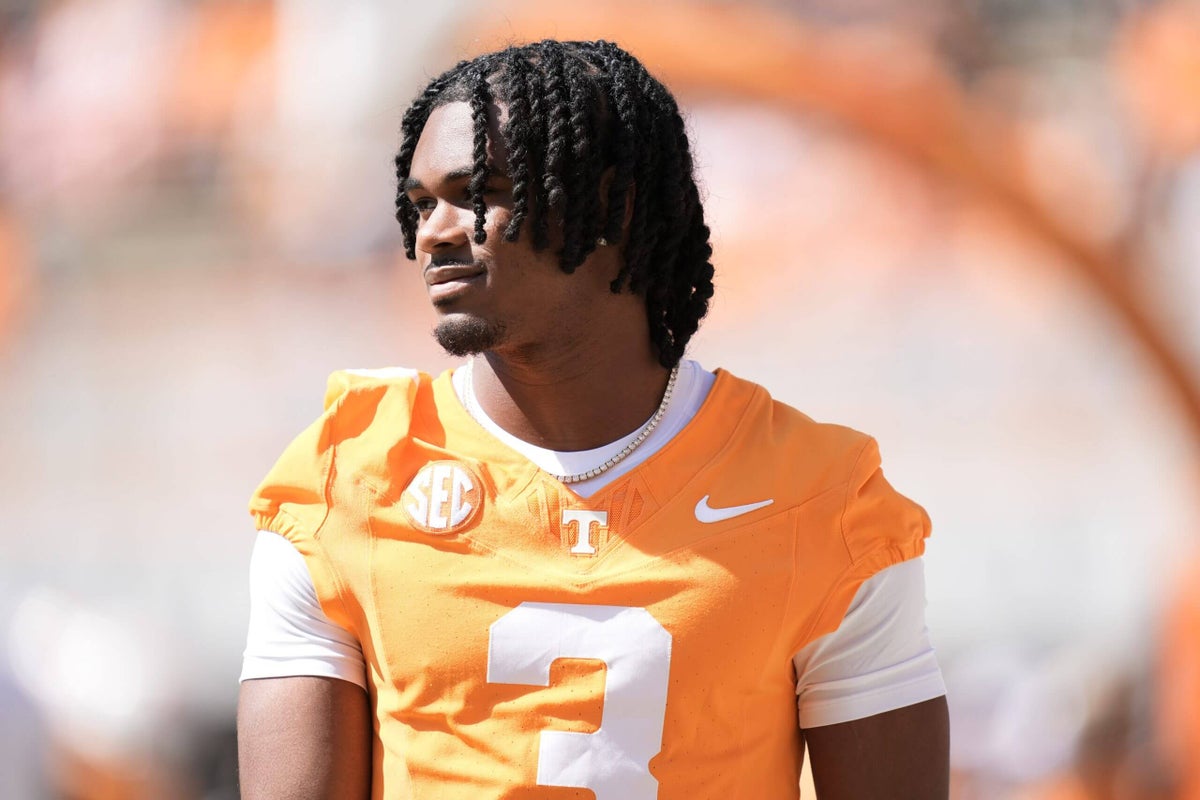
First round (No. 18): Jermod McCoy, CB, Tennessee
The Vikings haven’t drafted a Pro Bowl cornerback in more than a decade.
They’ve tried (though this list of names might hurt): Andrew Booth Jr., Jeff Gladney, Mike Hughes, Mackensie Alexander and Trae Waynes. None of them became what Xavier Rhodes once was. That’s a high bar, but as the Seahawks just proved with elite secondary play, it’s also a necessity if a defense wants to go from very good to elite.
Defensive coordinator Brian Flores has gotten by with the current crop of cornerbacks, but drafting McCoy would add another dimension. McCoy moves smoothly and can play the ball in the air. Line him up in press or off, and he looks comfortable on tape. If he hadn’t torn his ACL in January, he’d likely be a top-10 pick. He still might be.
The Vikings would do well with another proven cornerback from the SEC, LSU’s Mansoor Delane, but McCoy’s explosiveness earned him this pick.
Second round (No. 49): Blake Miller, T, Clemson
Will Miller still be on the board at this pick? It’s a fair question. Tackles tend to rise. And Miller, who played most of his college career at right tackle, is more of a high-floor prospect than one with a high ceiling. That feels like the appropriate target given the Vikings’ circumstances.
Minnesota needs depth at this position. Right tackle Brian O’Neill’s contract is set to expire after the 2026 season. Meanwhile, left tackle Christian Darrisaw has only started 10 games in three of his five seasons. Minnesota could extend O’Neill. But his injury history suggests the Vikings would benefit more from a developing youngster with a higher floor than from overspending at the position on the free-agent market.
Third round (No. 82): Kyle Louis, LB/S, Pittsburgh
This is a bit of a luxury selection for Flores. A cherry atop the sundae that was his big new contract.
Louis is a chess piece. Think of him in the mold of the Vikings’ current do-it-all man, Josh Metellus, who lines up everywhere and is asked to do a bit of everything. Louis can play in space. He’s intelligent. He processes the field well, and his exposure to Pat Narduzzi’s system would overlap with some of Flores’ concepts.
Metellus’ contract is only guaranteed through 2026. Perhaps Flores could find a way to use both of them, but if Metellus were to suffer an injury, the Vikings could keep their scheme intact.
Third round (No. 97): Emmett Johnson, RB, Nebraska (projected compensatory pick)
Johnson is a native of Richfield, Minn., but this is far more than a sweet story. He is dynamic, displays vision and can catch the ball out of the backfield.
If the Vikings release running back Aaron Jones to save salary cap space, they’re going to need a three-down replacement. Jordan Mason is an exceptional runner, but Johnson’s presence would be an investment in the future.
Fifth round (No. 161): Bud Clark, S, TCU
Considering how important the safety position is for Flores’ defense, drafting a potential replacement for Harrison Smith seems risky. Free agency could offer that answer. In that case, the Vikings could seek a more developmental option in the later rounds of the draft, and Clark offers a fascinating skill set.
He is a ball hawk. Few defenders performed better at the Senior Bowl in Mobile, Ala. Clark’s calling card is not his athleticism, but more his instincts. He reads passing concepts and anticipates.
These are the qualities that made Smith successful for more than a decade. Add Clark to a veteran room, and allow him to learn from new defensive backs coach Gerald Alexander, and the Vikings could do what they desperately need to do in finding contributors with late-round picks.
Sixth round (No. 195): Gracen Halton, DT, Oklahoma
One valid concern with this mock draft is the Vikings not drafting a defensive lineman until the sixth round. As the Seahawks proved, you cannot roster enough game-changing talent to get after the quarterback.
Halton is an interesting prospect in that he didn’t play full-time snaps at Oklahoma in 2025. Coaches and scouts will have to decipher the reasoning behind that.
If all reports check out, Halton fits the prototype for the defensive tackles Flores has coveted in recent years. He’s big, but he moves like he’s small. Like Louis and Clark, Halton made some noise at the Senior Bowl, which is typically a positive sign.
Seventh round (No. 234): James Brockermeyer, C, Miami
Plugging a rookie center into head coach Kevin O’Connell’s complex offense doesn’t make a boatload of sense. So, why not target a free-agent center, then draft a young player to observe and learn?
Brockermeyer might be a tad undersized at 6-foot-3 and 295 pounds. But his production should matter more than those metrics. He was a key piece in a Miami offensive line that helped anchor the Hurricanes’ run to the national championship game. He continued his string of good play at the Senior Bowl.
The Vikings have capable center depth in Blake Brandel and Michael Jurgens, but Brockermeyer might have more upside.
Seventh round (No. 235): Tyren Montgomery, WR, John Carroll
This is the let Keenan McCardell make a pick portion of the proceedings. If he sees something in a receiver like Montgomery, who was once a highly regarded high school basketball prospect, why not pluck him with one of these final selections?
At the Senior Bowl, Montgomery flashed some of the qualities already present in the Vikings receiver room. He tracked the ball well. He fluidly ran routes. John Carroll might not be known as a receiver pipeline, but there always has to be a first.
Seventh round (No. 244): Carsen Ryan, TE, BYU
This exercise could look a lot different if the Vikings part ways with veteran tight end T.J. Hockenson and swing for a player like Oregon’s Kenyon Sadiq in the first round. That would require some major reshuffling.
However, this iteration is probably more realistic. Ryan has nice size at 6-foot-4 and 250 pounds. He caught 45 passes in 2025 and would add to the competitive depth at the position.