
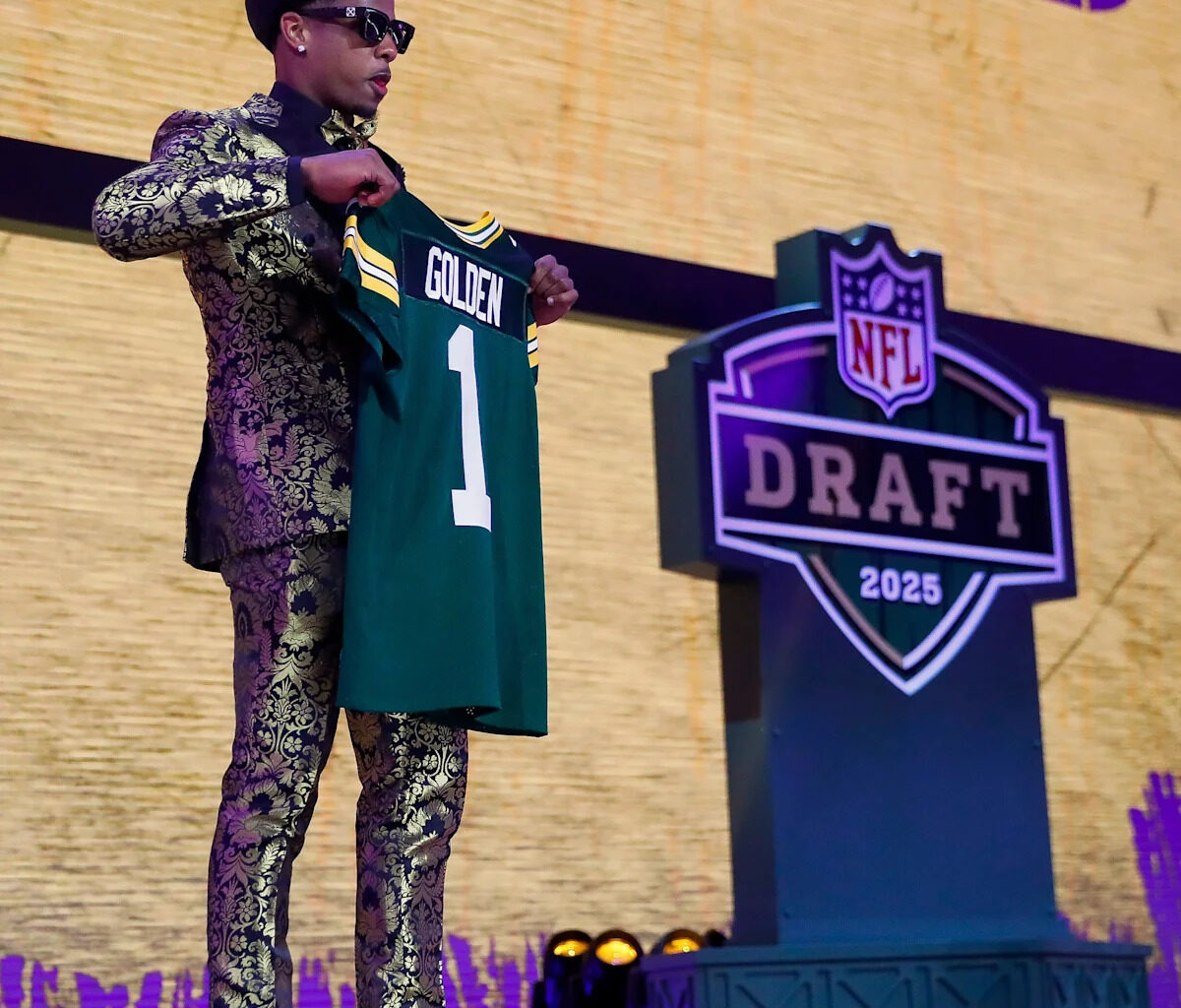
The Green Bay Packers rookies have not received rave reviews from the wider NFL media for their performance in 2025. In fact, Green Bay’s first year players have been ranked dead last league wide for their performance this past season in an article by Gennaro Filice on NFL.com.
Filice noted that first-round pick Matthew Golden was “lost in the shuffle” of a crowded wide receiver room, opining that Anthony Belton made more of an impact after becoming the starter at right guard in the second half of the year. He described Belton’s play as: “far from pristine.”
Advertisement
Is that analysis fair? Having watched every snap that every Packers rookie played in 2025 for the purposes of writing regular reports on the rookies’ progress, it is a bit reductive of Golden’s performance.
There were certainly spells in the season where he faded into the background, but it was not due to a lack of talent. Whenever Golden was called upon, he delivered, and there is no reason to doubt whether he will pan out as an NFL player; he played very well as a rookie.
Belton was indeed up and down in his first year, but he seemed to get better every week after being able to settle in at right guard, taking over the starting role from Thanksgiving.
Should the Packers’ players have been ranked higher? By using the PFF grades of their rookies compared to some of the teams placed above them in Filice’s rankings, the answer seems to be clearly: yes.
Advertisement
Green Bay had three players who played enough snaps to qualify for a ranking at their position based on PFF’s grading: Matthew Golden, who earned a 70.5 grade (60 is average), Anthony Belton, who had a grade of 48.2, and Warren Brinson, whose grade was 44.2.
Filice did not mention Brinson, who was not a resounding success by any means, but he did lead all rookie defensive tackles who played enough snaps to qualify in pass rush win rate at 12.3%. That’s not nothing for a sixth-round pick who was forced into the lineup.
The Jaguars, who were ranked 30th, also had three rookies hit the snaps qualifier: Travis Hunter, who had a 65.9 grade when averaging out his offensive and defensive snaps, and played in only seven games. Bhayshul Tuten and Le’Quint Allen had grades of 66 and 55 respectively, and were both backup running backs. It is quite hard to make an argument Jacksonville got better play or at least more impact from their rookies than Green Bay.
Miami (29) had four rookies play significant snaps: Kenneth Grant, a 1st round D-lineman who had a 48.4 grade, barely better than Brinson, Jonah Savaiinaea, who was last out of 79 guards with a 28.4 grade, Jordan Phillips (56.4 grade) and Dante Trader Jr. (59). Another win for Green Bay.
Advertisement
The Vikings (28) had just two players meet the snap threshold: 1st round guard Donavan Jackson (59.4) grade and Tyrion Ingram-Dawkins (58.3). The Packers’ rookies easily gave their team more.
Cincinnati (25) had 1st round pick Shemar Stewart finish dead last among 119 qualified edge rushers with a 41.2 grade. 2nd rounder Demetrius Knight had a 40.2 grade, while Dylan Fairchild and Jalen Rivers had grades of 59.1 and 31 respectively. This one doesn’t seem close.
The 49ers (24) had six rookies play significant snaps: Mykel Williams, Alfred Collins, Upton Stout, CJ West, Marques Sigle and Connor Colby. Five were on defense and averaged a grade of 45 on one of the worst defenses in the NFL. More rookies playing does not automatically mean better.
Meanwhile, the Colts (21) had only one rookie play enough snaps to qualify for PFF’s rankings: Tyler Warren, who had a good season but was taken very early in the draft for a tight end and had a grade of 67.6, lower than Matthew Golden. Ranking Indianapolis so high seems strange.
Advertisement
The Packers should arguably have been at least six spots higher in the rankings, although finishing 26th would still not be anything to write home about.
It is unlikely the Packers are ever going to be topping these lists, in part because they tend to bring rookies along slowly, often draft them before they are even needed to be relied upon, but probably most crucially, because they always pick late in the draft.
Eight of the top 10 teams in Filice’s rankings entered the draft with a pick in the top 10. The average spot in the draft order for the teams he ranked in the top 10 was eighth overall. The Packers picked at number 23.
It is also important to remember that draft picks are not taken based on what they are expected to do in year one, that pretty much goes for every NFL team.
Advertisement
These are long term investments, so putting stock into draft ‘grades’ immediately after the picks are made or a year into their careers, is a bit of a fool’s errand and not a logical way to evaluate the draft process.
But in the spirit of the conversation, the headline from Green Bay’s rookie class is that they did not miss on their first-round pick, as Golden very much looked the part. There are plenty of NFL teams who cannot say the same with any degree of confidence.
This article originally appeared on Packers Wire: Packers voted dead last for rookie impact in 2025, but is it fair?