
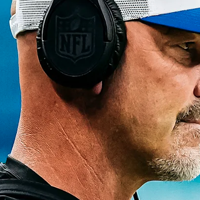
The Tennessee Titans have turned to a familiar defensive voice in hopes of stabilizing and reshaping that side of the ball, hiring Gus Bradley as their defensive coordinator.
Bradley brings more than 15 years of NFL coaching experience, including time as both a head coach and a defensive coordinator. For a Titans team undergoing a transition under new head coach Robert Saleh, Bradley’s background provides experience and a clear defensive identity.

Gus Bradley
Photo: Tennessee Titans
A longtime NFL assistant, Bradley first gained widespread recognition during his tenure with the Seattle Seahawks. Serving as defensive coordinator from 2009 to 2012, he helped lay the groundwork for what became known as the “Legion of Boom.”
That Seattle defense was built on speed and physicality, consistently ranking among the league’s best while relying on a strong front four and a confident secondary. Bradley’s work in Seattle elevated his profile around the league and led to his first head coaching opportunity.
In 2013, Bradley was hired as head coach of the Jacksonville Jaguars. While wins were limited early in a full-scale rebuild, Bradley focused on developing young players and establishing a defensive culture. Several of the foundational pieces he helped develop later became part of Jacksonville’s rise into a perennial playoff contender, most notably during its AFC Championship Game run in 2017.
After his time in Jacksonville, Bradley returned to a coordinator role, bringing his defensive system to the Los Angeles Chargers and, later, the Indianapolis Colts. In both stops, his defenses were known for limiting explosive plays and forcing opponents to sustain long drives.
With Indianapolis, Bradley oversaw units that finished among the league leaders in scoring defense and takeaways, helping the Colts remain competitive despite offensive inconsistency.
Bradley most recently worked for the San Francisco 49ers as the assistant head coach.
His defensive philosophy has favored a 4-3 scheme that prioritizes speed off the edge and disciplined coverage in the secondary. Rather than relying heavily on blitzing, Bradley prefers to generate pressure with the front four and trust his defensive backs to hold up in coverage. The approach places an emphasis on fundamentals, communication and limiting mistakes.
That philosophy fits naturally with that of Saleh, who built his own reputation as a defensive-minded coach. Saleh’s units have been defined by traits that align closely with Bradley’s system. With Saleh overseeing the overall vision and culture, Bradley can focus on implementing his scheme and developing players within it.
For the Titans, Bradley’s arrival could help maximize a roster that blends veterans, like Jeffery Simmons, with younger contributors. For a team looking to become more consistent on third down and in the red zone, his emphasis on structure could be key.
While the modern NFL continues to tilt toward offense, Bradley’s defenses have remained competitive by limiting big plays and forcing opponents to earn every yard. His hiring signals that Tennessee intends to reestablish toughness as a defining trait on defense.
With Bradley helping guide the unit and Saleh setting the tone, the Titans appear committed to building a defense with a clear identity — one designed to complement their evolving offense and give them a chance to compete week after week.