
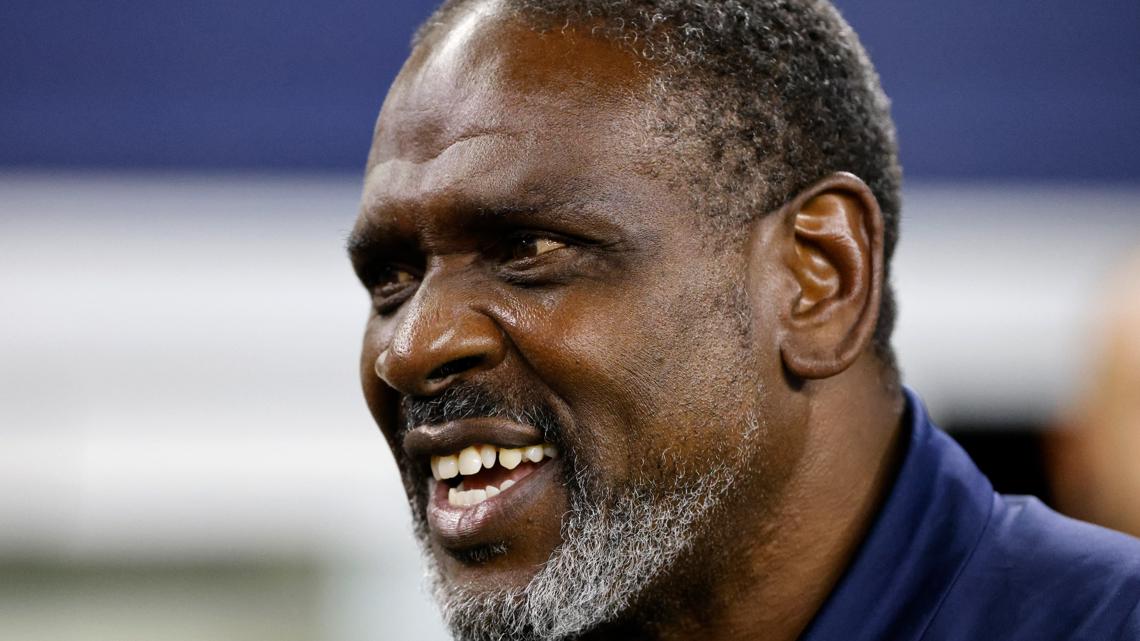
Appearing on the DLLS Cowboys podcast this week, Newton discussed how he found out he was getting a presidential pardon, and what it meant for him to receive it.
DALLAS — Last Thursday, seemingly out of nowhere, President Donald Trump granted pardons to five former NFL players with criminal records — including former Dallas Cowboys offensive lineman Nate Newton, who was convicted on drug trafficking charges in the early 2000s.
Turns out, unlike the rest of us, Newton had a bit of a heads up that the news was coming. But, as he told the DLLS Cowboys podcast this week, that didn’t make the whole situation any less crazy or surprising — even if it was, he said, a welcome reward for having turned his life around.
A cornerstone of the Cowboys dynasty in the 1990s, Newton was pulled over in Louisiana in 2001 with 213 pounds of marijuana in a van, according to the Associated Press. Then, six weeks later, he was arrested again while out on bond after he was found with 175 pounds of marijuana in the trunk of his car. He was sentenced to federal prison and served about two-and-a-half years for his crimes.
“To me, that was funny — the pardon,” the six-time Pro Bowler told DLLS Cowboys hosts Jesse Holley and Clarence Hill. (WFAA’s parent company, TEGNA, has been invested in DLLS Sports’ parent company, the ALLCITY Network, since 2024.)
It all started with a phone call, Newton explains.
“The other day, I was just chilling with my wife at the crib, and I get a call saying, ‘Hey, I’m Mr. Jones assistant’ out of nowhere,” Newton said. “And I’m telling my wife, ‘No way, this ain’t real.'”
Jones’ longtime assistant, Marylyn Love, passed away in 2022, and Newton didn’t recognize the name or voice of the person on the other end of the line. Still, after a series of text messages, he eventually decided there was some validity to all the messages, and he agreed to meet with Jones at his office.
It was there — in a real meeting, despite his earlier suspicions — that Jones revealed to Newton that President Trump was going to grant him a pardon.
Here’s how Newton explained what happened next:
“I’m facing him and said, ‘What’s up, Mr. Jones?’ and he said, ‘I don’t want to be casual about this, Nate.’ He said, ‘I just want to tell you something, but I don’t want to be too casual.’ I’m like, ‘OK, are we going to joke like we normally do, or…?’ So I go to the joke mode automatically. He said, ‘Well, you’ve been you’ve been pardoned for your crimes.’ So I said, ‘Well, hold on, Mr. Jones.’ I said, ‘I committed a lot of crimes. Which one I’m pardoned from?’ I’m like, ‘For real? Which one I’m pardoned from? Which crime?'”
It took Jones insisting that he wasn’t joking for the gravity of the situation to settle in for Newton.
“That’s when it dawned on me,” Newton said. “I said, ‘Well, you tell the president, thank you very, very much for taking time out of his busy schedule – him and all the people that work under him. Tell him I thank him very, very much. I mean, can we call him right now? You seem like you got direct line to him!’ And he said, ‘No, no, just wait a couple of days.'”
And, Newton said, just as Jones had promised, a couple days later, the news broke. That’s when the gratitude really hit him, too.
“What a pardon means to me is, one day my granddaughters and my grandsons may look back and see all the things that has transpired through my life, and then they’ll see, at the end, granddaddy or great granddaddy was pardoned,” Newton said. “And what that says to me, and I hope it says to them, is you can make mistakes, but once those mistakes happen and you start turning your life around. It shows years and years and years of doing things the right way. I did a lot of things against man himself, [against] young ladies and against the law. But through me finding Christ or accepting Christ in my life, I started a massive change. And over the last 20 or so years, that change has been very effective.”
I would like to thank President Trump and all of those that work under him who put this Pardon into effect. Thank you Sir for taking time out of your busy day in running this country. Thank you Sincerely and may God bless You. 🙏🏿
Nathaniel Newton Jr.
— Nathaniel Newton Jr (@61NateNewton) February 13, 2026
After his time in prison, Newton indeed turned his life around, finding work as a broadcaster covering football in the local media market. He also pulled off an incredible feat, with the help of his doctors: losing nearly half his body weight. Newton weighed more than 400 pounds in the 2000s before he undergoing bariatric surgery, as WFAA covered back in 2010. The surgery and weight loss got Newton down to 220 pounds.
Still, the why behind him receiving the pardon remains an unknown.
Said Newton: “For somebody to think of me, Nate Newton, in this world of all these stars and great people, for someone to go to the president, say, ‘Hey, how about pardoning this guy? How about giving this guy a second chance?’ Whether it was Mr. Jones, whether it was somebody who I don’t even know to go to him… You think Mr. Jones is thinking about Nate? The president’s thinking about Nate? Come on, man. He don’t know me. I don’t know him… I mean, that’s what life is all about. God puts angels, whether you like them or not, in your way, in your path that bless you sometimes.”
Newton does actually have one connection to Trump: Early in his professional career, Newton played for the Tampa Bay Bandits in the USFL, the upstart league formed in the ’80s to rival the NFL; Trump owned that league’s New Jersey Generals franchise.
“I know Mr. Jones had something to do with it, and probably a few other people,” Newton said. “Maybe [Newton’s former Cowboys teammate and former New Jersey Generals running back] Herschel Walker had something to do with it. You know, him and Mr. Trump, they’re boys. That’s my USFL brother.”
Among the many surprises involved in the pardon, Newton said Jones’ seeming involvement in it was the least shocking part.
“I’ve seen the way he’s done it with other people,” Newton said. “He don’t brag. He don’t go out and tell the world, ‘Hey, look what I did for this guy, that guy, this guy.’ But Jerry has his hands on a lot of older players, ex-players, however you want to put it, former players.”
Now, having earned his pardon, Newton said he feels like he’s whole again — in large part, he said, because much of the general public is misinformed about what it means to be a felon like him.
“This is the problem,” he said. “Felon is the key word to all of this. And that was the key word 20 years ago. When you become a felon, you lose your voting rights, you lose your right to carry guns of any kind, any weapons. You can’t hold a federal job. [But] the only thing that stayed in play over the years was the federal job. You can go out now if you’re a convicted felon, and you can own a weapon or you can vote. And you can vote right away — once you get off all that parole and all that, you can vote and you can get a gun, right? You know, depending on what state you’re in. Sometimes, you have to go through a little bit more depending, but in Texas, you can get one right away.”
Even though he’s been out of prison for two decades at this point, living his life as best he can outside in the real world, Newton said the pardon represents finally closing the chapter on past actions he regrets.
“So, what it means is you have done good things since the bad incidents or incidents you have done,” he said. “You’ve been consistent, you’ve been a good person. It’s just a way of saying, ‘Hey, you’re back in society.'”