
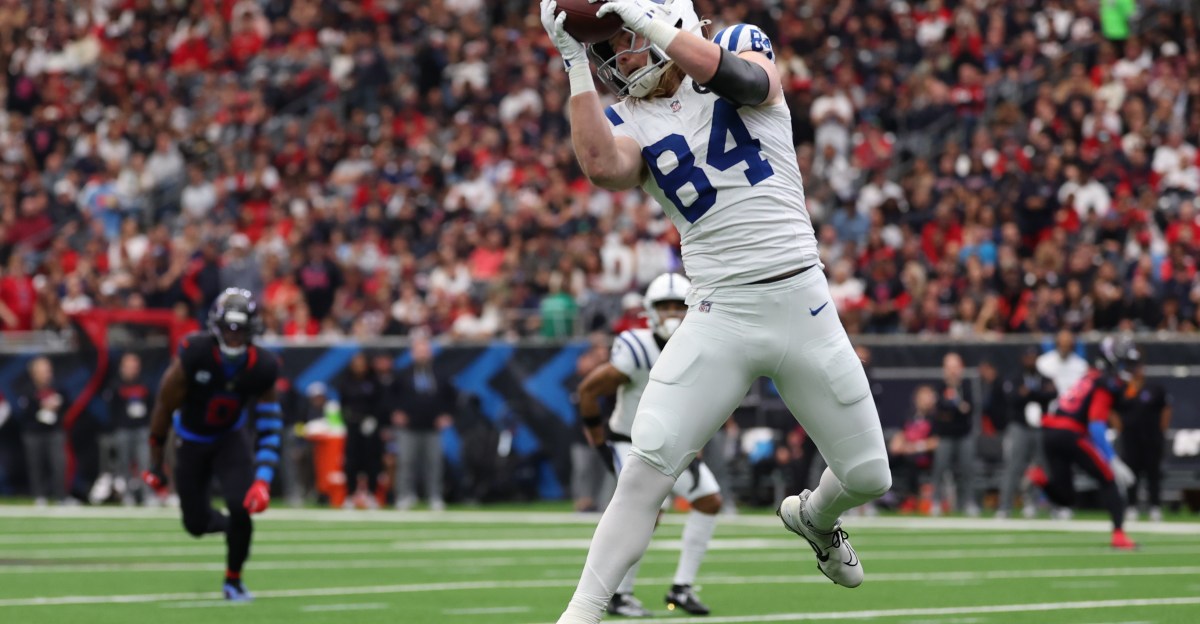
Tight end is the position that looks simple on paper and becomes complicated the moment you turn on the film. At a glance, the evaluation process seems similar to wide receiver: can he catch, can he run routes, can he block? In reality, tight ends live in a completely different world. They’re bigger, slower, more physical, and asked to do far more within the structure of an offense. On one play they’re running seams against safeties. On the next, they’re blocking defensive ends in the run game. Few positions in football demand such a wide and conflicting skill set.
At the college level, many tight ends are featured almost exclusively as oversized receivers, winning against mismatches in space. Others are used primarily as extra tackles, rarely asked to stretch the field. Very few are developed as complete players. That’s why projecting tight ends to the NFL is so difficult. Dominating smaller defenders on Saturdays doesn’t guarantee success against professional athletes who are just as strong, faster, and better coached.
For this installment, the goal is to separate “college production” from “NFL utility.” What traits actually carry over? What allows a tight end to stay on the field in every situation instead of becoming a situational player? This framework is built around how teams evaluate the position internally: can he be trusted as a receiver, relied on as a blocker, and deployed in multiple roles without tipping the offense’s hand.
As with the other positions in this series, the focus isn’t highlights or box scores. It’s patterns on film. Habits. Physical and mental traits that show up week after week. If you want to understand why some tight ends become foundational pieces while others fade into specialized roles, this is where the evaluation starts.
Blocking (Defensive Ends & Outside Linebackers)
Separation & Route Running
Plays in Traffic & Toughness
Football IQ & Spatial Awareness
Play Strength & Physicality
Special Teams Value (For Depth TEs)
In the end, tight end scouting is about finding balance. A player who can only catch is a big slot receiver. A player who can only block is an extra tackle. NFL teams are searching for the rare prospect who can live in both worlds without being a liability in either. When you watch with that in mind, the tape becomes much clearer. Look for dependable hands in traffic, the strength to hold up against defensive ends, the awareness to find space on key downs, and the versatility to line up anywhere without tipping the offense’s intentions. Production matters, but trust matters more. Coaches keep tight ends on the field because they don’t have to protect them with scheme. Use this framework and you’ll quickly see which prospects can become true three-down players and which ones are destined for specialized roles.