
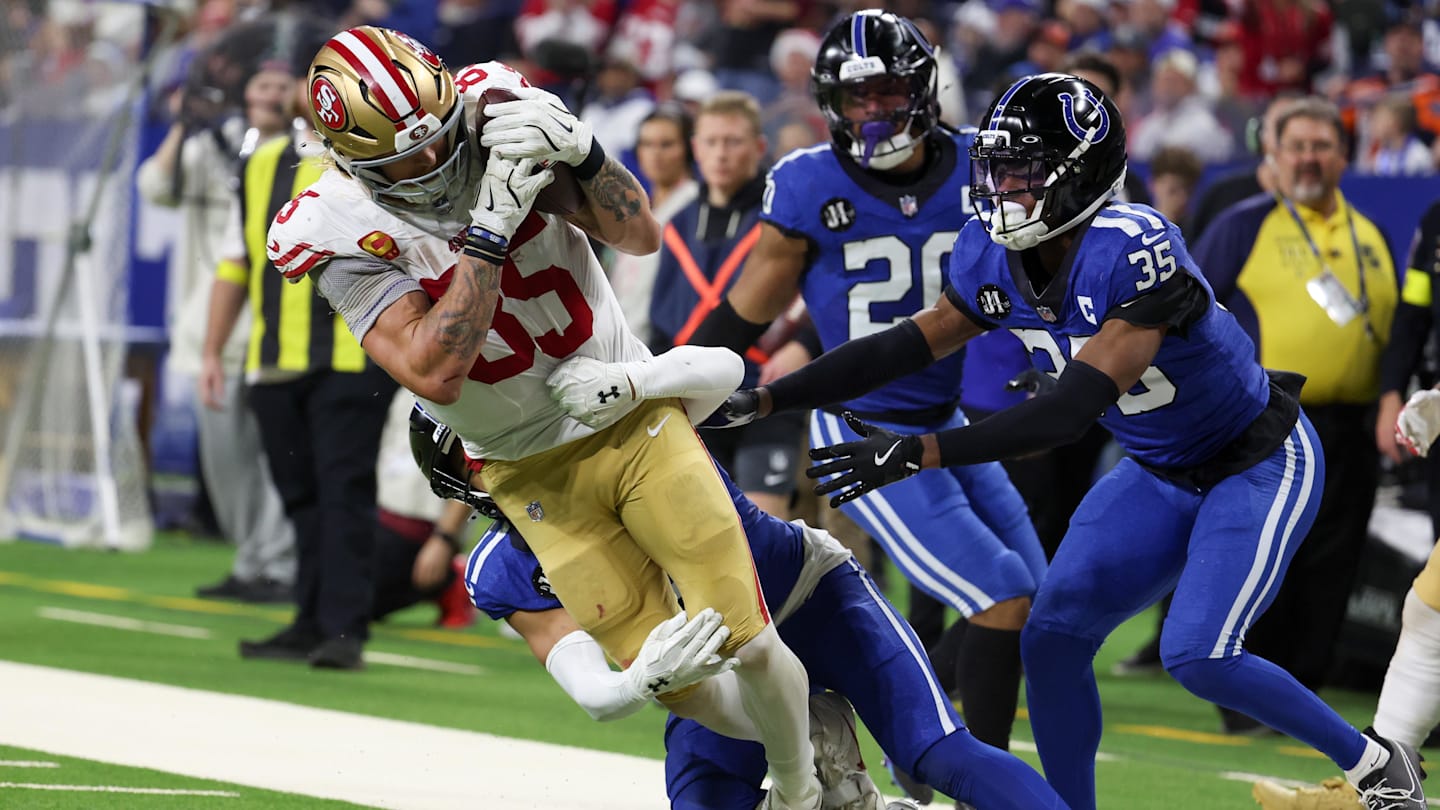
The San Francisco 49ers currently have George Kittle, Jake Tonges, Luke Farrell, and Brayden Willis under contract at tight end. On the surface, that looks like adequate depth. In reality, the room comes with significant questions.
Willis remains a borderline roster player, and Kittle is expected to begin the season on some form of injured list. That alone suggests San Francisco cannot afford to stand pat.
How can the 49ers improve the tight end room this offseason?
The answer largely depends on how the organization views Kittle’s timeline. He is still one of the most complete tight ends in football when healthy, but he is getting older and coming off a serious injury. If the front office believes his time as an elite, every-down force could wind down within the next two or three seasons, the draft becomes extremely appealing.
Tight end is widely considered one of the most difficult positions to transition into at the NFL level. Prospects must learn complex blocking schemes, route concepts, and defensive recognition, all while adjusting to NFL speed and physicality. Many talented tight ends take two or three seasons to truly break out. Drafting a player now would allow San Francisco to bring him along slowly behind Kittle. The rookie could contribute in sub-packages early, develop physically, and potentially be ready to assume a starting role when Kittle’s contract situation or durability becomes a larger issue.

Kyle Terada-Imagn Images
However, that route requires patience. If the 49ers believe Kittle still has multiple productive seasons left, they may instead focus on short-term stability. Tonges showed promise as a pass catcher when called upon, but Farrell struggled to consistently deliver as a blocking complement. That could signal that free agency is the more immediate solution.
A cost-effective veteran known for physicality and reliability in the run game could compete directly with Farrell while allowing Tonges to operate in more specialized passing situations. That type of move would stabilize the position without demanding significant cap space. It would also free up premium draft capital to address more pressing long-term needs elsewhere on the roster.
Ultimately, the type of addition San Francisco makes will reveal its long-term vision. A mid-round developmental pick signals planning for life after Kittle. A veteran blocking specialist signals confidence that Kittle will return and remain a focal point. Either way, doing nothing is not a realistic option for a team with championship aspirations and uncertainty at such a pivotal position.