
The New York Jets need two starting safeties.
How should they go about finding them?
The answer: Prioritize value.
New York has a multitude of needs, including at nearly all of the game’s “premium” positions, sans offensive tackle. For that reason, the rebuilding Jets would be wise to focus the bulk of their assets (cap space and draft picks) on their most dire needs, while pushing less valuable positions, such as safety, to the back burner for the time being.
Whether it’s using the second overall pick on Caleb Downs or backing up the Brink’s truck for a big-ticket free agent like Bryan Cook, a premium investment at a non-premium position does not seem like a route the Jets would be wise to take at this stage of their rebuild. Thus, New York should be expected to seek upgrades at the position without using premium assets.
How do you pull that off? Looking for the best scheme fits, of course.
The best way for an NFL team to squeeze more production out of a player than expected is to fit them into the perfect scheme, one that maximizes their talents and hides their weaknesses. In a sport where schematics are more paramount to a player’s success than perhaps any other, scheme is often the difference between a player being an afterthought on one team and a star on another.
These are the types of players New York must target at safety.
As nice as it would be to land a blue-chip prospect like Downs or a top-tier veteran like Cook, the Jets could find safeties built to thrive in their system without breaking the bank, preserving their premium assets to pursue game-wreckers at more valuable positions. They just need to find safeties who are devalued because of their lack of success in other systems, but would thrive in the Jets’ system.
There is a specific free agent duo that would fit the bill perfectly. But before we reveal those players, we must understand what Glenn might be looking for.
What does Aaron Glenn want in his safeties?
After sharing duties with Steve Wilks in 2025, Aaron Glenn appears to be taking over the Jets’ defense. No longer will New York’s defense feature an awkward blend of Wilks and Glenn’s differing styles; this is Glenn’s unit.
For that reason, it makes sense to use Glenn’s tenure as the Detroit Lions’ defensive coordinator as a model for what he will be looking for in his safeties.
With the 2023-24 Lions, Aaron Glenn relied on the safety duo of Kerby Joseph and Brian Branch.
The two players brought distinct skill sets to the table. Joseph was valued for his deep coverage skills, while Branch was valued for his versatility near the line of scrimmage.
In 2024, Joseph lined up as a deep safety on 54% of his defensive snaps. His primary role was to lock down the deep part of the field. Ultimately, across 17 games, Joseph was targeted just 27 times on 746 coverage snaps, an average of once every 27.6 snaps. This was the third-lowest target rate in the NFL among safeties.
At the safety position, a low target rate typically indicates that the player was primarily responsible for playing deep zones rather than handling man-to-man assignments, which are more likely to generate targets. Those man-to-man reps went to Branch in Detroit’s defense.
Branch ranked seventh among safeties with 180 slot coverage snaps in 2024. This role required Branch to defend far more targets as the primary defender than Joseph did. Whereas Joseph was targeted once every 27.6 coverage snaps, Branch was targeted once every 8.1 snaps, which is over three times as frequent (73 targets on 593 coverage snaps).
Branch was also heavily involved in the run defense, placing fourth among safeties with 24 run stops. Additionally, the Lions featured Branch as a blitzer; he ranked ninth at the position with 10 total pressures. Comparatively, Joseph had 11 run stops and 2 total pressures, indicating the stark difference in the players’ usage.
Both players thrived in their roles, with Branch earning a Pro Bowl nod and Joseph being voted a first-team All-Pro. The key to their success was the way Glenn’s defense allowed each of them to focus on what they excel at.
This stemmed from Glenn’s heavy usage of Cover 1, a single-high safety look. According to this article from FFToday, Detroit led the NFL with a 37.2% usage rate of Cover 1 in the 2024 season. This was substantially above the league average of 22.3%.
Glenn’s extreme reliance on Cover 1 meant that Detroit frequently had one safety back and one near the line of scrimmage, rather than both deep. This allowed Joseph and Branch to log plenty of reps in which they could focus on their specialties. Whenever Glenn called Cover 1 (which was very often), Detroit had the perfect man to play single-high (Joseph) and the perfect man to drop into the box (Branch).
The Jets need their versions of Joseph and Branch in Glenn’s system. The players do not necessarily have to be quite as good as Joseph or Branch; they just have to offer similar skill sets.
The following two free agents would be ideal fits for those molds at modest prices, allowing New York to potentially receive excellent value on the dollar.
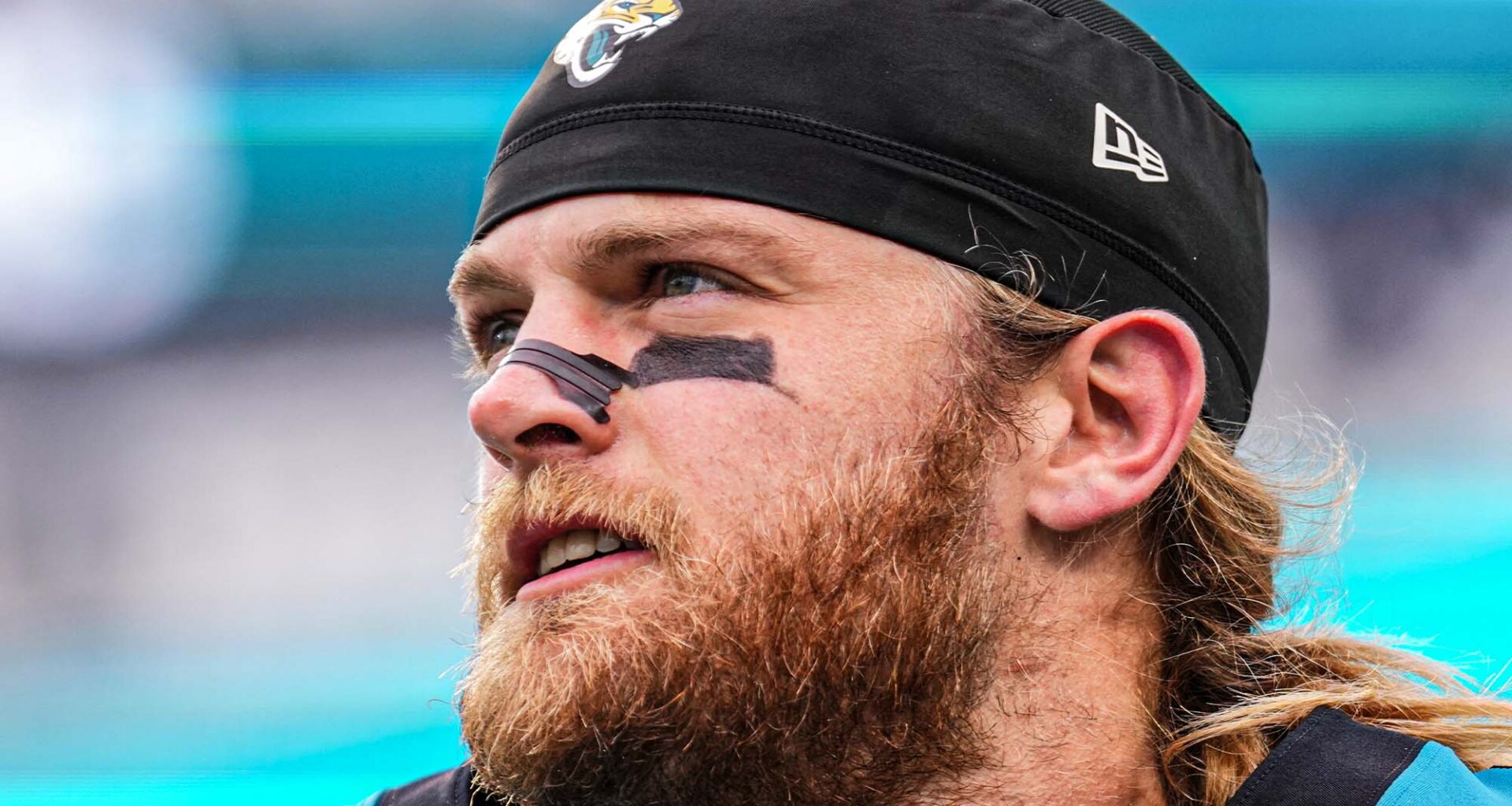
Andrew Wingard, Jaguars (Joseph mold)
Wingard, 29, has played 60.7% of his career defensive snaps as a deep safety, per PFF, right in the neighborhood of Joseph’s career rate (59.1%).
Over the first six years of his career, Wingard was used as a situational player for the Jaguars. He started 28 of his 86 games and played 40.5% of Jacksonville’s defensive snaps when active.
Whenever he got chances to play, Wingard generally performed well in coverage.
Across 2,154 defensive snaps from 2020-24, these were Wingard’s numbers in coverage:
1,194 coverage snaps
71 targets (One target every 16.8 coverage snaps)
42 receptions (59.2% completion rate)
407 yards (5.7 yards per target)
6 TD
5 INT
74.1 passer rating
2 penalties (2 DPI, 0 holding, 0 illegal contact)
Those would be very solid numbers for a starting free safety. Allowing under six yards per target is especially impressive; the 2025 league average for safeties was 8.1. His 1.2-to-1 touchdown-to-interception ratio was also better than the 2025 league average for safeties (1.7-to-1). Just two penalties on 1,000-plus coverage snaps is good stuff, too.
The main weakness in Wingard’s game was his tackling, particularly against the run. He was fine at wrapping up in the pass game (albeit not great), but struggled mightily to finish on run plays.
From 2020-24, Wingard had a slightly above-average 11.9% missed tackle rate on pass plays (2025 NFL S average: 12.3%), but his missed tackle rate on run plays was a poor 16% (2025 NFL S average: 13.1%).
In 2025, Wingard was promoted to a full-time starting role for all 16 of his appearances. The results were shaky.
Wingard allowed 28-of-43 passing for 293 yards, two touchdowns, and one interception (90.6 passer rating), while missing 16 tackles (12th-most among safeties) on a 16% missed tackle rate. Overall, he earned a mediocre 57.3 overall grade from Pro Football Focus (58th of 72 qualified safeties).
However, Wingard’s usage under new defensive coordinator Anthony Campanile was not ideal for the strengths and weaknesses he displayed throughout his career.
The best stretch of Wingard’s career came from 2022-24, when he posted an overall PFF grade of 76+ in each season. Over this span, Wingard lined up as a deep safety on a whopping 69.5% of his snaps.
But under Campanile in 2025, that rate dropped to 56.5%. Additionally, his rate of snaps as a pass rusher rose from 2.1% to 5.8%, nearly triple. These numbers show that Jacksonville was asking Wingard to do more work around the line of scrimmage, which is not his strength.
Put Wingard back in a scheme that allows him to focus on playing as a deep safety, and there is a good chance he will produce like an above-average starter. And as a 29-year-old coming off a down year, his market value will be low, allowing the Jets to capitalize.
Jabrill Peppers, Steelers
The ninth-year veteran started just two of his 14 appearances for Pittsburgh in 2025, primarily playing on special teams. Over a limited size of defensive reps, though, Peppers was fantastic in his role.
Across 100 defensive snaps for the Steelers, Peppers played just 15 as a deep safety. He was in the box on 48 snaps and in the slot on the other 37.
Peppers dominated against the run, racking up a 90.9 run defense grade from PFF. In that phase, he made six tackles and missed none while forcing a fumble.
Peppers had spent the previous three seasons with the New England Patriots, where he thrived as both a run defender and coverage defender in his role as a box safety.
Across the 2023-24 seasons for New England, Peppers played 36.9% of his snaps in the box and 13.8% in the slot. He earned an 86.3 run defense grade, missing just seven tackles on a 10.1% missed tackle rate in that phase. In coverage, he held up admirably, allowing 27-of-44 passes to be caught for 176 yards (4.0 yards per target), one touchdown, and three interceptions—a 49.1 passer rating.
Peppers should be attainable for a low price. The NFL won’t be lining up to sign a box safety who is 30-going-on-31 and mainly played special teams last year.
But in the Branch role of Glenn’s system, Peppers’ strengths would be maximized. He could be a solid playmaker for the Jets, especially relative to what he’ll be paid.
With Wingard in Joseph’s role and Peppers in Branch’s role, the Jets would have two veteran starting safeties who have proven they can yield above-average-starter production in the respective roles they’d be asked to play. Per Spotrac’s projections, this duo would be expected to cost New York just $7.3 million per year.
Even if the Jets do not land these exact two players, they exemplify what the Jets should be looking for at the safety position: low-cost signings whose value would be amplified because they fit into one of the two specialized safety roles in Glenn’s system.